The Sacred Road You're Already On: Understanding the American Drive as Ritual Journey
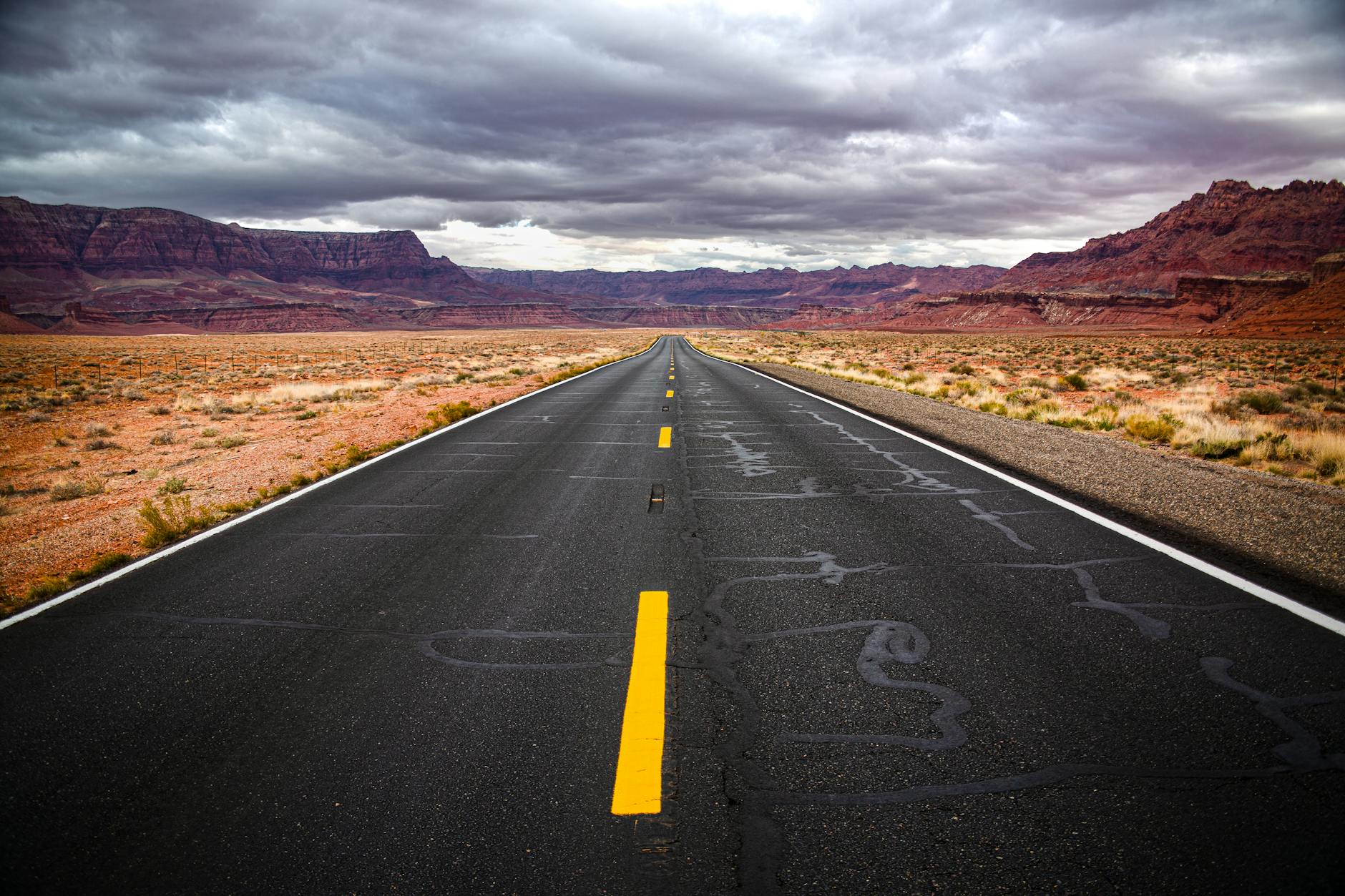
The Sacred Road You're Already On: Understanding the American Drive as Ritual Journey
Let me propose something that may initially seem like an overreach: the family loading a Subaru Outback for a two-week drive to the national parks of the American West is engaged in the same fundamental act as a twelfth-century French merchant setting out for Santiago de Compostela. Not metaphorically similar. Structurally identical, in the ways that matter most to human psychology.
If that claim strikes you as eccentric, consider what you actually do on a road trip. You leave your ordinary life behind. You travel a defined route toward a destination that carries symbolic weight beyond its physical reality. You endure discomforts — the long stretches, the mediocre food, the fellow travelers who are not always congenial — that you would not tolerate at home. You arrive somewhere, experience something that feels significant, and return changed in some way you may struggle to articulate. Then you tell the story of it, repeatedly, to people who were not there.
That is the pilgrimage structure. It has been the pilgrimage structure for as long as human beings have been making sacred journeys, which is to say for as long as we have written records of human beings doing anything at all.
What Pilgrimage Actually Was
The popular image of medieval pilgrimage — gaunt penitents in hair shirts trudging through mud toward redemption — is accurate for some pilgrims and misleading about the institution as a whole. The roads to Canterbury, Rome, Jerusalem, and Compostela were also commercial arteries, social networks, and, by any honest accounting, the leisure travel industry of their era.
Chaucer's pilgrims in The Canterbury Tales are not a collection of suffering ascetics. They are a cross-section of English society — a knight, a miller, a wife of considerable opinions — passing the miles with stories, arguments, flirtation, and competitive one-upmanship. The Venetian traveler Felix Fabri, who made two pilgrimages to Jerusalem in the 1480s and wrote about both at exhausting length, complained about fellow pilgrims who snored, about ships that smelled terrible, about guides who were clearly making things up, and about the gap between what he had expected the Holy Land to feel like and what it actually felt like when he arrived.
Fabri's journals read, in stretches, like a particularly honest TripAdvisor review. He went for transcendence and found logistics. He also, by his own account, came home permanently altered — more patient, more curious, more aware of his own smallness. The discomforts and the transformation were not separate experiences. They were the same experience.
The American Shrine System
The United States has developed, over the past century, a geographically distributed network of sites that function as secular shrines — places that Americans travel to not merely because they are beautiful or interesting, but because visiting them means something. Yellowstone. The Grand Canyon. Graceland. The Lincoln Memorial. Route 66 itself, which is less a road than a concept, a pilgrimage route whose destination is an idea about what America once was.
The Hajj, the Islamic pilgrimage to Mecca, is one of the most rigorously documented mass-travel experiences in human history, and the scholarship on what it does to participants is instructive. Researchers studying Hajj returnees have consistently found elevated measures of tolerance, increased sense of connection to a broader community, and a sustained sense of personal significance that persists well after the journey ends. These effects are not produced by Mecca itself — they are produced by the act of making the journey, by the shared suffering of the route, and by the arrival at a place that the traveler has invested with meaning long before reaching it.
Yellowstone generates similar reports. So does the first view of the Grand Canyon's rim. So, remarkably, does Graceland, which draws visitors who describe the experience in language that is, stripped of its pop-cultural framing, indistinguishable from religious testimony. The mechanism is identical because the psychology is identical.
Why Reframing the Trip Changes the Trip
Here is the practical argument, and it is the reason this observation belongs in a travel strategy discussion rather than a philosophy seminar: travelers who understand their journey as a ritual passage rather than a consumer experience make systematically better decisions, tolerate difficulty more effectively, and report higher satisfaction with the overall experience.
The evidence for this comes from both ends of the historical record. Medieval pilgrimage literature is full of accounts of travelers who arrived at their destination exhausted, disappointed by the physical reality of the shrine, and then — crucially — integrated that disappointment into a larger narrative of meaning that the journey itself had provided. The destination was important, but it was the journey that did the work.
Contemporary travel psychology has reached similar conclusions through different methods. Studies of peak travel experiences consistently find that the memorable, identity-shaping journeys are those that involved some degree of difficulty, genuine uncertainty, and meaningful contact with other people — including strangers. The controlled, optimized, friction-free vacation produces pleasure. The pilgrimage-structured journey produces stories that people are still telling decades later.
This reframing has immediate tactical implications. The traffic jam outside Yellowstone is not an obstacle to the trip — it is part of the ritual approach, the equivalent of the crowded road to Compostela. The stranger at the campsite who talks too long is not an inconvenience — they are a Chaucerian fellow traveler, and the story they tell you may be the one you remember. The moment when the destination fails to match the image you carried of it is not a disappointment — it is the pilgrimage's oldest and most reliable lesson, the one Felix Fabri learned in Jerusalem and wrote about for the rest of his life.
Taking the Frame Seriously Before You Leave
Before your next significant road trip, spend twenty minutes with the question that every pilgrimage tradition asks its travelers to answer in advance: Why are you going? Not the logistical answer. The real one.
If you are driving to the Grand Canyon, what does the Grand Canyon mean to you, and where did that meaning come from? If you are making a Route 66 run, what are you actually seeking on that road — and is that thing available at the destination, or is it available only in the act of traveling?
Pilgrims who could answer that question tended to come home with something. Those who could not tended to come home with souvenirs.
The road has always known the difference.