The Pilgrim's Burden
In 1391, a English merchant named William Wey returned from Jerusalem carrying fourteen pounds of carefully wrapped objects: vials of Jordan River water, pressed flowers from Gethsemane, fragments of stone from the Holy Sepulchre, and a wooden cross carved by monks. His contemporaries didn't consider this excessive — they considered it insufficient. Medieval pilgrims routinely returned home staggering under the weight of their proof.
 Photo: Holy Sepulchre, via c8.alamy.com
Wey's inventory, preserved in his detailed travel account, reads like a manifest of anxiety. Each object represented not just a memory, but evidence that the memory was real. The vial of holy water wasn't kitsch; it was technology. Without it, how could Wey convince himself — let alone his neighbors — that he had actually stood where Christ was baptized?
This wasn't medieval superstition. It was human psychology in its purest form.
The Doubt That Drives Commerce
Every souvenir purchase begins with the same question: Did this really happen to me? The question seems absurd — of course you were there, you have the boarding passes and the photos to prove it. But human memory is notoriously unreliable, and transformative experiences often feel dreamlike even as they occur. The souvenir serves as an anchor, a physical object that tethers an ephemeral experience to material reality.
Roman travelers understood this psychology intimately. Archaeological excavations across the Mediterranean reveal a sophisticated souvenir industry that operated on principles modern airport gift shops would recognize. Lead ampullae filled with Nile water sold briskly to tourists visiting Egypt. Miniature replicas of famous statues were mass-produced in workshops near major temples. Coins minted with local imagery were purchased by visitors who already had perfectly functional money.
The Romans even developed the equivalent of the modern t-shirt: glass vessels stamped with "I was at Baiae" or "Souvenir of Alexandria." The Latin inscription "hoc monumentum" — literally "this memory-thing" — appears on countless tourist objects from the imperial period. The Romans had a word for what we're all doing: monumentum, the thing that makes you remember.
The Status Signal Disguised as Memory
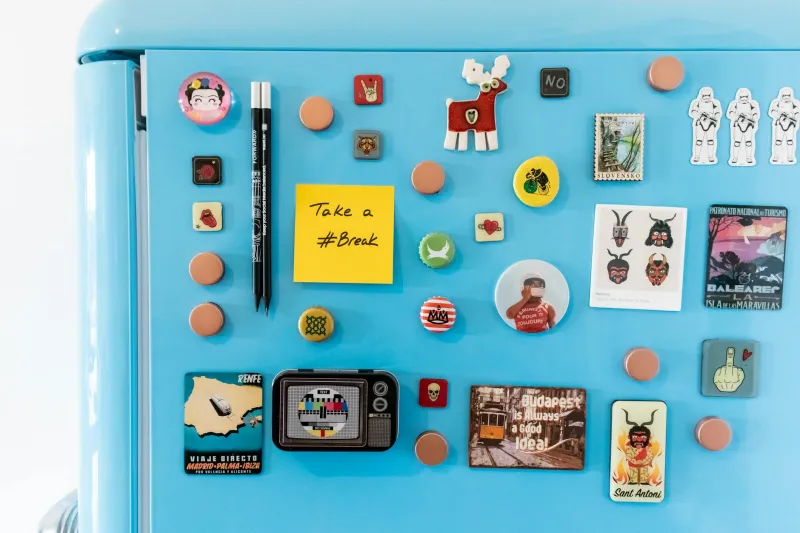
But souvenirs serve a dual function that travelers rarely acknowledge. They're not just memory aids; they're status signals. The medieval pilgrim's collection of holy relics announced to his community that he possessed the wealth, health, and piety to complete a dangerous journey. The Roman's Egyptian ampulla demonstrated worldliness and sophistication. The modern traveler's collection of international refrigerator magnets performs the same social function — it's a geographic resume displayed on kitchen appliances.
This status signaling explains why souvenir authenticity matters so little. Medieval pilgrims routinely purchased "saint's bones" that were obviously chicken fragments and "holy water" that was clearly local well water. Roman tourists bought "authentic" Egyptian artifacts mass-produced in Roman workshops. Modern travelers purchase "handcrafted" items from factories while knowing they're factory-made.
The authenticity isn't in the object — it's in the transaction. The act of purchasing creates the authenticity. By buying something, anything, at the destination, travelers transform themselves from mere observers into participants. The souvenir isn't proof of what you saw; it's proof of what you did.
The Instagram Paradox
Digital photography should have eliminated the need for physical souvenirs. Why buy a plastic Statue of Liberty when you have a hundred photos of the real thing? Yet souvenir sales continue to grow, suggesting that photos and objects serve different psychological functions.
Photographs document what happened. Souvenirs create evidence that it happened to you. The difference is crucial. A photo of the Eiffel Tower could have been taken by anyone; a miniature Eiffel Tower purchased in Paris could only have been acquired by someone who was physically present in the city. The object carries the traveler's agency in a way the photograph cannot.
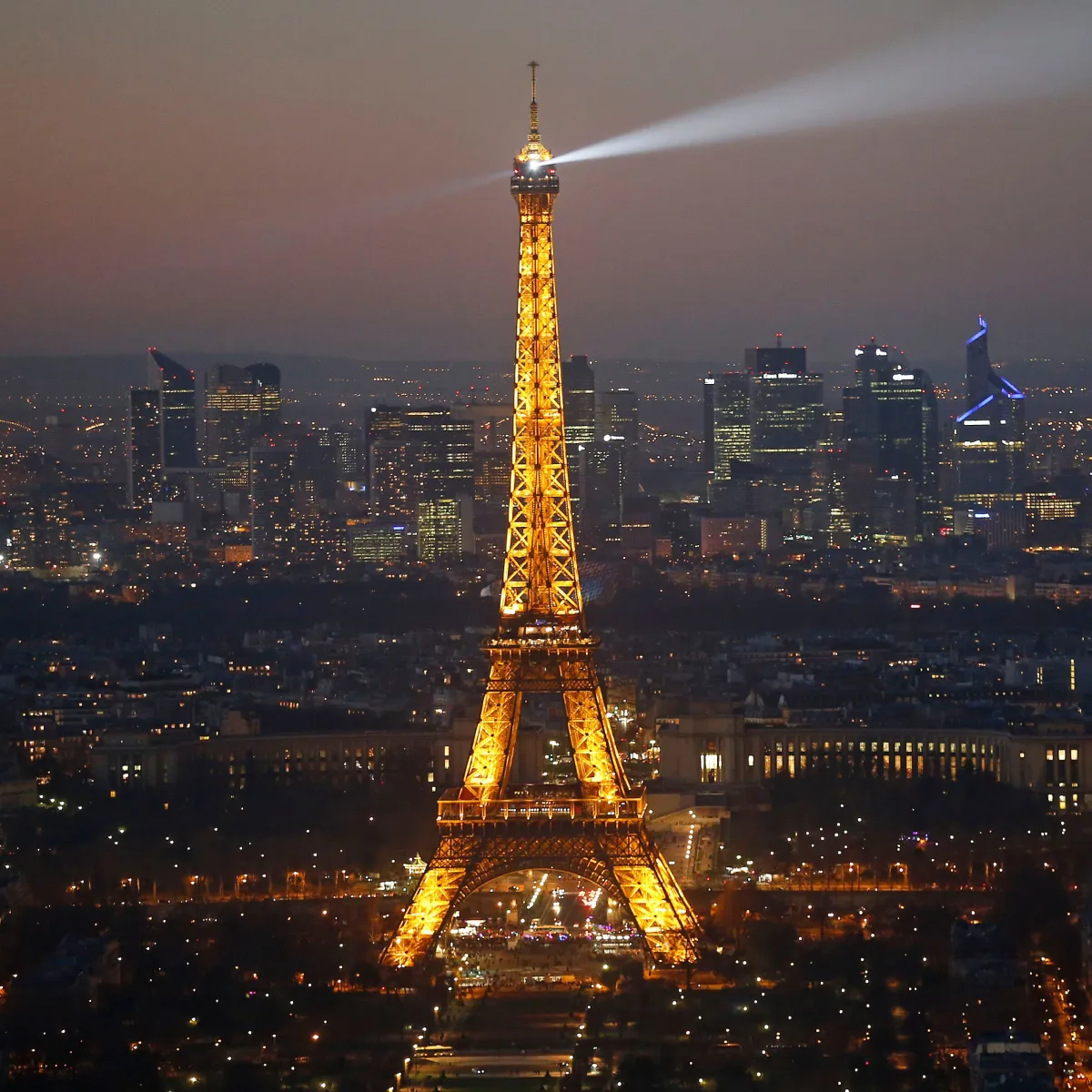 Photo: Eiffel Tower, via media.architecturaldigest.com
This explains the rise of "experience souvenirs" — objects that can only be obtained through participation rather than observation. The pressed penny from a specific museum, the ticket stub from a particular performance, the hotel key card saved as a memento — these items prove presence in a way that even the most artistic photograph cannot.
The Economics of Emotional Insurance
Souvenir shops are positioned at airports, train stations, and tourist exits for psychological rather than logistical reasons. The placement exploits a specific moment of vulnerability: the transition from extraordinary experience back to ordinary life. As travelers prepare to return home, they confront the possibility that their journey might fade, become unreal, or be forgotten.
The souvenir purchase is emotional insurance against this forgetting. It's a hedge against the possibility that the experience wasn't as transformative as it felt in the moment. This explains why travelers often buy souvenirs they don't particularly want or need — the purchase isn't about desire, it's about preservation.
The Collector's Paradox
Seasoned travelers often develop elaborate souvenir systems: one specific type of object from each destination, a consistent price point, a particular aesthetic. These systems suggest that the real value isn't in any individual souvenir but in the collection itself. The collection becomes a physical map of the traveler's geographic autobiography.
But collections also reveal the souvenir's fundamental limitation. As the collection grows, individual objects lose meaning. The twentieth refrigerator magnet carries less emotional weight than the first. The system that was designed to preserve memory eventually overwhelms it.
The Future of Proof
Understanding the souvenir's psychological function can help modern travelers make better decisions about what to buy and why. The question isn't whether to purchase souvenirs — the impulse is too deeply rooted in human psychology to resist entirely. The question is whether to buy objects that will genuinely serve their intended function as memory anchors and status signals, or to succumb to the anxiety-driven purchasing that leaves travelers with drawers full of meaningless trinkets.
The most effective souvenirs are often the least obvious ones: the book purchased at a local bookstore, the spice bought at a neighborhood market, the tool acquired from a craftsperson. These objects carry stories that connect them to specific moments and places in ways that mass-produced tourist items cannot.
The souvenir will survive every technological innovation because it serves a function technology cannot replace: it transforms the passive experience of having been somewhere into the active proof of having done something. In a world where experiences increasingly feel virtual, the humble souvenir remains stubbornly, essentially real.