The Great Democratic Experiment
In 1859, a British aristocrat visiting New York's Astor House wrote home in barely concealed horror: "One finds oneself seated beside a merchant's clerk at breakfast, a farmer's wife in the reading room, and heaven knows what manner of person warming themselves by the same fire." What scandalized this visitor was precisely what made the American hotel lobby revolutionary — it was perhaps the first architectural space in human history designed for strangers to coexist as equals.
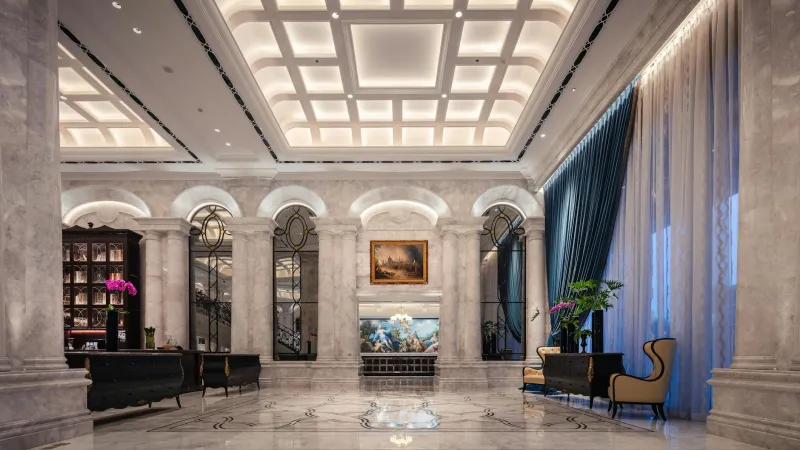
The grand hotel lobbies of 19th-century America weren't just waiting areas; they were laboratories for democracy. Unlike European inns that segregated travelers by class or the rigid social hierarchies of Old World public spaces, American hotel lobbies operated on a radical principle: if you could afford a room, you belonged in every public area of the building. The marble floors, crystal chandeliers, and velvet furniture weren't reserved for the wealthy — they were the birthright of anyone who paid the daily rate.
The Architecture of Equality
This wasn't an accident. Hotel architects like Isaiah Rogers deliberately designed lobbies as "people's palaces," vast public rooms that would demonstrate American egalitarian values through space itself. The lobby of Boston's Tremont House, completed in 1829, featured soaring ceilings, imported marble, and furniture finer than most private homes. The message was clear: in America, temporary wealth could buy you temporary aristocracy.
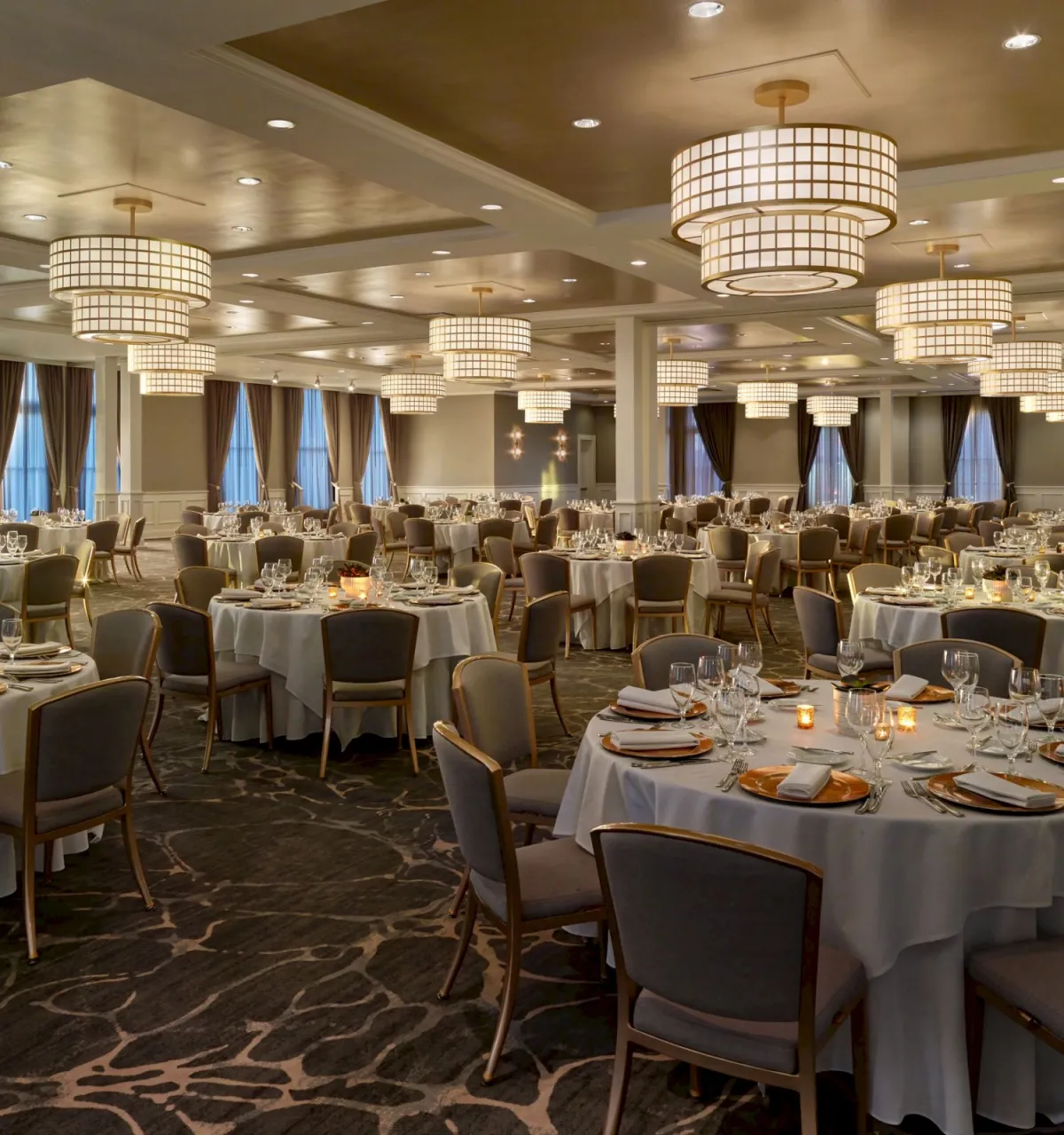 Photo: Tremont House, via www.thetremonthouse.com
The psychological impact was profound. Foreign visitors consistently remarked on how American hotel guests behaved differently than their European counterparts — more confident, less deferential, willing to strike up conversations with strangers. The lobby wasn't just reflecting democratic values; it was actively creating them. When a traveling salesman from Ohio could sit in the same leather chair as a railroad baron from New York, both men internalized a lesson about their fundamental equality that extended far beyond the hotel walls.
The Monetization of Mixing
But human psychology contains its own contradictions. The same Americans who celebrated democratic mixing in hotel lobbies also craved distinction. By the 1870s, hotels began experimenting with subtle hierarchies within their supposedly egalitarian spaces. The Palmer House in Chicago introduced "ladies' parlors" and "gentlemen's smoking rooms." The Plaza in New York created different entrances for different types of guests.
These weren't initially about excluding people — they were about providing choice. But choice, once introduced, inevitably becomes hierarchy. The ladies' parlor became the preferred ladies' parlor. The smoking room developed its own internal geography of status. What began as accommodation became stratification.
The Rise of the Velvet Rope
The transformation accelerated in the 20th century as hotels discovered they could charge premium rates for what had once been standard access. The invention of the "club floor" in the 1960s marked a turning point: suddenly, identical rooms on different floors commanded different prices based solely on lobby access. The democratic lobby was carved into tiers — standard, preferred, elite.
Today's luxury hotels have perfected this segmentation. The Ritz-Carlton's Club Level, Four Seasons' Executive Floors, and countless "concierge lounges" represent the complete inversion of the original American hotel lobby concept. Instead of mixing classes, modern hotels separate them with surgical precision. The lobby remains grand, but it's increasingly a performance space where those with basic rooms can admire what they're not entitled to access.
The Psychology of Purchased Belonging
What drives this willingness to pay extra for spaces that were once considered universal rights? The same human psychology that made the democratic lobby work in the first place. Americans still crave the feeling of belonging in elegant spaces, but they've been trained to believe that belonging must be earned through spending. The club lounge exploits our democratic instincts while satisfying our aristocratic aspirations.
The irony is profound. The original American hotel lobby was radical precisely because it offered luxury without exclusion. Modern hotel marketing sells exclusion as the luxury itself. We pay premium prices to avoid the very mixing that once made American hospitality revolutionary.
Reading the Room
For today's traveler, understanding this history provides practical guidance. Every hotel amenity now marketed as "exclusive" was once standard. Every club lounge, priority check-in, and members-only space represents a piece of public comfort that was gradually privatized and sold back to us at a markup.
The smart traveler asks: What am I actually buying? Often, club access provides little more than what the original hotel lobby offered — a comfortable place to sit, complimentary refreshments, and the company of fellow travelers. The difference is that we now pay extra for privileges our predecessors considered basic hospitality.
The American hotel lobby's journey from democratic experiment to luxury commodity reveals a broader truth about how public goods become private amenities. Understanding this pattern helps travelers make better decisions about what's worth paying for and what's simply the result of artificial scarcity.
The next time you're offered an upgrade to club level access, remember: you're not buying luxury. You're buying back a piece of democracy that was slowly taken away.