The Adolescent Empire's Grand Tour: Why Every Rising Culture Eventually Packs Its Bags for Rome
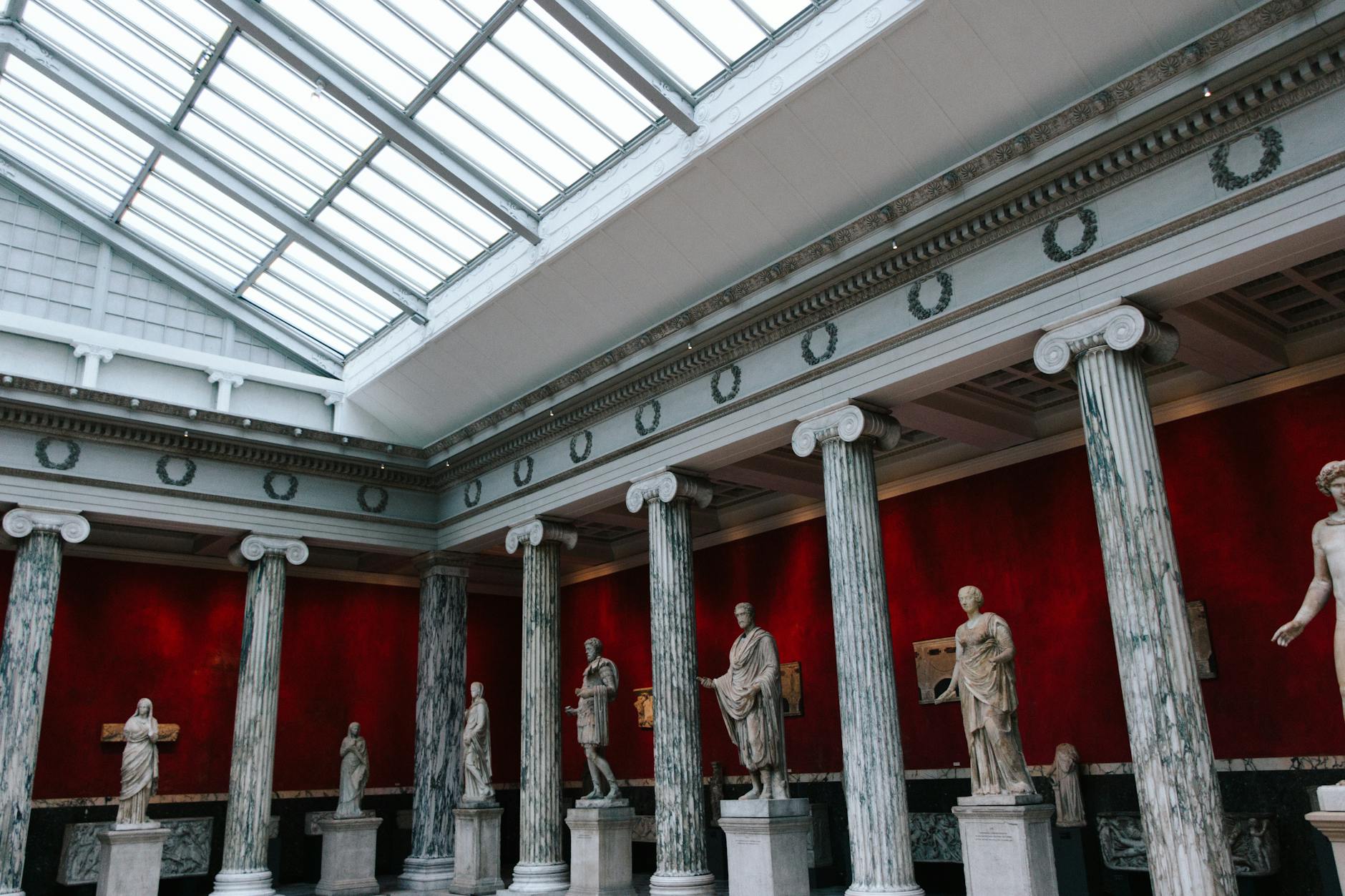
The Adolescent Empire's Grand Tour: Why Every Rising Culture Eventually Packs Its Bags for Rome
Let us begin with an uncomfortable observation. When a twenty-three-year-old American arrives in Florence for the first time — standing in the Piazza della Signoria with a slightly damp map, experiencing what they will later describe as a transformative moment — they are doing something that a twenty-three-year-old Roman aristocrat did in Athens roughly two thousand years earlier. The clothes are different. The transportation is different. The selfie capability is dramatically different. But the psychological transaction being conducted is identical, and the historical record is long enough that we can now see it for what it is.
This is not a flattering observation. But it is a useful one.
Rome Goes to School in Athens
By the second century BCE, it had become standard practice among Rome's elite families to send their sons to Athens for an education. The Greek city was, at that point, a conquered province of the Roman Republic — politically subordinate, militarily irrelevant, and culturally dominant in a way that the Romans found simultaneously irritating and irresistible. Athens had the philosophers, the rhetoric schools, the architecture, the accumulated prestige of centuries. Rome had the legions and the administration and the gnawing sense that it had built the most powerful state in the world without quite knowing what to do with it culturally.
The young Romans who traveled to Athens were not going for practical training. They were going for legitimacy. They were going to acquire the cultural fluency that raw power could not purchase — the ability to quote Plato correctly, to argue in Greek, to understand the references that marked a person as civilized rather than merely successful. Cicero went. Julius Caesar went. Augustus sent his adopted son Gaius. The pattern was so consistent that it became effectively mandatory for any Roman who aspired to serious public life.
What is striking, from a long historical distance, is the mixture of reverence and anxiety that Roman writers express about this pilgrimage. They admired Greece. They also resented needing to admire it. Horace — the same traveler whose road complaints we might recognize from any modern review platform — captured the ambivalence precisely when he wrote that "captive Greece took captive her fierce conqueror." Rome had won the war and lost the cultural argument, and the grand tour to Athens was the annual acknowledgment of that defeat.
If you have ever watched an American in a European museum — the particular combination of genuine wonder and defensive self-consciousness, the slight over-performance of appreciation — you have seen the same emotional weather system that Horace was describing.
The British Invention of the Grand Tour as Institution
The phenomenon reached its most formalized expression in eighteenth-century Britain, when the Grand Tour became a recognized institution — almost a rite of passage with its own geography, itinerary, and social grammar. Young aristocrats, having completed their education at Oxford or Cambridge, were dispatched to the Continent for periods ranging from several months to several years. The canonical route ran through Paris, across the Alps, and down through Italy: Turin, Florence, Rome, Naples, and back. The purpose was explicitly self-improving. The young traveler was expected to return with refined taste, conversational French, an appreciation for classical art, and the social poise that came from having navigated foreign courts and salons.
The British Grand Tour was, in retrospect, an almost perfectly transparent expression of cultural insecurity dressed as cultural confidence. Britain in the eighteenth century was becoming the dominant global power — commercially, militarily, and eventually industrially. And yet it looked at France and Italy and saw something it lacked: depth. History. The accumulated weight of centuries of art, architecture, and intellectual tradition that could not be manufactured or imported, only absorbed through sustained presence.
The Grand Tourist brought back paintings, sculptures, architectural drawings, and antiquities in quantities that were, by any honest assessment, colonial in their scale. The British Museum is, among other things, a monument to the acquisitive anxiety of a rising power that needed to prove it understood what civilization meant. The objects were evidence. They said: we were there, we recognized the value, we belong in this conversation.
The American Chapter: Rick Steves and the Eternal Return
The American version of this pattern requires less historical distance to recognize, which makes it both easier to describe and more uncomfortable to sit with. The postwar American relationship with European travel has followed the Grand Tour template with a fidelity that would be almost parodic if it were not so genuinely felt.
The markers are consistent across generations. Europe is where Americans go to encounter history, art, and a relationship with time that feels inaccessible at home. It is where they go to feel educated rather than merely informed, cultured rather than merely prosperous, sophisticated rather than merely competent. The specific destinations shift with generational taste — London and Paris for the postwar generation, Florence and Prague for the nineties traveler, Lisbon and Ljubljana for the present moment — but the underlying transaction remains constant. The American goes to Europe to receive something that America, in the traveler's private assessment, cannot provide.
This is not an ignoble impulse. The desire to encounter something older and more layered than your own formation is a genuine form of intellectual hunger. But the historical record is clear that it is not, as it is sometimes framed, a mark of unusual sophistication. It is the predictable behavior of a civilization in a particular phase of its development — the phase in which raw capability has outrun cultural confidence, and the instinct is to go looking for the credential that will close the gap.
Every rising culture does this. Every rising culture believes it invented the impulse. None of them did.
What the Pattern Actually Reveals
The historical record of this behavior, read carefully, suggests something that most travel writing declines to say directly: the Grand Tour, in all its iterations, is as much about the traveler's relationship with themselves as it is about the destination. The young Roman in Athens was not primarily learning about Greece. He was constructing a version of himself that could operate in Roman public life. The British aristocrat in Florence was not primarily appreciating Botticelli. He was acquiring the social vocabulary of a class that needed to justify its authority through culture rather than just inheritance. The American in Paris is not primarily experiencing France. They are testing a version of themselves against a backdrop that has been pre-loaded with significance.
This is not a criticism. It is a description of how human beings actually use travel — as a mirror, as a stage, as a laboratory for identity. The destination is real, but it is also a prop in a drama that is fundamentally about the traveler.
The question the pattern raises, for the American traveler specifically, is this: if the Grand Tour impulse is not about the destination but about the traveler's need for a particular kind of encounter — with age, with depth, with the accumulated weight of human experience — then Europe is not the only place that provides it. Japan has been building cities for longer than Britain has existed as a unified nation. The ruins of Carthage predate the Roman forum. The trading cities of West Africa were conducting sophisticated international commerce when London was a muddy river settlement.
The American who travels to Europe for self-improvement is doing something ancient and deeply human. The American who notices the pattern, and asks what it is actually in service of, might find that the most transformative journey available is not the one that every previous rising culture has already made.
The past is the best guide to where you're going. Sometimes it points somewhere you didn't expect.