The Manufactured Dream: How 19th-Century Resort Architects Invented Modern FOMO
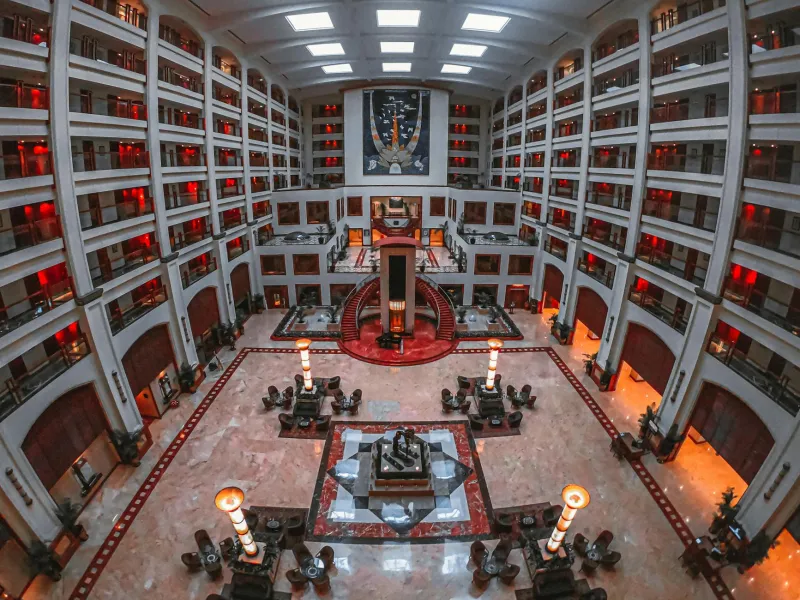
The Birth of Artificial Scarcity
In 1869, Henry Morrison Flagler stood in the swamplands of Florida and saw something that did not yet exist: a winter paradise that wealthy Americans would fight each other to experience. The Standard Oil magnate understood a fundamental truth about human nature that modern travel marketers have simply repackaged with better cameras—people do not want what they need, they want what they believe others are having without them.
Flagler's Ponce de León Hotel in St. Augustine became the template for manufactured travel desire. He did not simply build a hotel; he constructed an elaborate theater of exclusivity. The building itself was designed to photograph well in newspapers, with its distinctive Spanish Renaissance architecture providing visual shorthand for luxury that could be reproduced in black and white illustrations across the country.
But the architecture was just the stage. The real innovation lay in Flagler's understanding of social psychology. He knew that desire spreads like a contagion, and like any good epidemiologist, he identified his patient zero: the right kind of celebrity guest.
Celebrity Endorsement Before Celebrity Culture
When President Grover Cleveland honeymooned at the Ponce de León in 1886, it was not a coincidence. Flagler had spent months orchestrating the visit, understanding that presidential presence would create a gravitational pull for America's emerging upper class. The hotel's guest registry read like a who's who of Gilded Age society: Astors, Vanderbilts, Whitneys—names that carried social currency in an era when social currency was the only currency that mattered for the newly wealthy.
The psychological mechanism at work was what modern behavioral economists call social proof, but the hotel barons called it something simpler: keeping up with the Joneses. Every carefully leaked guest list, every society column mention, every staged photograph of well-dressed families enjoying themselves created a feedback loop of desire. If the Astors were there, what did it say about you that you were not?
This was not accidental. Hotel publicity departments—among the first of their kind in American business—employed teams of writers whose sole job was to plant stories in newspapers across the country. They understood that the product they were selling was not rooms or meals, but the feeling of being included in something exclusive.
The Science of Suggestion
The Greenbrier in West Virginia perfected another piece of the puzzle: the illusion of discovery. While marketing itself as a hidden retreat for those "in the know," the resort simultaneously worked to ensure that knowledge of its exclusivity was as widespread as possible. Their publicity materials spoke of "discerning guests" and "those who understand true luxury," language designed to make readers feel that not knowing about the Greenbrier revealed a deficit in their cultural sophistication.
This psychological sleight of hand—making the mainstream feel exclusive while ensuring broad awareness—is identical to the mechanism behind every "hidden gem" travel blog post today. The Greenbrier's marketing team understood that people want to feel special, but they also want to feel safe in their choices. The resort offered both: the thrill of exclusivity and the comfort of social validation.
The Del Monte Hotel in Monterey, California, took this further by creating artificial scarcity around the experience itself. Rather than simply opening their doors to anyone who could pay, they instituted a complex system of references and social vouching. Potential guests needed introductions from existing patrons, creating a social network effect that made admission feel like joining a club rather than booking a room.
The Original Content Strategy
What modern travel marketers call "content strategy," the grand hotels called "atmosphere creation." The Palace Hotel in San Francisco employed a full-time photographer whose job was to document the hotel's social life—the elegant dinners, the well-dressed guests, the moments of leisure that suggested a life elevated above ordinary concerns.
These photographs were not kept as private mementos. They were distributed to newspapers, included in promotional materials, and displayed in the hotel lobbies themselves. Guests could see themselves as part of an ongoing narrative of sophistication and success. The photography served the same function as today's Instagram posts: proof that something enviable was happening, and documentation that you were part of it.
The psychological insight was profound: people do not just want to have experiences, they want to be seen having experiences. The grand hotels understood that half the value of their product was in its social signaling potential. A stay at the Del Monte was not just a vacation; it was a credential.
The Mechanics of Modern Influence
When today's travel influencers post carefully curated images of themselves in exotic locations, they are using a playbook written by Henry Flagler's publicity team. The mechanisms are identical: create artificial scarcity, leverage social proof, make the mainstream feel exclusive, and always, always make sure people understand what they are missing.
The only difference is speed and scale. Where the grand hotels needed months to plant stories in newspapers across the country, Instagram can create global FOMO in minutes. But the psychological triggers remain unchanged because human psychology remains unchanged.
Understanding this history provides modern travelers with a crucial advantage: the ability to distinguish between genuine desire and manufactured want. When you find yourself desperately wanting to visit a destination because of what you have seen online, ask yourself whether you are responding to the place itself or to the theater of exclusivity that has been built around it.
The grand hotel barons knew something that every traveler should remember: the most powerful marketing does not sell you a product, it sells you a version of yourself. The question is whether that version is one you actually want to become.