Manufacturing Heritage: The American Art of Inventing Yesterday to Sell Tomorrow
The Birthplace Industry
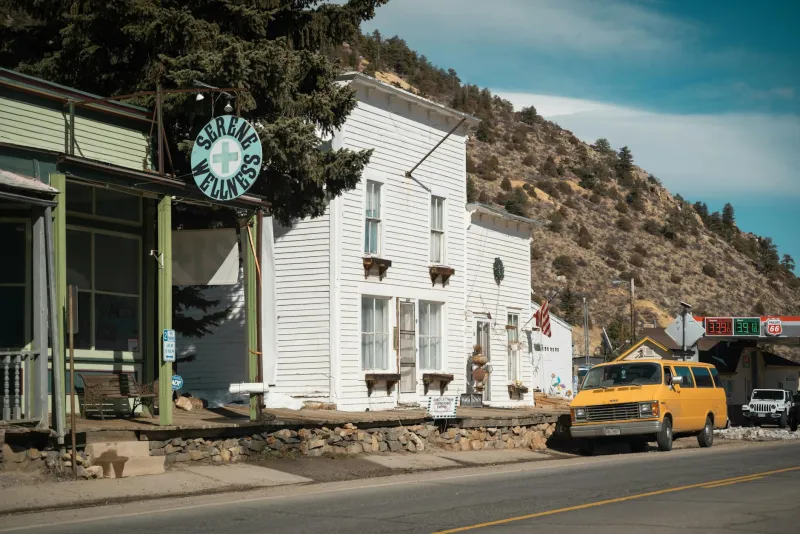
Drive through small-town America and you'll encounter a peculiar phenomenon: an improbable number of "firsts." The first McDonald's, the birthplace of Route 66, the oldest continuously operating general store, the site where Lincoln allegedly slept. These claims multiply beyond statistical possibility, yet each draws visitors willing to detour from their planned routes.
This isn't accidental. It's the continuation of a marketing strategy that American communities have refined for over two centuries. The recognition that in a country without ancient ruins or royal castles, history itself becomes a manufactured commodity.
The George Washington Slept Here Economy
The template was established early. By 1825, barely fifty years after the Revolution, American taverns and inns had discovered the economic value of presidential provenance. "Washington Slept Here" signs proliferated along the Eastern seaboard at a rate that would have required the first president to spend every night of his adult life in a different establishment.
This wasn't fraud in the traditional sense. It was the pragmatic recognition that travelers sought connection to something larger than their immediate experience. The innkeeper who claimed Washington's patronage understood something profound about human psychology: people will pay premium prices for proximity to significance, even when that significance is largely symbolic.
The practice spread westward with the frontier. Log cabins claimed association with Lincoln. Trading posts invented connections to Lewis and Clark. Saloons manufactured Wild West pedigrees. Each community learned the same lesson: a good story was worth more than good roads.
The Medieval Parallel
This phenomenon wasn't uniquely American. Medieval European towns had perfected similar strategies centuries earlier. The proliferation of "authentic" pieces of the True Cross — enough wood to build a small forest, according to skeptical Renaissance scholars — represented the same economic logic. Communities that could credibly claim holy relics attracted pilgrims, and pilgrims brought commerce.
The psychological mechanism driving a medieval pilgrim to visit a dubious relic is identical to what motivates a modern tourist to photograph a historically questionable birthplace marker. Both seek what anthropologists call "sacred geography" — physical locations that provide tangible connection to narratives larger than their individual lives.
The Authenticity Paradox
Modern tourism boards face a sophisticated version of the same challenge their 19th-century predecessors encountered: how to market authenticity in a marketplace where authenticity itself becomes a performance. The solution has remained remarkably consistent: emphasize the emotional truth over the historical facts.
Consider Tombstone, Arizona. The town's current incarnation as a Wild West theme park bears little resemblance to its brief historical reality as a mining settlement. Yet millions of visitors participate enthusiastically in gunfight reenactments and saloon experiences that fulfill their expectations of what the Old West should feel like.
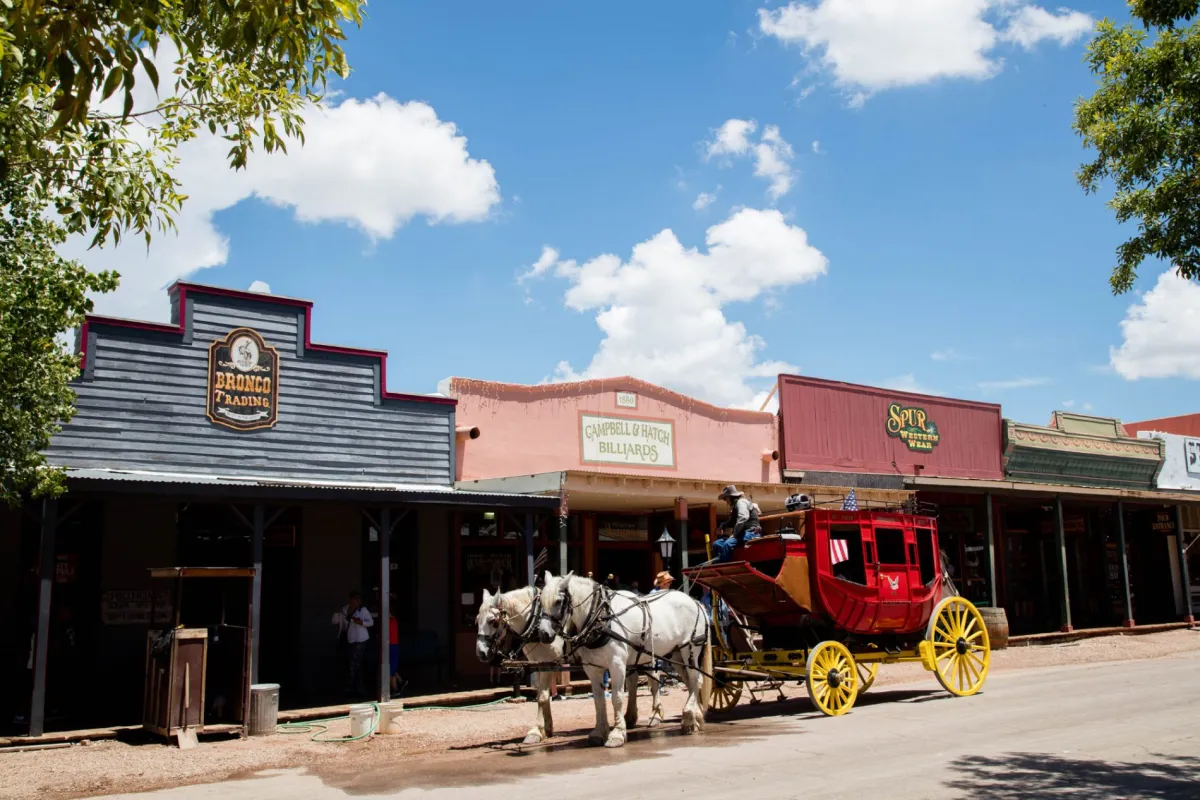 Photo: Tombstone, Arizona, via rovingvails.com
The success of Tombstone's manufactured mythology demonstrates something important about the relationship between history and tourism: visitors don't seek historical accuracy as much as they seek historical satisfaction. The story needs to feel true more than it needs to be true.
The Ghost Tour Gold Rush
Contemporary America's "most haunted" designations represent the latest evolution of this ancient strategy. Savannah, New Orleans, St. Augustine, and dozens of smaller cities compete for supernatural supremacy, each claiming unique concentrations of paranormal activity.
These claims follow predictable patterns. Tragic historical events get amplified into ghost stories. Unexplained phenomena get attributed to specific historical figures. Tour routes get designed to maximize atmospheric effect rather than historical accuracy.
Yet the success of ghost tourism reveals something genuine about human psychology: the desire to experience places where the past feels present. Whether the ghosts are real matters less than whether the experience of connection to history feels authentic.
The Infrastructure of Legend
Successful legend manufacturing requires more than creative storytelling. It demands the construction of what we might call "narrative infrastructure" — physical elements that support and reinforce the chosen story.
Historical markers, museum displays, themed architecture, and interpretive trails all function as technologies for making abstract stories feel concrete. The most successful tourist destinations understand that visitors need physical objects to anchor their emotional experiences.
This explains why gift shops selling historically themed merchandise aren't just revenue streams but essential components of the storytelling apparatus. The replica arrowhead or vintage postcard serves as a physical reminder that transforms a tourist's memory from "I visited a place" to "I experienced something significant."
The Democracy of Heritage
What makes American heritage manufacturing distinctive is its democratic character. Unlike European tourism, which relies heavily on aristocratic history, American communities have learned to find significance in ordinary stories. The general store, the one-room schoolhouse, the covered bridge — these become sacred sites not because of their grandeur but because of their representativeness.
This democratization of heritage reflects something fundamental about American culture: the belief that significance can be found anywhere, created by anyone, and marketed to everyone. It's a profoundly optimistic worldview that transforms every small town into a potential destination.
Reading the Legends
For the informed traveler, understanding the psychology behind heritage manufacturing enhances rather than diminishes the experience. Recognizing that Custer's Last Stand has been reimagined multiple times for different audiences doesn't make the Little Bighorn less meaningful — it makes the human need to find meaning in landscape more visible.
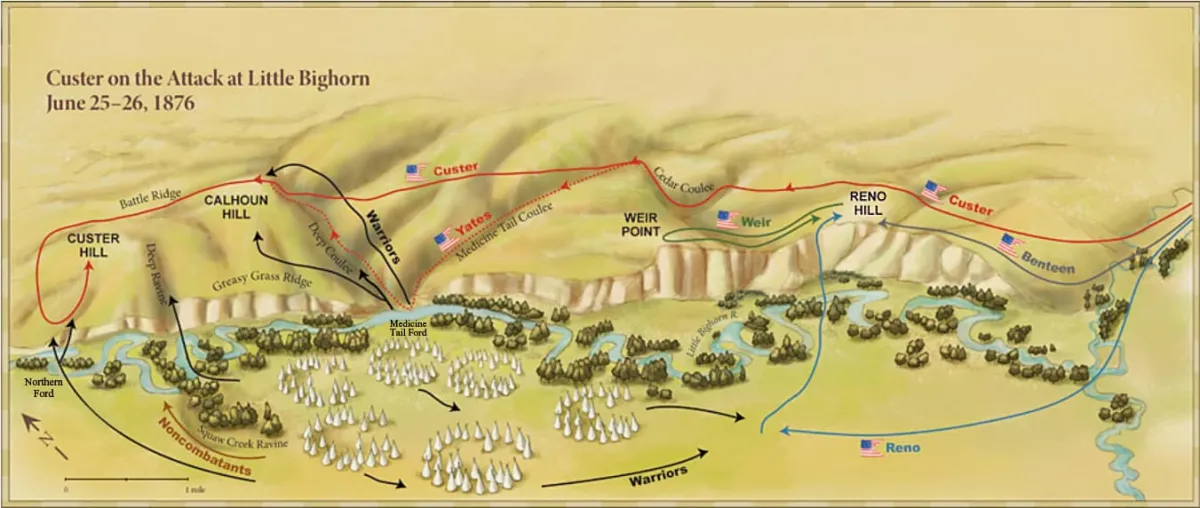 Photo: Little Bighorn, via mlewx3rizjsy.i.optimole.com
The key is learning to read the layers. Which elements of a town's story reflect genuine historical research? Which represent 20th-century romantic interpretation? Which serve current marketing needs? The stratification of legend reveals as much about American culture as the original events themselves.
The most sophisticated heritage destinations acknowledge this complexity rather than hiding it. They invite visitors to participate consciously in the construction of meaning rather than passively consuming predetermined narratives.
The Eternal Return
The manufacturing of heritage serves a function deeper than economic development. It addresses the fundamental human need to locate individual experience within larger patterns of meaning. The tourist who photographs a historical marker isn't just documenting their visit — they're participating in a ritual of connection that links them to both past and future.
This ritual function explains why heritage tourism remains resilient despite increasing skepticism about historical accuracy. The psychological need it serves — the desire to touch something larger than ourselves — transcends the specific truth claims of any individual story.
American communities that understand this psychology will continue to thrive in the tourism economy. Those that focus only on historical facts without attending to emotional truth will find themselves bypassed by travelers seeking more satisfying narratives elsewhere.
The past, as always, belongs to whoever tells its story most convincingly.