The Universal Clock
Every act of hospitality contains an invisible expiration date. This isn't modern rudeness or contemporary time pressure—it's a psychological constant that anthropologists have documented across every known human culture for the past five thousand years. The ancient Greeks had a word for it: xenia, the sacred duty of hospitality that came with equally sacred boundaries.
What makes this pattern so consistent across time and geography is that it's rooted in fundamental human psychology rather than cultural convention. The same neural mechanisms that create the initial warmth of welcome also generate the eventual fatigue of hosting. Understanding this isn't about becoming cynical about human nature—it's about becoming skilled at reading the signals that every host unconsciously broadcasts.
The Greek Template
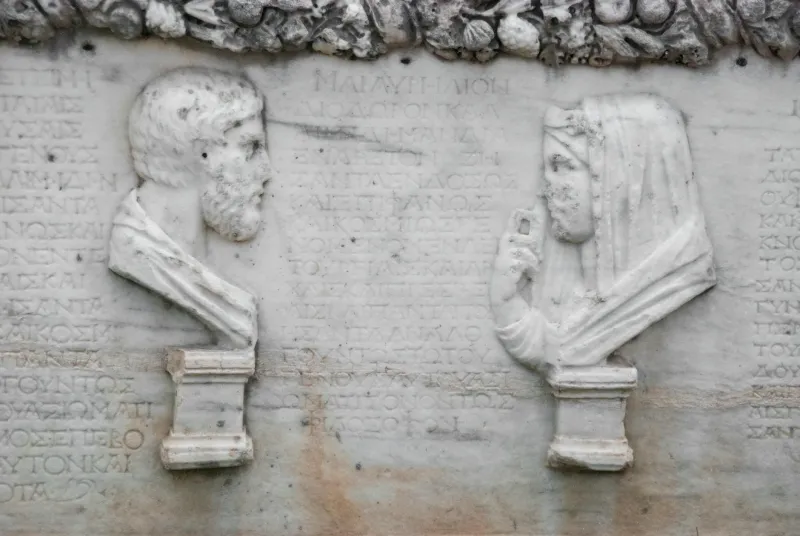
Ancient Greek hospitality laws provide the clearest historical framework for understanding how this psychology operates. Under xenia, hosts were obligated to feed, shelter, and protect strangers without even asking their names or business. This radical generosity came with an equally radical expectation: guests would recognize when their welcome had expired and depart gracefully.
The system worked because both parties understood the unspoken contract. Hosts offered unlimited generosity for a limited time. Guests accepted unlimited obligation to read the signs correctly. Violating either side of this arrangement wasn't just rude—it was considered a form of spiritual pollution that could bring divine punishment.
This ancient framework reveals something crucial about modern travel situations: the discomfort you feel when you've stayed too long isn't social anxiety—it's evolutionary wisdom detecting a violated contract.
The Benjamin Franklin Principle
Benjamin Franklin's famous observation that "fish and visitors smell in three days" wasn't original wit—it was recognition of a pattern he'd observed across cultures during his diplomatic travels. Franklin understood that hospitality fatigue follows a predictable timeline regardless of how much the host initially enjoyed the guest's company.
 Photo: Benjamin Franklin, via static.wixstatic.com
Modern psychology has confirmed Franklin's intuition with remarkable precision. Studies of host-guest relationships show that enthusiasm peaks in the first 24-48 hours, plateaus briefly, then begins a steady decline that accelerates after day three. This isn't about personalities or relationship quality—it's about the cognitive load of maintaining altered household routines.
The practical insight: if you're staying with friends, family, or even in someone's rental property, the three-day mark represents a psychological inflection point. Stays longer than this require active management of the host relationship, not just passive enjoyment of their generosity.
Reading the Modern Signals
Contemporary hosts rarely express welcome fatigue directly. Instead, they broadcast it through subtle behavioral changes that follow remarkably consistent patterns. Learning to recognize these signals isn't about becoming paranoid—it's about developing the social intelligence that made ancient travelers successful.
The first signal is temporal: conversations about your departure plans increase in frequency and specificity. This doesn't mean you're unwelcome—it means your host is psychologically preparing for the return to normal routine. Skilled guests respond by proactively confirming departure details rather than waiting for direct requests.
The second signal is spatial: your host begins reclaiming shared spaces through small organizational activities. Books get reshuffled, kitchen items return to specific locations, personal belongings migrate back to their usual spots. This isn't passive-aggressive behavior—it's unconscious preparation for restored domestic control.
The third signal is energetic: interactions become slightly more effortful for your host. Responses take longer, suggestions become less elaborate, and social initiatives decrease. This fatigue isn't personal rejection—it's the natural result of sustained hosting performance.
The Airbnb Evolution
The rise of short-term rental platforms has created a fascinating modern laboratory for studying hospitality psychology. Even in commercial hosting relationships where guests pay for accommodation, the same psychological patterns emerge. Hosts who initially provide extensive local recommendations and personal attention often become more businesslike as stays extend beyond the expected duration.
This commercial context reveals something important: hospitality fatigue isn't about money or formal obligations. It's about the psychological energy required to maintain awareness of another person's needs and comfort within your space. Even when compensated, this awareness becomes cognitively expensive over time.
Smart Airbnb guests recognize this by gradually reducing their demands on host attention as their stay progresses, regardless of what the host initially offered to provide.
The War-Level Consequences
History provides dramatic examples of what happens when guests fundamentally misread hospitality boundaries. The Trojan War, according to Homer, began when Paris violated the hospitality of Menelaus by seducing his wife during an extended stay. While obviously mythological, this story reflects a genuine cultural understanding that hospitality violations could justify extreme responses.
 Photo: Homer, via pngimg.com
 Photo: Trojan War, via englishodyssey.weebly.com
More recent historical examples include diplomatic incidents caused by ambassadors who overstayed ceremonial welcomes, trade relationships destroyed by merchants who misread commercial hospitality, and family feuds triggered by relatives who couldn't recognize when visits had become impositions.
These extreme cases illuminate a practical truth: the social cost of overstaying is almost always higher than the economic cost of leaving early.
The Practical Algorithm
Successful travelers throughout history have operated according to an unwritten algorithm for managing hospitality relationships. First, they arrive with a clearly communicated departure plan, giving hosts a psychological endpoint to anticipate. Second, they monitor their own impact on household routines and adjust their behavior to minimize disruption as time progresses. Third, they watch for the subtle signals of host fatigue and respond proactively rather than reactively.
Most importantly, they understand that graceful departure is part of graceful arrival. The goal isn't to maximize the length of welcome but to leave while welcome still exists, ensuring future invitations remain possible.
The Modern Application
Whether you're staying with friends, renting someone's property, or even occupying a hotel room that staff must service, the same psychological principles apply. Hospitality is a finite resource that regenerates through absence, not presence. The most successful travelers are those who understand this limitation and work within it rather than against it.
This doesn't mean cutting trips short or avoiding longer stays. It means recognizing that extended visits require different skills than brief ones—specifically, the ability to read psychological cues and adjust expectations accordingly. The ancient Greeks understood this wisdom three thousand years ago. Modern travelers who learn it find that their welcome, like their memory, lasts much longer.