The Standardization of Adventure: How America's Greatest Highway Project Killed the Journey
The Promise of Endless Possibility
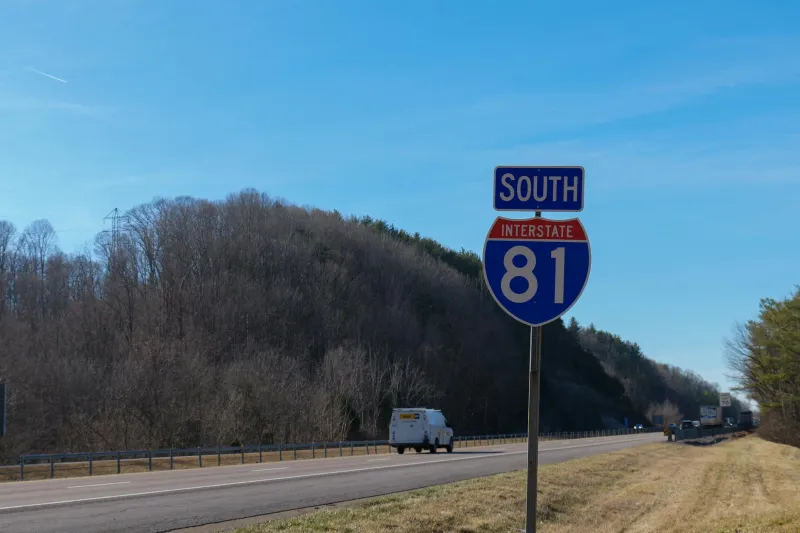
In 1956, President Dwight Eisenhower signed the Federal-Aid Highway Act, launching the largest public works project in American history. The Interstate Highway System would span 41,000 miles, connecting every corner of the continent with ribbons of concrete that promised something revolutionary: the freedom to go anywhere, anytime, without constraint.
The marketing was intoxicating. Americans could finally break free from the tyranny of train schedules and airline routes. The open road beckoned with infinite possibility. You could wake up in Chicago and sleep in Denver, stop wherever curiosity called, discover hidden gems that no guidebook had catalogued. The interstate would democratize adventure itself.
But human psychology reveals a different truth. When presented with unlimited options, travelers don't embrace uncertainty—they flee from it. The same psychological patterns that drove medieval pilgrims to follow well-worn routes to Santiago de Compostela would soon transform America's highways into corridors of comfortable predictability.
The Roadside Revolution Nobody Saw Coming
Within a decade of the interstate's completion, something remarkable happened along its margins. Howard Johnson's orange roofs began sprouting at regular intervals like mile markers. Holiday Inn's cheerful signs promised "No Surprises"—and meant it literally. McDonald's golden arches became more reliable navigation aids than compass readings.
This wasn't an accident. It was the inevitable response to a fundamental human need that highway planners had overlooked: the desire for certainty within uncertainty. Ancient Roman travelers faced the same psychological tension. They wanted the adventure of the journey but demanded the security of knowing where their next meal would come from. Roman tabernae (roadside inns) developed standardized services for exactly this reason.
The interstate's corporate colonizers understood what Rome's innkeepers had grasped two millennia earlier: travelers will pay premium prices for the elimination of surprise. Howard Johnson's didn't just serve food; it served the promise that a clam roll in Kansas would taste identical to one in Connecticut. Holiday Inn didn't just provide beds; it provided the guarantee that check-in procedures in Phoenix would mirror those in Pittsburgh.
The Paradox of Manufactured Freedom
By 1970, the American road trip had become a masterpiece of managed experience. Families could drive coast to coast while encountering fewer genuine surprises than a medieval merchant traveling between adjacent villages. The interstate had created something unprecedented in human history: a journey without discovery.
Consider the psychological mechanics at work. Traditional travel had always involved a fundamental trade-off between comfort and authenticity. Marco Polo's journey to China was transformative precisely because it was unpredictable, dangerous, and filled with genuine unknowns. American interstate travel eliminated this trade-off by industrializing authenticity itself.
Roadside attractions sprouted along the highways, each one carefully designed to deliver "unique" experiences that were actually mass-produced. Wall Drug in South Dakota became famous for being famous. The World's Largest Ball of Twine in Kansas offered the illusion of discovery while operating on the McDonald's model of standardized product delivery.
The Economics of Eliminating Adventure
The financial incentives were perfectly aligned. Franchise operators needed predictable profit margins, which required predictable customer behavior. Travelers needed predictable services, which required standardized experiences. Insurance companies needed predictable risk profiles, which required eliminating the variables that had made travel adventurous for thousands of years.
This created a feedback loop that would define American travel psychology for generations. The more standardized the roadside became, the more travelers came to expect standardization. The more they expected it, the more businesses provided it. Within a generation, the idea of stopping at an unknown local restaurant seemed not adventurous but reckless.
Compare this to the travel patterns of earlier eras. Eighteenth-century American travelers wrote extensively about the uncertainty of their journeys—bad roads, unreliable accommodations, unexpected delays. But their journals also reveal something modern interstate travelers rarely experience: genuine surprise, authentic local encounters, and the kind of serendipitous discoveries that create lasting memories.
What We Actually Bought
The interstate highway system succeeded beyond its designers' wildest dreams, but not in the way they intended. It didn't create a nation of bold explorers striking out into the unknown. Instead, it produced the most risk-averse travelers in human history, people who could cross a continent while experiencing less cultural variation than a Roman citizen traveling between neighboring provinces.
This reveals something profound about American psychology. When we say we want freedom, we often mean we want the feeling of freedom without its inherent uncertainties. The interstate gave us exactly that: the sensation of adventure wrapped in the security of predictability.
The highway system's true genius wasn't engineering—it was psychological. It satisfied our contradictory desires for both exploration and safety, novelty and familiarity, freedom and security. It gave us the romance of the open road while eliminating everything that had made roads romantic.
The Long View
Today's GPS-guided, app-optimized travel represents the logical evolution of patterns that began with America's first interstate highways. We've simply digitized the same fundamental desire: the elimination of uncertainty from the journey. Our smartphones have become the ultimate Howard Johnson's—promising that every destination will deliver exactly what we expect, nothing more, nothing less.
Understanding this history helps explain why modern "authentic" travel experiences often feel so manufactured. We're the inheritors of a travel culture that spent half a century systematically removing spontaneity from the journey. The open road didn't make us free—it taught us to prefer our adventures pre-packaged, our discoveries pre-approved, and our surprises carefully managed.
The interstate highway system remains one of humanity's great achievements. But its true legacy isn't the roads themselves—it's the transformation of the American traveler from explorer to consumer, from adventurer to customer, from someone who journeys into the unknown to someone who drives familiar routes to predictable destinations. The road that promised everything delivered exactly what we asked for, which turned out to be nothing we hadn't seen before.