The Theater of Arrival: How America's Gilded Age Invented the Performance of Travel
The Original Influencers Wore Bustles
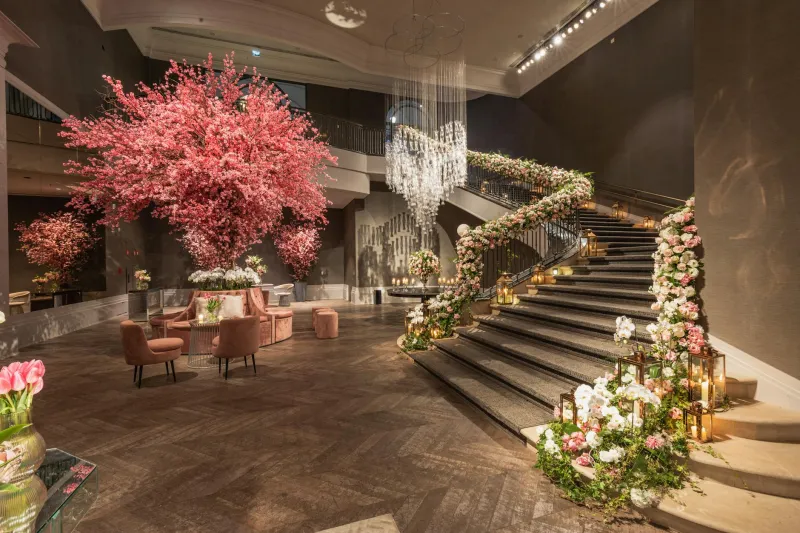
In the summer of 1885, a steel magnate's wife spent three hours each morning preparing for her descent down the grand staircase of Saratoga Springs' United States Hotel. Her entrance into the lobby was choreographed down to the minute—timed to coincide with the arrival of the morning newspapers, when the maximum number of witnesses would be present to observe her Worth gown, her imported French maid, and the calculated casualness with which she acknowledged other guests.
This woman understood something that modern travelers posting sunset photos from Santorini have forgotten they know: the audience has always been more important than the experience.
The Gilded Age resort circuit—stretching from Saratoga Springs to Newport, from the Catskills to Bar Harbor—operated as America's first social media platform. The medium was physical presence rather than digital posts, but the psychology was identical. Wealthy Americans invested extraordinary sums not in the pleasure of travel itself, but in the careful curation of how that travel would be perceived by their peers.
The Architecture of Being Seen
The grand hotels of this era were designed as stages for social performance. The United States Hotel's lobby stretched 300 feet, providing maximum visibility for entrances and exits. The Grand Union Hotel featured a piazza that ran the length of the building—a promenade specifically engineered for displaying oneself to other guests.
These architectural choices were not accidents. Hotel developers understood that their guests were paying premium rates not for luxury accommodations, but for the right to perform their wealth and taste before the correct audience. The buildings themselves were elaborate sets constructed to facilitate this theater.
Consider the ritual of "taking the waters" at Saratoga Springs. The supposed health benefits of the mineral springs were largely incidental to the real purpose: the morning parade to the spring houses provided a daily opportunity for guests to display new outfits, acknowledge social equals, and subtly snub those deemed beneath their station. The water was simply a prop in an elaborate social drama.
The Economics of Impression Management
The financial investments required for this performance were staggering. A typical stay at a premier resort could cost the equivalent of $50,000 in today's currency—not including the extensive wardrobe required for multiple daily costume changes. Wealthy families maintained separate sets of servants specifically for travel, whose primary function was not comfort but the maintenance of appearances.
Newport's cottage owners spent millions creating summer "homes" that would be occupied for perhaps six weeks annually. The real estate was not purchased for habitation but for the social theater it enabled. Mrs. William Backhouse Astor Jr.'s ballroom could accommodate 400 guests—not because she particularly enjoyed large parties, but because the size of one's gatherings served as a precise measurement of social influence.
This economic logic mirrors exactly the hidden costs of modern travel performance. Today's travelers budget for experiences they can photograph rather than experiences they might enjoy. The Instagram-worthy restaurant, the photogenic hotel, the scenic viewpoint that will generate likes—these choices represent the same fundamental calculation that drove Gilded Age resort behavior.
The Unchanged Psychology of Witness
What the steel magnate's wife and the modern travel influencer share is an understanding that experiences without witnesses lack social value. The Gilded Age resort guest who spent her morning choreographing a lobby entrance was operating from the same psychological framework as the contemporary traveler who interrupts dinner to photograph each course.
Both recognize that travel's primary function is not personal enrichment but social signaling. The destination serves as a backdrop for demonstrating one's resources, taste, and access to exclusive experiences. The actual pleasure derived from the journey is secondary to its utility as a tool for status communication.
This is why the same psychological patterns persist across technological revolutions. The medium changes—from physical presence to digital posts—but the underlying human need to demonstrate social position through travel choices remains constant. Understanding this continuity allows modern travelers to make more honest assessments of their motivations.
The Performance Trap
The Gilded Age resort circuit eventually collapsed under the weight of its own artificiality. By the 1920s, the elaborate social theater had become so disconnected from genuine pleasure that even its primary participants began to find it hollow. The rise of automobile travel offered an escape from the performative constraints of fixed resort society.
Contemporary travel faces a similar risk. When the performance becomes more important than the experience, when the documentation overshadows the moment being documented, travel loses its capacity to provide genuine refreshment or insight. The Gilded Age offers a cautionary example of what happens when the audience becomes more important than the journey.
Choosing Your Stage Wisely
The lesson for modern travelers is not to abandon all social considerations—humans are inherently social creatures, and sharing experiences serves important psychological functions. Rather, the historical perspective suggests being more conscious about when and why we choose to perform our travels for others.
The steel magnate's wife understood exactly what she was purchasing with her elaborate resort performances: social position and peer recognition. Modern travelers who can be equally honest about their motivations—distinguishing between experiences they want to have and experiences they want to be seen having—are more likely to find satisfaction in their journeys.
The theater of travel will always exist because the psychology that drives it is permanent. The question is whether you're performing consciously, with clear understanding of what you hope to gain, or whether you've simply inherited the script without examining whether it serves your actual needs.