When Privacy Became a Product: How American Hotels Invented Solitude and Sold It Back to Us
The Shared Bed Revolution
In 1794, a French traveler named François-Alexandre-Frédéric de La Rochefoucauld-Liancourt recorded his horror at American inn customs: "One is often obliged to sleep in the same bed with a stranger." What shocked this aristocrat was not an aberration but the universal condition of travel for five thousand years. Privacy, as we understand it today, was not a service the hospitality industry provided—it was a physical impossibility.
Consider the mathematics of movement before the railroad. A typical colonial tavern might house thirty travelers in a space designed for eight. Beds were shared not by choice but by necessity, with sleeping arrangements determined by arrival time, social station, and the innkeeper's judgment of who might rob whom during the night. The concept of paying extra for solitude would have seemed as absurd as purchasing air.
The Architecture of Isolation
The transformation began in earnest during the 1850s, when American hotel magnates like Isaiah Rogers pioneered what architectural historians now call "the privacy revolution." The Tremont House in Boston, opened in 1829, was among the first to offer individual rooms with locks—a luxury so novel that guests frequently forgot to use them, having never owned a key to their sleeping quarters.
But the real innovation wasn't the private room itself. It was the systematic pricing of human solitude. Hotel ledgers from the period reveal a careful calibration of rates based on degrees of isolation: shared dormitories at the bottom, private rooms in the middle, and suites—originally just larger private rooms—at the premium tier. The American hotel industry had discovered something profound: they could charge people for the absence of other people.
This represented a fundamental shift in human psychology that we still live with today. For millennia, communal travel had been both practical necessity and social ritual. The medieval inn's common room wasn't just economical—it was where news traveled, business deals formed, and strangers became temporary allies against the uncertainties of the road. Privacy meant vulnerability, isolation meant danger.
The Victorian Anxiety Machine
The rise of private accommodations coincided with—and likely contributed to—a broader Victorian anxiety about contamination, both physical and moral. Hotel advertisements from the 1870s reveal the marketing language that transformed solitude from necessity into virtue. "Refined guests demand refined separation," proclaimed one Chicago establishment. "The discerning traveler requires sanctuary from the common crowd."
These weren't just selling points—they were social programming. The idea that restoration required isolation was being taught to a generation that had never experienced it. Hotel etiquette manuals of the period are fascinating documents of this transition, offering detailed instructions on how to behave when alone in a room (something their grandparents would never have encountered while traveling).
The psychological impact was immediate and lasting. Travel journals from the 1880s show a marked shift in language: where earlier generations wrote about the people they met on the road, Victorian travelers increasingly wrote about escaping from people. The room had become a refuge rather than merely a place to sleep.
The Premium Loneliness Economy
By the 1890s, American hotels had perfected what we now recognize as the modern hospitality pricing model: the systematic monetization of antisocial behavior. The honeymoon suite—a Victorian invention—represented the ultimate expression of this philosophy. Newlyweds paid extraordinary premiums not for luxury amenities but for guaranteed isolation from other human beings.
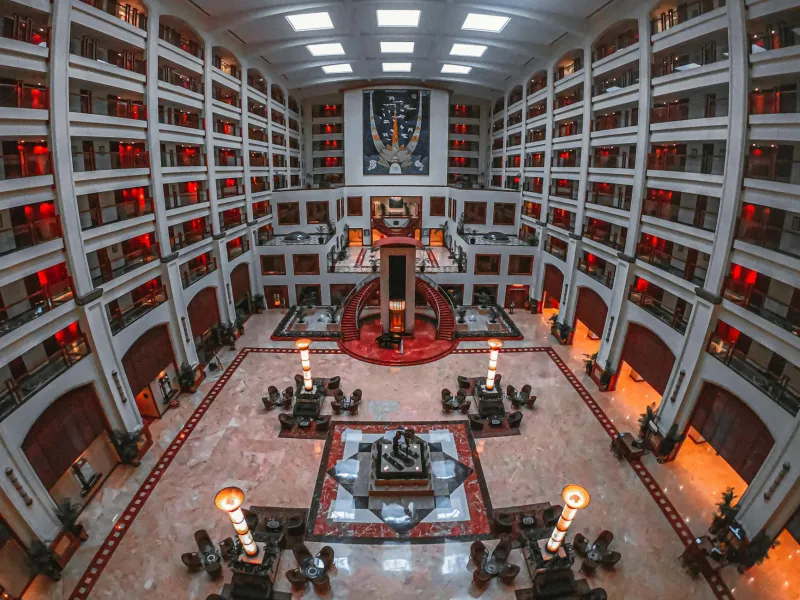
Hotel architects responded by designing increasingly elaborate mechanisms for avoiding contact with fellow guests. Private elevators, separate dining rooms, even discrete entrances—all designed to ensure that wealthy travelers need never acknowledge the existence of anyone else. The grand hotels of the Gilded Age were essentially machines for producing solitude at scale.
The Airbnb Echo
This history illuminates something crucial about contemporary travel psychology. The modern obsession with private villa rentals, entire-home Airbnb listings, and "authentic local experiences" (meaning experiences with no actual locals) isn't a natural preference—it's the inherited ideology of Victorian hotel marketing.
We've been trained to equate privacy with luxury, isolation with restoration, and separation with authenticity. The medieval pilgrim who shared a bed with strangers and learned their stories would find our travel habits incomprehensible. We've purchased privacy so thoroughly that we've forgotten what we traded for it.
The Loneliness We Bought
The Victorian hotel industry's greatest achievement was convincing travelers that other people were the problem rather than the solution. They transformed the communal nature of human movement—which had persisted for millennia as both practical necessity and social good—into a luxury product. Privacy became a commodity, and like all commodities, it required artificial scarcity to maintain its value.
Today's traveler, clutching their keycard to a private room they'll inhabit alone, might pause to consider what their ancestors knew instinctively: the journey was never supposed to be solitary. The road was meant to be shared, stories were meant to be exchanged, and the temporary community of travelers was not an inconvenience to be purchased away but the entire point of leaving home.
The honeymoon suite was never about romance—it was about the profitable isolation of human beings who had evolved to travel together. We bought the privacy, but we're still paying the price.