The Country That Wasn't on the Brochure: Traveling the Territories America Chose Not to Remember
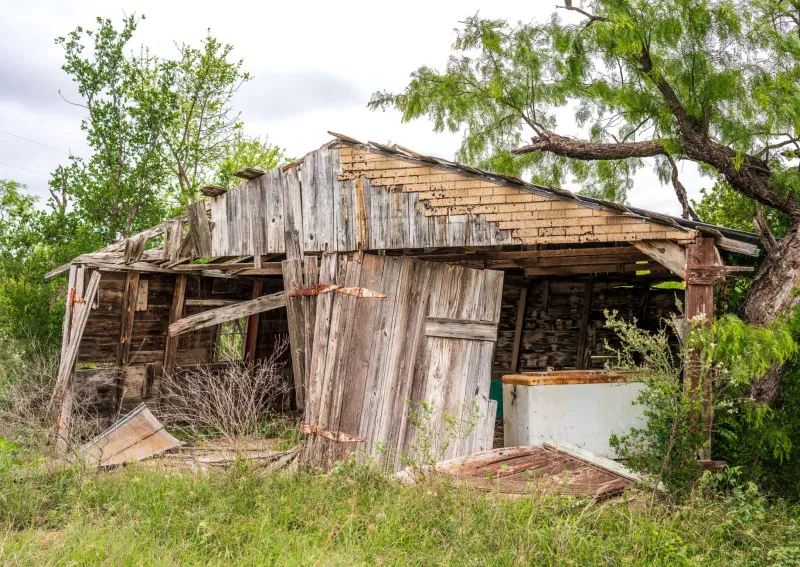
Every civilization has maintained two maps: the one it published and the one it kept folded in a drawer. The published map showed roads, monuments, and the names of towns worth visiting. The hidden map recorded everything the official version required you not to see—the neighborhoods behind the tracks, the communities submerged beneath reservoirs, the settlements whose residents were told, by custom or by law, that they did not belong in the version of the country being constructed for public consumption.
For much of the twentieth century, American travel culture distributed the published map almost exclusively. Tourism boards, automobile clubs, and roadside attraction guides conspired, not always consciously, to route the traveling public away from anything that complicated the national self-image. The result was a geography of selective visibility: some places were everywhere, and some places, for the purposes of leisure travel, simply did not exist.
What is happening now—the deliberate pilgrimage to formerly erased places—is not a new human impulse dressed in contemporary clothing. It is the oldest impulse in travel's long history: the need to see, with one's own eyes, what someone else decided you should not.
The Mechanics of Cartographic Silence
The deliberate exclusion of communities from the geography of American leisure has roots that predate the automobile. Antebellum travel writing largely omitted the interior lives of enslaved people from plantation tour narratives, rendering invisible the majority population of entire regions. Native American settlements, when they appeared at all in nineteenth-century travel literature, were framed as curiosities or obstacles rather than as the continuous, functioning societies they were. Chinese communities that built the transcontinental railroad were systematically excluded from the celebratory tourism that the railroad itself enabled.
The mid-twentieth century formalized what had previously been informal. Sundown towns—municipalities that enforced, through ordinance or threat, the departure of Black residents before nightfall—existed in every region of the country, not merely the South. The Green Book, published annually from 1936 to 1966, was not a celebration of Black travel culture so much as a survival document: a shadow map produced because the official one had been made deliberately hostile. That a Black motorist required a separate publication to navigate safely through his own country is not a footnote. It is a primary document of what American geography actually was.
Those communities did not disappear when the Green Book ceased publication. They were simply unaddressed.
What Arrives When the Traveler Finally Does
The contemporary traveler who visits Rosewood, Florida—the Black community destroyed in a 1923 massacre and thereafter largely absent from state tourism—is not merely satisfying historical curiosity. Something more complicated is occurring. The act of arriving at a place that was made to disappear is itself a form of testimony. It says: I know this was here. I came anyway. I stood here.
This behavior has precise historical analogues. Medieval pilgrims traveled to sites of martyrdom in part because the physical act of presence was understood to carry moral weight that reading about the event could not replicate. The journey to Gettysburg in the years immediately following the Civil War served a similar function—not simply commemoration, but a compulsion to make the body a witness to what the mind had been told. What differs in the current moment is that many travelers are arriving at sites their own family histories actively suppressed, which introduces a dimension of inherited complicity that straightforward commemoration does not require.
A traveler whose grandparents lived in a sundown town and never mentioned it is not merely visiting a historical site. She is visiting a silence. The destination is, in part, the fact of the silence itself.
The Inheritance Nobody Claimed
Family silences around race, displacement, and exclusion are not unique to any single American demographic. The grandchildren of white families who benefited from redlining often arrive in formerly redlined neighborhoods with no conscious awareness of the connection. The descendants of families displaced by federal dam projects—many of them rural white communities in Appalachia, as well as Native American and Black communities throughout the South and West—frequently discover that the lake their parents took them to fish on was built on top of someone else's town.
This is where travel intersects with psychology in ways that no laboratory experiment on a college campus can adequately replicate. The historical record shows, repeatedly and across cultures, that human beings seek physical confirmation of knowledge they find emotionally difficult to hold in the abstract. The Roman traveler who made a point of visiting Carthage after its destruction, the Victorian tourist who insisted on seeing the Irish famine roads, the American who drives to the site of a Japanese American internment camp in the California desert—all are performing the same cognitive act. They are converting an abstraction into a coordinate.
The abstraction, in this case, is guilt. The coordinate is the place where the guilt becomes undeniable.
What the Destination Asks of You
There is a legitimate question embedded in this form of travel, and it is not a comfortable one: what does the community being visited receive from the visit? The history of disaster tourism and dark tourism is not uniformly flattering. Communities that have suffered are not automatically served by being witnessed, particularly when the witness arrives, photographs the suffering, and departs without further engagement.
The most instructive historical model may be that of the witness who stays long enough to be changed. Travelers who visited the Freedom Rider sites in the 1960s and returned home to change their local behavior accomplished something that the tourist who simply checks a location off a list does not. The difference is not in the sincerity of the visit but in what the traveler agrees to carry home.
The places that were kept off the map did not survive their exclusion in order to become backdrops for someone else's self-improvement. They survived because people lived in them and refused to stop. The traveler who arrives at such a place is not completing a journey. She is beginning a different kind of accountability—one that, if history is any guide, has no convenient terminus.
The map that never existed is not waiting to be collected. It is waiting to be answered.