What the Pilgrim Wrote Down: The Eternal War Between Experience and Its Erasure
The Problem That Predates the Camera
Somewhere around the fourteenth century, a pilgrim returning from Santiago de Compostela sat down and tried to reconstruct the route from memory. The shrines blurred together. The names of the innkeepers had gone. The face of the stranger who had shared bread with him outside Burgos was already a smear of general impression rather than a particular human being. He had walked six hundred miles for an experience he could no longer clearly describe.
This is not a medieval problem. It is a human one. The psychologist Hermann Ebbinghaus mapped what he called the forgetting curve in 1885, demonstrating that newly acquired information degrades with alarming speed—roughly half of it gone within an hour, and the vast majority vanished within a week unless actively reinforced. Ebbinghaus worked with nonsense syllables in a German laboratory, but his findings apply with uncomfortable precision to the traveler standing in front of a cathedral, certain that this moment will never leave her, already wrong.
The pilgrims knew this. They did not have Ebbinghaus, but they had the evidence of their own returns. And their response to the forgetting curve was not resignation. It was an entire documentary apparatus.
The Journal as Prosthetic Memory
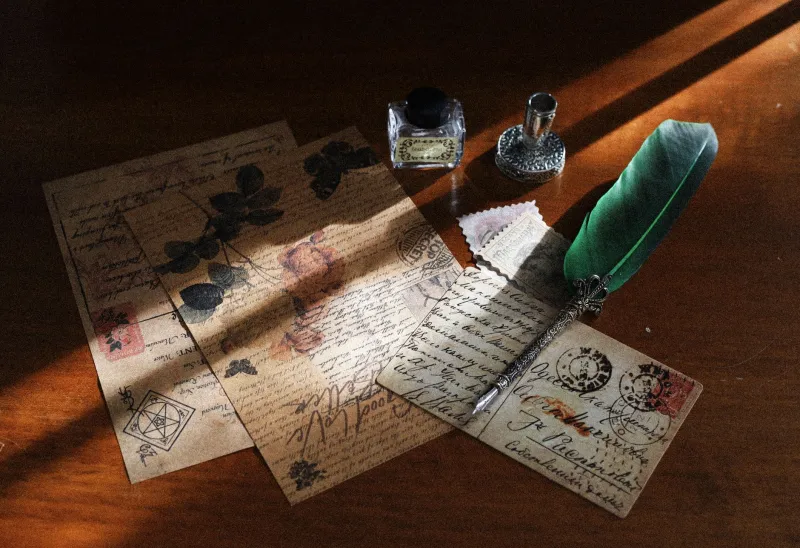
The itinerarium—the written record of a journey—was a genre with serious medieval standing. Pilgrims to the Holy Land produced them with the urgency of legal depositions. Felix Fabri, a Dominican friar who made the Jerusalem pilgrimage twice in the 1480s, produced a manuscript account running to hundreds of pages. He recorded not merely distances and shrines but arguments with fellow travelers, the quality of the water at particular wells, the behavior of local merchants, and his own emotional states at specific geographical moments. He was not writing literature. He was performing a rescue operation on experience.
The Grand Tourists of the seventeenth and eighteenth centuries inherited this compulsion and elevated it into social currency. Young English and American gentlemen dispatched to Europe for their education returned home expected to produce not merely improved manners but documented proof: journals, letters, sketches, and eventually the formal travel memoir. Thomas Jefferson's travel notes from his 1787 tour of southern France read less like a diary and more like the field report of a man who understood that his own recollection would betray him. He recorded soil types, crop rotations, architectural measurements, and wine prices with the systematic thoroughness of someone who did not trust the mind to hold what the eyes had seen.
The anxiety was not vanity. It was accurate. These travelers understood, through hard experience, that the journey and the memory of the journey were two entirely different objects, and that only one of them would survive.
What Documentation Actually Preserved
Here is what the pilgrims and Grand Tourists discovered, and what their journals confirm: writing something down does not simply record an experience. It transforms it. The act of converting sensation into language requires selection, emphasis, and narrative structure—all of which are editorial decisions that change what is being preserved.
Fabri's account of Jerusalem is not Jerusalem. It is Fabri's Jerusalem, shaped by what he chose to notice, what he found worth transcribing, and what he understood his audience back in Ulm would find credible or interesting. The journal preserved something, but it was not the experience itself. It was the traveler's interpretation of the experience, frozen at the moment of writing.
This distinction matters because it is precisely the distinction our culture refuses to make about photographs.
The Phone in the Cathedral
The contemporary traveler standing in the Sistine Chapel with a phone raised overhead is performing the same rescue operation Felix Fabri performed with a quill. The underlying anxiety is identical: this will fade, and I need to stop it. The tool has changed. The panic has not.
What has changed is the volume of material produced in service of that panic. A medieval pilgrim might generate fifty pages of notes over a six-week journey. A contemporary American tourist at a three-day European city break may generate several hundred photographs, a dozen videos, and a continuous stream of social media posts. The documentation has expanded by orders of magnitude. The forgetting curve has not moved.
Research in cognitive psychology—the kind conducted on the bored college students who constitute the experimental record of human behavior—suggests something the pilgrims would have found unsurprising: photographing an object can actually impair memory of it. The act of outsourcing the recording to a device appears to reduce the brain's incentive to encode the experience itself. We take the picture partly instead of remembering, not merely in addition to it.
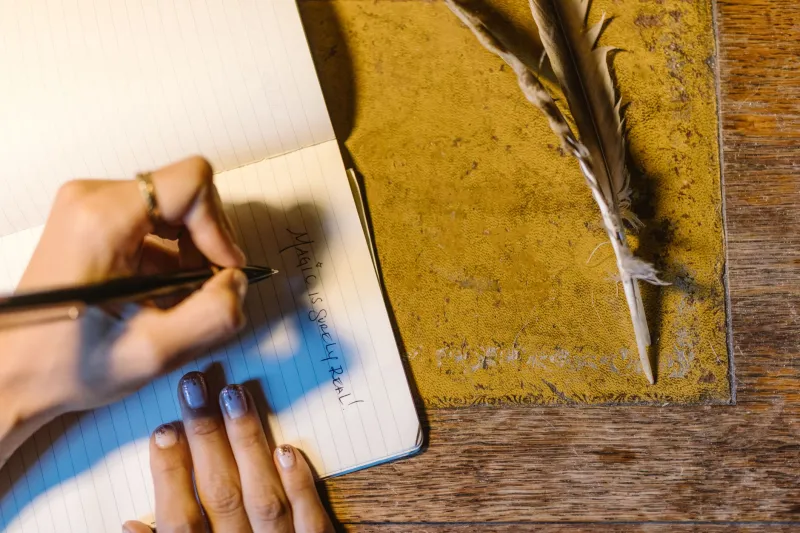
Fabri, who had no camera, was forced to look. The looking was the documentation. The journal was the secondary record of something that had already been absorbed.
The Relic as Backup System
Medieval pilgrims had a solution to the inadequacy of written records: they brought things home. The relic, the badge, the pressed flower from Gethsemane, the vial of Jordan water—these were not mere souvenirs. They were physical anchors for memory, objects that could be held in the hand to trigger recall in a way that a page of writing could not. The pilgrim badge from Canterbury was a mnemonic device. It said: this happened, and I was there, and here is the proof your mind cannot manufacture on its own.
The American tourist's refrigerator magnet and the medieval pilgrim's ampulla of holy water are operating on the same psychological logic. Both represent the traveler's acknowledgment that memory is unreliable and that external objects can serve as prompts for recall. The difference is that the pilgrim understood this explicitly. The tourist is often mildly embarrassed by it.
The Honest Accounting
What five centuries of travel documentation actually reveal is not a story of progress. The pilgrim with her journal, the Grand Tourist with his sketchbook, and the Instagram user with her carefully curated grid are all engaged in the same negotiation with the same adversary. Memory degrades. Experience is not self-preserving. The journey you take and the journey you carry home are different journeys, and the gap between them has always required active management.
The tools have multiplied. The problem has not been solved. What has changed is our relationship to the documentation itself. For Fabri, the journal was private—a record made for himself and perhaps a small readership of fellow clerics. For the Grand Tourist, the letters home were semi-public performances of cultivation. For the contemporary traveler, the documentation is often the primary product, shared in real time with an audience that may outnumber any Grand Tourist's readership by a factor of thousands.
When documentation becomes performance, the rescue operation changes its object. You are no longer preserving the experience for yourself. You are constructing a version of the experience for others—which is to say, you are doing exactly what Fabri did, but faster, and with considerably less self-awareness about it.
The pilgrims at least knew they were editing.