Polite Exile: How Every Culture Invented a Romantic Reason to Remove Its Newlyweds
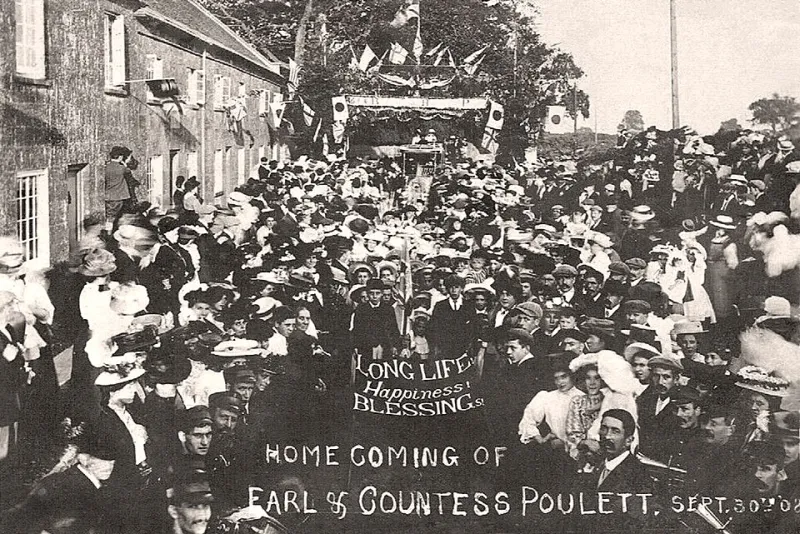
Photo: Unknown authorUnknown author, Public domain, via Wikimedia Commons
The honeymoon suite is, by design, somewhere else. That is not an accident of romance. It is the entire point.
Across five thousand years and dozens of civilizations that shared almost nothing else — not language, not religion, not legal tradition — the ritual of removing a newly married couple from their community immediately after the wedding ceremony appears with a consistency that should give any serious traveler pause. When a behavior recurs that reliably across that much cultural distance, the explanation is never merely sentimental. The explanation is structural. Something in the social architecture of human communities requires the newlyweds to be elsewhere for a while, and the story told to justify their departure has always been secondary to the fact of their departure itself.
The Norse Version Was More Honest
The earliest iterations of what we now call the honeymoon dispensed with romantic framing entirely. Among certain Norse peoples, the practice of bride kidnapping — in which a groom, with or without the bride's enthusiastic cooperation, removed her from her family's community for a period lasting roughly one lunar cycle — served a function that was transparently social rather than sentimental. The couple was hidden. The family was given time to grieve the loss, accept the transfer of property and alliance, and reorganize itself around the new reality. The mead, fermented from honey and consumed throughout the concealment period, gave the custom its name. The romance was incidental. The removal was the mechanism.
This is not a Norse peculiarity. Versions of the same logic appear in ancient Hindu custom, in the sequestered chambers of Roman wedding tradition, in the elaborate post-ceremony seclusion practices documented across sub-Saharan Africa and pre-Columbian Mesoamerica. The couple is always taken somewhere. The community is always given time to adjust. The journey is always framed as a gift to the couple rather than a service to the group — which is precisely how the most effective social engineering tends to operate.
What a Marriage Actually Disrupts
To understand why removal served a function, it helps to think about what a marriage actually did to a pre-modern community. A wedding was not a private ceremony between two individuals. It was a merger of households, a redistribution of labor and land and loyalty, a renegotiation of every social relationship that touched either family. The couple at the center of that transaction arrived at their wedding morning embedded in one set of obligations and departed that evening representing an entirely new power configuration.
That reconfiguration created friction. Parents lost children to new primary loyalties. Siblings lost allies to competing households. Friends lost companions to domestic absorption. The community that had functioned around two individuals now had to reorganize itself around a unit — and units, unlike individuals, have combined leverage, combined resources, and a combined claim on everyone else's goodwill.
Removing the couple during this reorganization period was not cruelty. It was courtesy — extended, notably, as much to the community as to the newlyweds. The journey gave everyone time to finish grieving, finish adjusting, and finish deciding how they felt before they had to perform feeling otherwise at the breakfast table.
The Victorian Railway Made It Respectable
The version of the honeymoon that most Americans recognize — the railway excursion to a scenic destination, followed by the grand hotel, followed by the waterfall — is largely a Victorian invention, and it is revealing that the Victorians arrived at it precisely when they did. The mid-nineteenth century saw both the rapid expansion of passenger rail and a cultural anxiety about the proper management of newly married couples in an increasingly mobile society. The railway honeymoon solved a logistics problem that had previously been solved by geography: when communities were small and fixed, removal was easy. When communities became urban and anonymous, the removal had to be deliberate, ticketed, and scheduled.
Niagara Falls became the American honeymoon capital not because of any inherent romantic property of falling water, but because it was the right distance from the right cities on the right rail lines at the moment when the middle class acquired both the leisure and the income to perform the ritual properly. The waterfall was a prop. The train schedule was the mechanism. The distance was, as it had always been, the point.
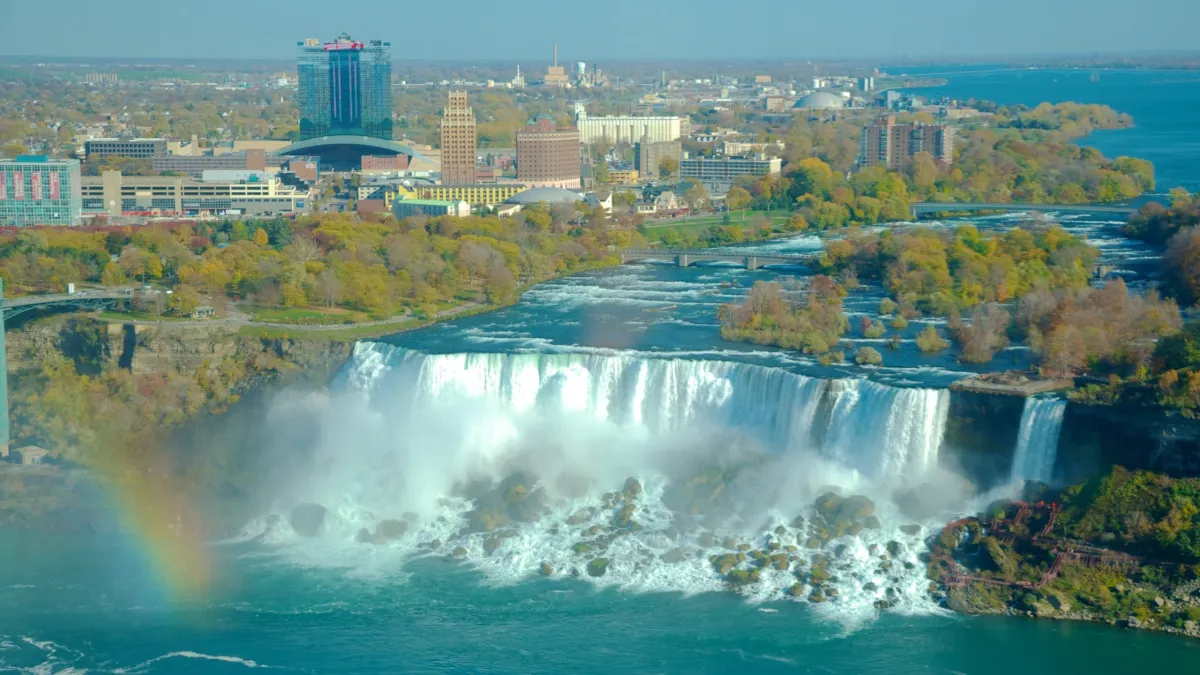 Photo: Niagara Falls, via a.travel-assets.com
The All-Inclusive Resort as Updated Quarantine
The contemporary all-inclusive honeymoon resort represents the most refined version of this ancient arrangement yet devised. The wristband that admits you to every buffet and swim-up bar also, not coincidentally, discourages you from leaving the property. The curated environment eliminates the need to engage with the local community, the local economy, or anything that might constitute an actual encounter with the place you have traveled to visit. You are, in the most comfortable possible sense, contained.
This is not a criticism. It is a description of what the product has always been. The resort industry did not invent the impulse to sequester newlyweds in a managed environment designed to prevent external interference with the couple's early bonding period. It merely added a swim-up bar and called it paradise.
The couples who book these packages are not making a naive choice. They are, consciously or not, participating in one of the oldest social technologies in the human record — a technology that works, that has always worked, and that works precisely because its real function is never stated in the brochure.
What the Long Memory Reveals
The traveler who understands this history gains something useful: a more honest relationship with the ritual they are performing. The honeymoon journey is real. The romance is real. The desire for privacy and shared experience is entirely genuine. None of that requires the pretense that the journey is purely spontaneous, purely personal, or purely about the couple.
It is also, and has always been, about the community left behind — the family reorganizing itself around the new reality, the friends recalibrating their expectations, the social network quietly adjusting to a new configuration of loyalty and obligation. The couple returns to a world that has had time to prepare for them. That preparation is the gift the journey actually gives.
The honeymoon suite is somewhere else. It has always been somewhere else. That is, in the fullest sense of the word, the destination.