Standing Where It Happened: The Ancient Human Need to Visit Places of Catastrophe
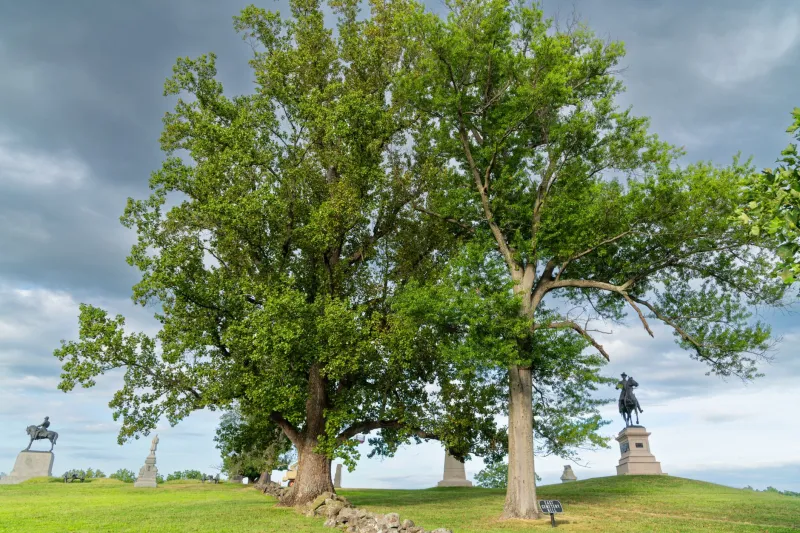
Gettysburg receives more than a million visitors annually. Ground Zero in lower Manhattan draws comparable numbers. The sites of Hurricane Katrina's worst flooding in New Orleans have been incorporated into formal tour itineraries. Scholars and journalists have spent considerable energy in recent decades debating whether this phenomenon — dark tourism, as it has come to be called — represents something troubling about contemporary culture: a voyeurism enabled by cheap flights and social media, a commodification of grief that previous generations would have found indecent.
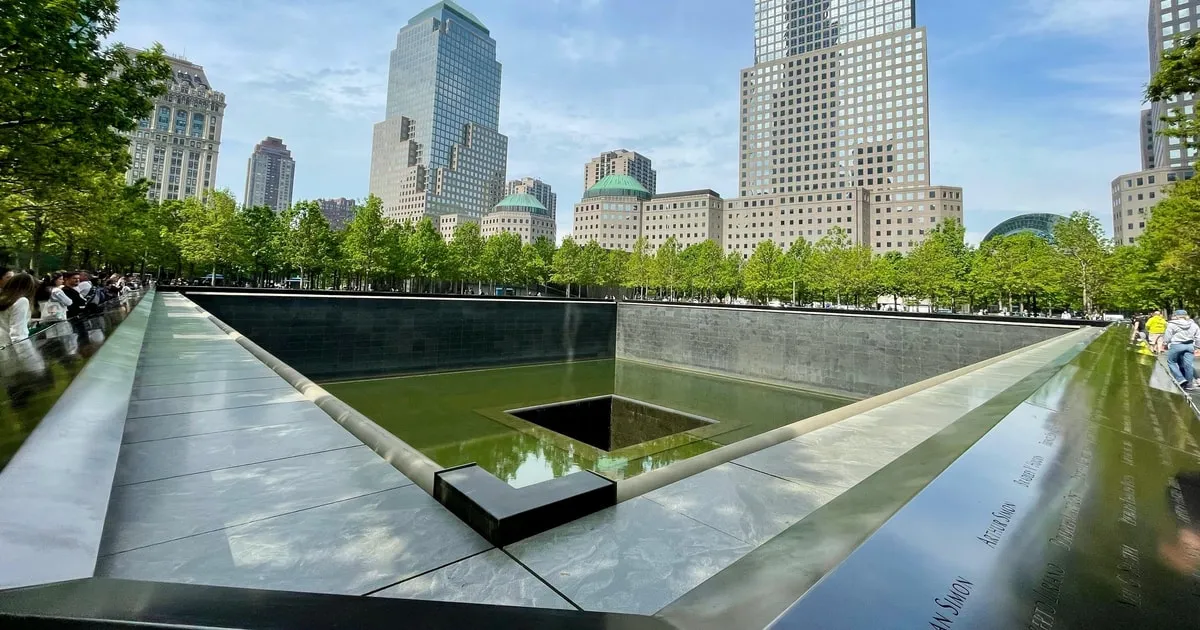 Photo: Ground Zero, via cdn.getyourguide.com
The historical record does not support this anxiety. The compulsion to travel to places where terrible things happened is not a product of the modern attention economy. It is one of the most consistent behaviors in the entire archive of human movement, documented across cultures and centuries with a regularity that suggests something more fundamental than spectacle-seeking is at work.
Carthage and the Grammar of Ruin
When Roman citizens traveled to the site of Carthage in the centuries following its destruction in 146 BCE, they were not doing something their contemporaries considered unusual. The pilgrimage to a significant ruin — particularly one whose destruction carried political or moral meaning — was a recognized form of educated travel in the ancient Mediterranean world. Scipio Aemilianus, who commanded the army that destroyed Carthage, reportedly wept at the sight of the burning city and quoted Homer on the fall of Troy. The gesture was understood by his contemporaries as appropriate: a great destruction demanded witness, and witness demanded presence.
Herodotus, writing in the fifth century BCE, documented his own visits to sites of battle and catastrophe with the same methodical attention he gave to temples and markets. For him, as for his readers, these places were not morbid detours but essential stops on any serious account of the world. To have been there — to have stood on the ground where something irreversible had occurred — was to have access to a kind of knowledge that no written account could fully convey.
This epistemological claim is worth taking seriously. It is not simply that ancient travelers were drawn to dramatic sites. It is that they believed, and articulated the belief, that physical presence at a place of catastrophe produced a form of understanding unavailable by any other means.
The Medieval Battlefield as Sacred Geography
The medieval Christian tradition of pilgrimage is usually discussed in terms of its destinations: Jerusalem, Rome, Santiago de Compostela. Less commonly examined is the parallel tradition of visiting sites of martyrdom, massacre, and military catastrophe that did not carry official ecclesiastical endorsement but flourished nonetheless.
After the Battle of Agincourt in 1415, travelers from across northern France and the Low Countries made their way to the site within months of the fighting. They came to pray, certainly, but also — as contemporary accounts make clear — to see. To see the scale of it. To see the field that had absorbed so much death and now looked, disturbingly, like any other field in Picardy. The tension between the enormity of what had happened and the indifference of the physical landscape to that enormity was, for medieval visitors, a theological problem as much as an emotional one. How could this ground look like ordinary ground?
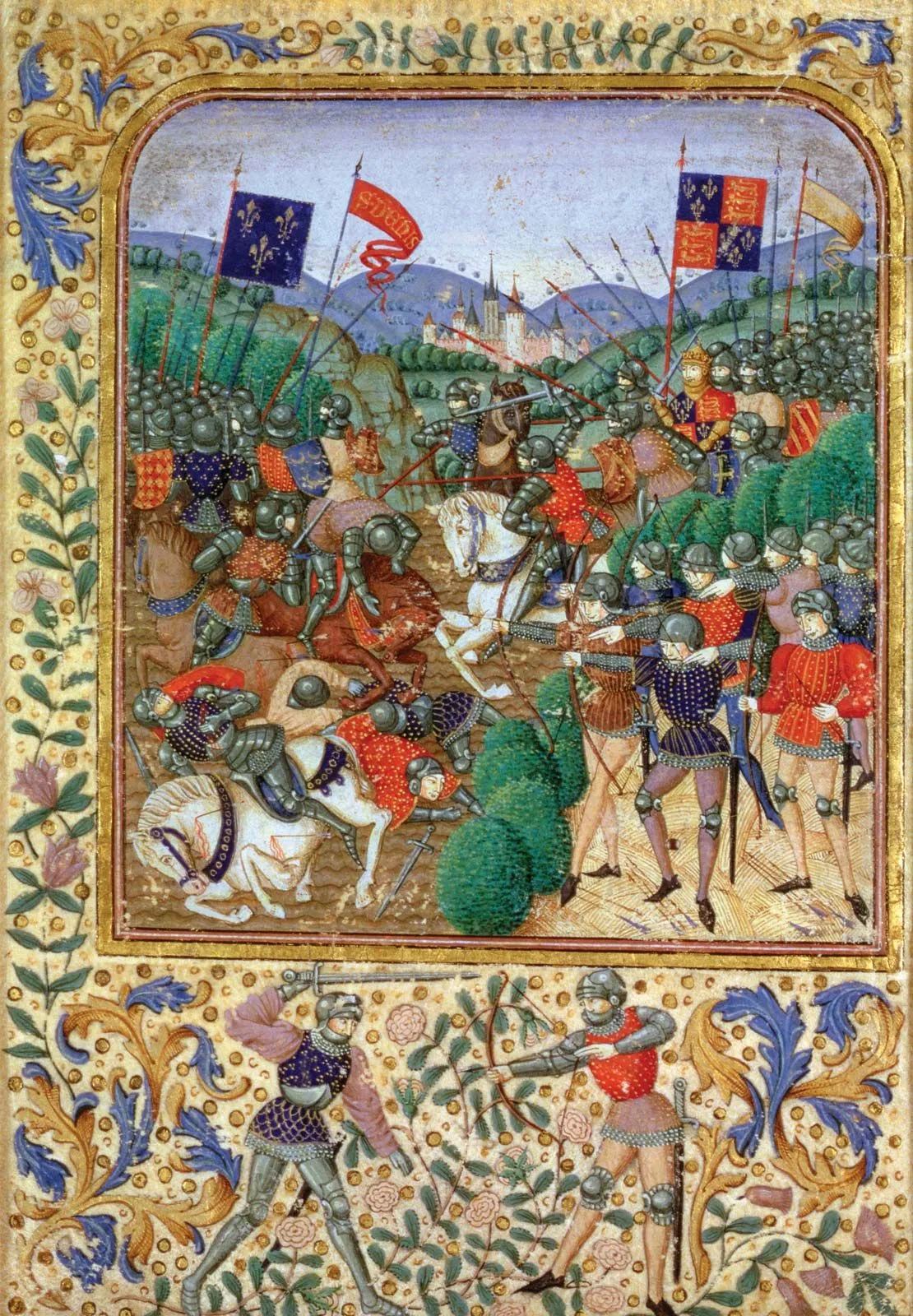 Photo: Battle of Agincourt, via cdn.britannica.com
This question — the dissonance between the magnitude of historical event and the neutrality of the surviving landscape — is precisely what drives visitors to dark tourism sites today. Survivors and scholars of the Holocaust have written extensively about the experience of standing at Auschwitz and confronting the gap between what the mind knows and what the eyes see: a place that looks, in its physical bones, like a series of deteriorating industrial buildings. The cognitive labor required to bridge that gap is not passive. It is not spectacle consumption. It is an active, difficult, and genuinely educational form of engagement.
What the Compulsion Is Actually About
The most useful framework for understanding dark tourism across its long history is not psychology of morbidity but psychology of legibility. Human beings have a deep and consistent need to make abstract facts concrete — to convert information into experience, to locate suffering in space so that it can be held in the mind as something real rather than merely known as something true.
Battlefields serve this function with particular efficiency. A casualty figure — 51,000 men killed, wounded, or missing at Gettysburg over three days in July 1863 — is a number that the mind cannot fully process. The same information encountered while walking the ground where those men fell, reading the names on the monuments, standing at the angle of a ridge that made a particular charge either courageous or suicidal depending on which side you were on — that information becomes something the body participates in understanding. The abstraction acquires dimension.
This is not voyeurism. It is not, at its core, entertainment. It is the oldest available technology for making mortality legible — for taking the fact of mass death and rendering it comprehensible to creatures whose imaginations were built for the scale of a village, not the scale of industrial warfare or pandemic or deliberate genocide.
The Ethics of Presence
None of this means that all forms of dark tourism are equivalent, or that the manner of engagement is irrelevant. The traveler who arrives at a site of catastrophe with the primary intention of producing content for a personal audience is doing something categorically different from the traveler who arrives in the spirit of witness — even if their physical itineraries are identical. The distinction is not always visible from the outside, which is one reason the debate about dark tourism generates more heat than light.
What the historical record consistently shows, however, is that the impulse itself — the need to go, to stand there, to look — is not pathological. It is among the most human things a traveler can do. Roman citizens went to Carthage. Medieval pilgrims went to Agincourt. Americans go to Gettysburg and Pearl Harbor and the National September 11 Memorial. In each case, they are participating in an act of collective memory-making that requires physical presence because the alternative — knowing without going — has always felt, to human beings, like an insufficient form of knowing.
The traveler who understands this is in a better position to undertake it honestly: to arrive not as a consumer of someone else's tragedy but as a participant in the ancient, necessary work of making history real enough to learn from.