The Original Review Economy: How Spoken Reputation Has Always Governed Where Travelers Eat, Sleep, and Survive
The review platform is approximately twenty years old. The behavior it digitizes is approximately five thousand years older. Before Yelp, before TripAdvisor, before the Google star rating, before the travel guidebook, before the printed gazette, before any written record at all, there was a human being arriving somewhere new and asking another human being where it was safe to eat, sleep, and conduct business. The answer to that question — passed mouth to ear, wagon to wagon, table to table — was the original infrastructure of the travel economy. It built empires of hospitality and it destroyed them, and it did so with a speed and a finality that the modern platform has accelerated but not fundamentally altered.
The traveler who understands this history is not merely better informed. She is better equipped to navigate the contemporary landscape, because the mechanics of reputation — how it forms, how it spreads, how it collapses — have not changed in any meaningful way since the first merchant asked the first innkeeper's previous customer whether the water was clean.
How Reputation Traveled Before It Could Be Written
In pre-literate trading cultures, the reputation of a waystation, a ferryman, a market, or a hospitality provider traveled through a remarkably efficient informal network. Merchants moving along fixed trade routes encountered each other repeatedly. The Silk Road, the incense routes of Arabia, the overland paths of sub-Saharan Africa — all of these were not simply roads but information corridors. The travelers who used them regularly knew each other, or knew people who knew each other, and the intelligence they exchanged was not primarily geographic. It was reputational.
Which innkeeper in which city watered the wine. Which ferryman took your money and then delayed the crossing until you paid again. Which market stall sold honest weight and which used a thumb on the scale. This information circulated through the trading community with extraordinary speed and persistence. A bad reputation, once established along a trade route, could follow a business for years — long enough to destroy it — because the community of travelers was finite and its memory was long.
The Roman writer Horace, traveling the Appian Way in the first century BCE and recording his observations in verse, describes a boatman who was notorious among travelers for drunkenness and delay. Horace did not discover this through personal experience first. He knew it before he arrived, because the boatman's reputation had preceded him through exactly this kind of informal network. The review had been written; it simply had not been written down.
The Tavern Economy and the Power of the Teamster
In early America, the most influential figures in the roadside reputation economy were not innkeepers, not travelers, and certainly not any form of official inspector. They were teamsters — the drivers of freight wagons who moved goods along the post roads and turnpikes that connected the young nation's towns and cities. Teamsters traveled constantly, stopped everywhere, and talked to everyone. Their opinions about which taverns served honest food, which innkeepers ran clean establishments, and which roadside stops were to be avoided at all costs carried enormous commercial weight.
A tavern that earned the approval of the teamster community could count on a reliable flow of business. A tavern that earned their contempt could expect to see that contempt transmitted, with impressive efficiency, across hundreds of miles of road. The teamster's opinion was not simply personal preference — it was a form of professional intelligence, shared among a community of people whose livelihoods depended on knowing where they could safely stop.
This is the structural precursor to the review platform. The teamster was a verified, frequent traveler whose opinion carried credibility precisely because he had no financial stake in the establishments he evaluated. His recommendation was trustworthy for the same reason that a reviewer with hundreds of verified visits is considered more credible than one with a single review: the volume and consistency of experience conferred authority.
The Traveling Salesman as Information Network
The railroad era produced its own variant of this system. The traveling salesman — that quintessentially American commercial figure, covering a fixed territory by rail and then by automobile — became, in the late nineteenth and early twentieth centuries, one of the primary carriers of roadside reputation. Salesmen stayed in commercial hotels, ate in roadside restaurants, and stopped at the same establishments on regular circuits. They compared notes with each other, shared intelligence about which hotels were reliable and which were not, and carried that intelligence across their territories with a consistency and reach that no individual traveler could match.
The commercial traveler's hotel rating system — informal, unwritten, but remarkably consistent within the community — predates the published travel guide by decades. AAA's diamond rating system, first introduced in 1937, was in some sense simply the formalization of a consensus that the commercial traveling community had been maintaining informally for the better part of a century.
The Interstate and the Acceleration of Word of Mouth
The postwar interstate highway system created a new version of the same dynamic, but at a dramatically larger scale. The traveling public of the 1950s and 1960s was vast, mobile, and connected by the same informal networks of family, workplace, and community that had always carried reputational intelligence. A bad experience at a roadside motel in Missouri might be reported to a neighbor in Ohio, who mentioned it to a colleague in Pennsylvania, who told his brother-in-law before a summer road trip. The chain was longer, the network was larger, but the mechanism was identical.
What changed was the consequence of a bad reputation. On the old turnpike, a tavern that lost the teamsters' confidence lost perhaps a few dozen regular customers. On the interstate, a motel that developed a reputation for uncleanliness or dishonesty could lose access to a market of millions. The scale of the highway system amplified both the opportunity and the risk of reputational failure.
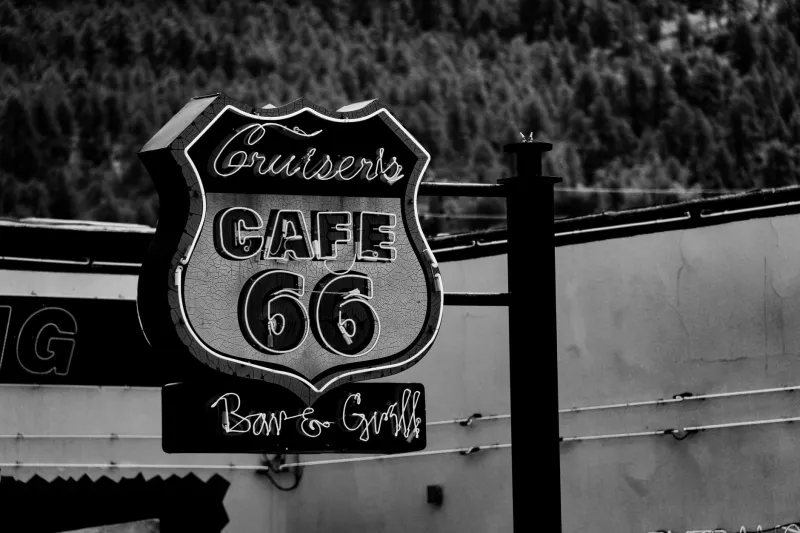
This is why the franchise model became dominant in the highway accommodation and dining market so quickly. The franchise was, at its core, a reputation-management technology. It promised travelers that the establishment they were entering had met a defined standard — that the reputation of the brand transferred to the individual location. The Golden Arches were not primarily a food delivery system. They were a reputation guarantee, a signal that the informal intelligence network had been replaced by a contractual one.
What the Platform Changed — and What It Did Not
The modern review platform accelerated the velocity of reputational information by several orders of magnitude. A single negative experience, posted publicly, can now reach tens of thousands of potential customers within hours. A viral complaint — particularly one accompanied by photographic evidence — can produce a business crisis in a timeframe that would have been incomprehensible to a nineteenth-century innkeeper.
But the underlying mechanics are unchanged. The review platform is simply a faster, broader, more persistent version of the teamster's table talk. The information being transmitted is the same: Is this place honest? Is it clean? Does it deliver what it promises? Will I be treated fairly? These questions are as old as travel itself, and the answers have always traveled through social networks, because social networks — formal or informal, digital or conversational — are the only infrastructure capable of carrying them.
What this history teaches the practical traveler is specific and actionable. Reputation, in any era, is most reliable when it comes from a source whose experience resembles your own intended experience. The teamster's opinion of a commercial hotel was valuable to other commercial travelers; it was less useful to a family on a pleasure trip. The same principle applies to the review platform: a five-star rating from a reviewer whose travel patterns, preferences, and standards match yours is worth more than a hundred ratings from reviewers whose context you cannot evaluate.
Reading the Long Memory of a Place
The traveler who understands the history of spoken reputation also understands something that the platform tends to obscure: reputations, once established, are remarkably persistent. A business that earned a strong reputation over decades does not lose it overnight. A business that earned a bad one carries it longer than the algorithm typically reflects.
The Roman inn that Horace's boatman ruined with his drunkenness did not recover when the boatman sobered up. The reputation had been written into the community's memory, and it stayed there. The same principle applies today. The restaurant that had a terrible year, fixed its problems, and is now genuinely excellent is still carrying the residue of its worst period in the minds of travelers who heard about it then and never heard the correction.
This is an opportunity for the attentive traveler. The place whose reputation has not yet caught up with its current reality — in either direction — is the place where the long memory of the road offers a genuine advantage. Before Yelp, the traveler who asked the right questions of the right people found it first. The technology is different. The strategy is not.