The Traveler Who Stays Abroad: How Physical Distance Has Always Licensed Americans to Become Someone Else

There is a version of you that only exists in foreign hotel bars. This person holds opinions that your colleagues have never heard. They order things they cannot pronounce with a confidence that would embarrass them in a domestic restaurant. They discuss their marriage, their politics, their private theology with a stranger they will never see again, and they do so with a candor that would be professionally inadvisable and socially catastrophic at home. By the time the plane lands at the departure airport, this person has folded themselves back into the carry-on. Customs is cleared. The usual self resumes.
This is not a modern phenomenon. It is not a product of cheap airfare, social media, or the particular anxieties of contemporary American life. It is one of the most consistent behavioral patterns in the history of travel, and it has been documented — with varying degrees of alarm, admiration, and philosophical interest — for at least two thousand years.
Distance as Structural Permission
The Roman philosopher Seneca, who traveled extensively and wrote about it with the skeptical precision of a man who did not entirely trust his own reactions to novelty, observed that changing one's location did not change one's character. He was making a moral argument: the person who fled Rome to escape their vices would find those vices waiting in Naples.
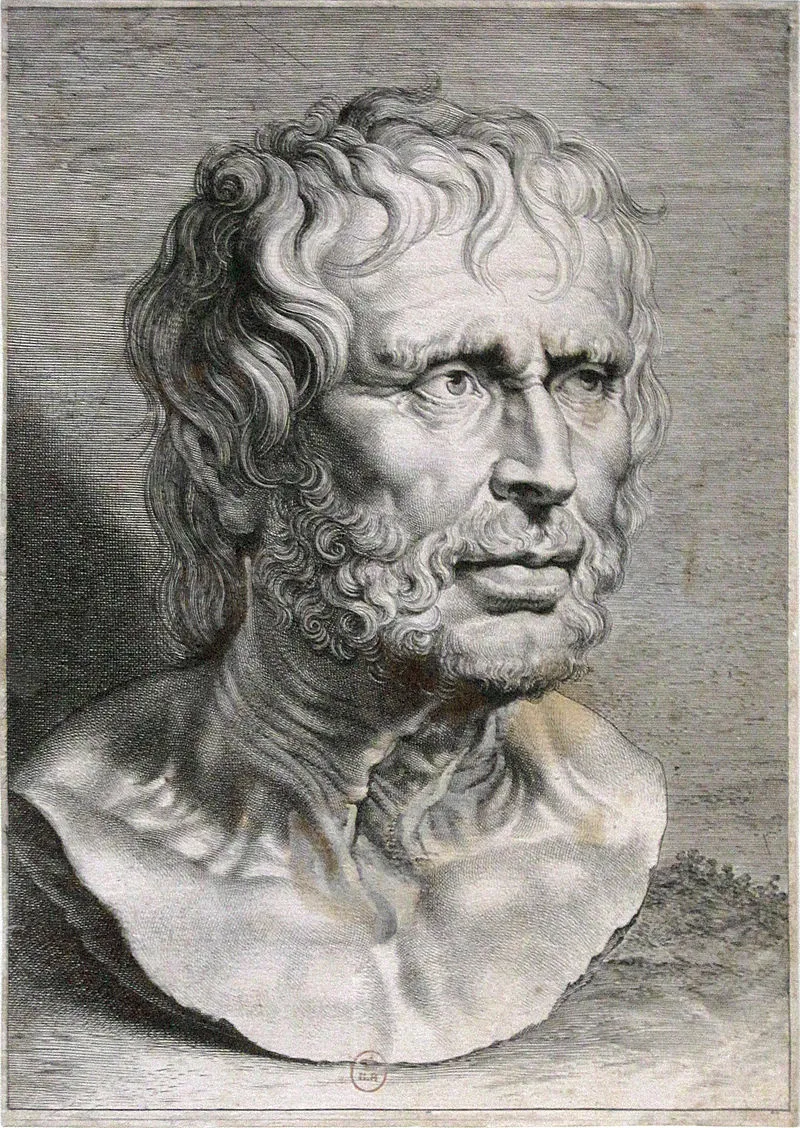 Photo: Seneca, via s.libertaddigital.com
Seneca was correct about vices. He was describing something else entirely when he noticed that the Romans of his acquaintance behaved differently in the provinces than they did in the capital — more relaxed in their political opinions, more candid about their personal lives, more willing to experiment with foreign customs. This was not vice. This was the structural effect of distance on social performance.
Every human society maintains an elaborate system of behavioral expectations that are enforced not by law but by proximity — by the fact that the people who know you are watching. Remove the proximity, and a significant portion of the enforcement mechanism disappears. This is not a character flaw. It is a feature of how social identity functions. We perform ourselves for the people who have a stake in our performance. When those people are four thousand miles away, the performance has no audience, and the performer, temporarily, is free.
The 19th-Century American Abroad
The phenomenon is particularly vivid in the American case because American public culture has historically maintained an unusually demanding set of behavioral expectations — a legacy of the Puritan moral architecture that shaped the country's earliest communal norms and persisted, in secularized form, long after the theology that generated it had faded.
The nineteenth-century American who traveled to Europe on the Grand Tour — a practice that began as an aristocratic European finishing ritual and was adopted, with characteristic American ambition, by the emerging upper-middle class — encountered in Europe a social environment that made almost no demands on their American identity. Nobody in Florence cared whether they attended the correct church. Nobody in Paris was tracking their drinking. Nobody in London had any opinion about their business reputation in Cincinnati.
The result, documented extensively in letters, diaries, and the published travel accounts that were enormously popular in the period, was a behavioral expansion that their authors frequently described in almost physical terms — as a loosening, a breathing-out, a removal of some invisible garment that had been worn so long it had ceased to feel like clothing.
Henry James built a significant portion of his literary career on this observation. His Americans in Europe are almost universally engaged in the negotiation between who they are required to be at home and who the road has permitted them to become. The tension in his novels is not between American innocence and European corruption — that reading is too simple. The tension is between the self that is socially constructed and the self that the absence of the constructing society briefly permits to surface.
 Photo: Henry James, via premiumseeds.fr
The Structural Amnesty of the Journey
What is most historically consistent about this phenomenon is that it is not experienced as dishonesty by the people living it. The American in the foreign hotel bar who reveals opinions they have never voiced at home does not generally feel that they are being false. They feel, frequently, that they are being true — that the self which speaks in this context is closer to their actual interior than the self they perform for their neighbors, their employer, their family.
This creates an interesting psychological paradox that travel literature has circled for centuries without quite resolving. If the abroad-self is more authentic than the home-self, what does that say about the home-self? And if the home-self is the one that persists — the one that resumes at the customs gate and continues indefinitely — what is the status of the more candid version that was briefly permitted to exist?
The medieval Christian pilgrimage tradition handled this tension through the concept of the journey as spiritual transformation: you left as one person, you returned as another, and the community was obligated to receive you as changed. The transformation was the point. The road was not a parenthesis in your real life; it was the mechanism by which your real life was renewed.
The secular American traveler generally has no equivalent framework. The abroad-self is experienced as a vacation from the home-self rather than a revision of it, which means the journey home is experienced not as a return but as a resumption — a closing of the account rather than a carrying-forward of its balance.
What the Alternate Self Actually Reveals
For the traveler who wants to extract something more durable from the phenomenon than a pleasant memory, the historically useful question is not who am I when nobody is watching but rather what does the distance-self know that the proximity-self refuses to say?
The opinions confessed in the foreign hotel bar are usually not new opinions. They are old opinions that have been waiting for a context in which their expression would carry no social cost. The experimental behavior tried abroad is usually not entirely alien to the traveler's domestic desires — it is a version of something already present that the home environment has never provided permission to attempt.
This is why the most productive use of the abroad-self is not to treat it as a holiday from identity but as a set of field notes. What did you say, abroad, that you have never said at home? What did you try that you have been wanting to try for years? What did you find, in the absence of the usual audience, that you actually believed?
The Silk Road merchants who spent months away from their home cities returned not only with goods but with ideas, habits, and perspectives that had been acquired in the absence of the social enforcement mechanisms of home. The communities that absorbed those returning travelers — and the historical record is clear that the most commercially dynamic communities were precisely those that did — were communities that understood the abroad-self as a resource rather than a threat.
The Closing of the Passport
The journey home is its own psychological event, and it is worth taking seriously. The resumption of the home-self is not automatic. It requires a small, usually unconscious act of re-performance — a reassumption of the expected manner, the expected opinions, the expected version of the story of who you are.
Every experienced traveler knows the feeling: somewhere between the arrival gate and the baggage carousel, the adjustment begins. The posture shifts. The vocabulary narrows back to its domestic range. The experimental self, which had been speaking freely for days or weeks, begins the process of returning to its usual silence.
This is not a failure of courage. It is a recognition of the social contract that proximity enforces — a contract that is, for most people in most circumstances, worth honoring. But the traveler who returns without carrying anything forward from the abroad-self has not merely resumed their life. They have missed the point of the journey.
The historical record of travel, read across five thousand years, suggests that the most consequential journeys are not the ones that took the traveler farthest from home. They are the ones that took the traveler farthest from the performed self — and then brought something back.