Packed Away: The Souvenir That Was Never Meant to Come Home

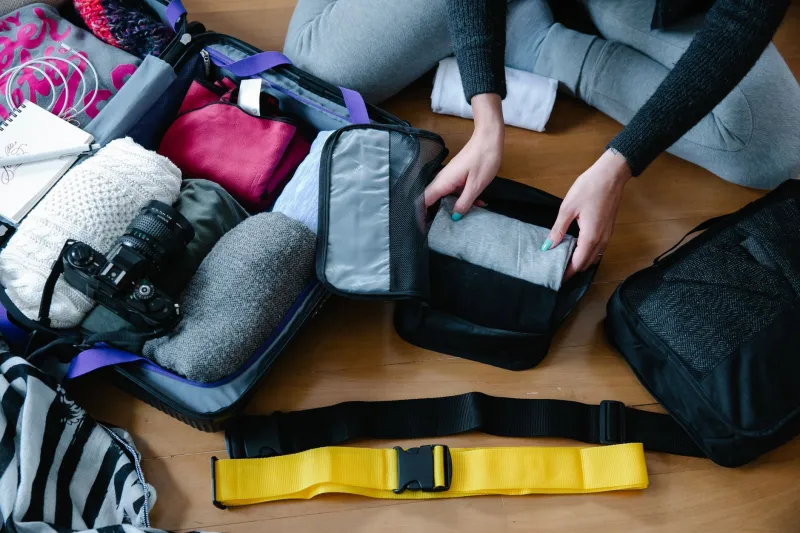
Photo by Photo by Dana Sarsenbekova on Unsplash on Unsplash
Somewhere in an American home right now, there is a drawer that does not open easily. It sticks a little at the front, or requires a particular angle of the wrist, and this minor inconvenience has become, over time, a small mercy. Inside that drawer, wrapped in the same tissue paper the shop in Oaxaca or Kyoto or Reykjavik used, sits an object that was purchased with complete sincerity. It was chosen carefully. It was carried home in a bag that was repositioned three times in the overhead compartment so it would not break. It has not been touched since.
This is not an unusual story. It is, in fact, one of the most common stories in American domestic life—so common that we rarely notice it deserves examination.
The Object and Its Promise
The souvenir, as a category of human behavior, is ancient. Roman pilgrims returning from Jerusalem carried ampullae—small flasks filled with oil or water blessed at holy sites. Medieval travelers sewed lead badges onto their cloaks to announce the shrines they had visited. The object was never purely decorative. It was testimonial. It said: I was there. I was changed by being there. This thing is evidence.
What has changed in the modern American context is not the impulse but the stakes. The Roman pilgrim's ampulla confirmed a spiritual journey that his entire community already understood and valued. The badge was legible to anyone who saw it. The object and the transformation it represented were mutually reinforcing.
The olive wood bowl purchased at a market stall in Crete carries no such communal framework. It arrives home into a life that did not pause while its owner was abroad. The kitchen already has bowls. The shelves are already arranged. And the person who selected this particular object, in a particular light, after a particularly good lunch, was operating inside a version of themselves that the kitchen does not recognize.
The Gap Between Travelers
Consumer psychologists have noted for decades what travel writers have known intuitively for much longer: people make purchasing decisions on trips according to the values and preferences of their traveling self, not their resident self. These are not the same person. The traveling self rises earlier, walks farther, eats things it would never order at home, and is genuinely interested in the history of textile production in a way that will not survive the flight back.
This is not a character flaw. It is, if anything, evidence that travel works. The person browsing a craftsman's stall in Santa Fe or a bookshop in Edinburgh is temporarily freed from the accumulated constraints of their ordinary life—the commute, the inbox, the particular way Tuesday feels. They are operating with a wider aperture. Their preferences, in that moment, are real.
The problem is that the object they choose is real too, and it must return with them.
What the Drawer Actually Contains
The sealed souvenir, left undisturbed in its tissue paper, is not a failure of follow-through. It is a monument to a specific and irrecoverable moment. To open it, to use it, to place it on a shelf where it will collect dust and eventually be moved to make room for something else, is to allow it to become ordinary. Sealed, it remains perfect. It remains from there.
This logic has a long precedent. The Victorians were explicit about it: they created entire categories of objects—mourning jewelry, memorial hair, sealed lockets—whose value depended entirely on their not being casually handled. The object's power resided in its inaccessibility. To treat it as furniture would have been to misunderstand what it was.
The traveler who leaves the Provençal tablecloth in the linen closet, still folded, is operating under a version of the same principle. The tablecloth in use is just a tablecloth. The tablecloth in the closet is the afternoon in Aix, the particular quality of the light, the conversation that felt like it mattered.
The Inheritance Problem
This pattern becomes more complicated, and more revealing, when the souvenir outlives its purchaser.
American estate sales are full of them. Objects brought back from trips taken in the 1960s or 1970s, still wrapped, occasionally still accompanied by the receipt. The children sorting through their parents' belongings encounter these things with a particular species of confusion. They did not know about the trip, or they knew only the outline of it. The object offers no explanation. It simply insists that something happened.
Family historians have observed that these sealed souvenirs frequently become the most contested items in an estate—not because of their monetary value, which is usually negligible, but because of the narrative weight they carry. Someone chose this. Someone carried it across an ocean. The fact that it was never used does not diminish the choice; it amplifies it. The object becomes a question the dead left unanswered.
The Shame That Is Not Quite Shame
There is a particular feeling associated with encountering the sealed souvenir some months after returning home. It is not quite guilt, though it resembles guilt. It is closer to the feeling of having made a promise to a version of yourself that you cannot currently locate.
The bowl, the scarf, the hand-printed map—these objects do not reproach their owners for failing to use them. They reproach their owners for failing to remain the person who bought them. This is a subtly different accusation, and a harder one to answer.
Five thousand years of travel writing, from Herodotus forward, document the same essential tension: the traveler returns, and the traveler is changed, but the home is not. The Roman soldier back from Gaul, the medieval merchant back from the Levant, the American tourist back from two weeks in Japan—all of them carry some version of this problem. The journey altered the interior landscape. The exterior landscape declined to cooperate.
The Drawer as Archive
Perhaps the most honest way to understand the sealed souvenir is not as a failure but as an archive. The drawer that does not open easily is not a repository of shame. It is a record of genuine experience, preserved in the only form that keeps its integrity intact.
The traveler who bought the olive wood bowl was not wrong about the bowl. She was not wrong about what it meant in the moment she chose it. She was simply caught between two true things: the person she was when she bought it, and the person who came home.
Both of those people are real. The drawer holds the evidence of their distance from each other—which is, in the end, the most accurate souvenir a trip can produce.