Room for Confession: The Hotel Stay as America's Most Reliable Permission Slip
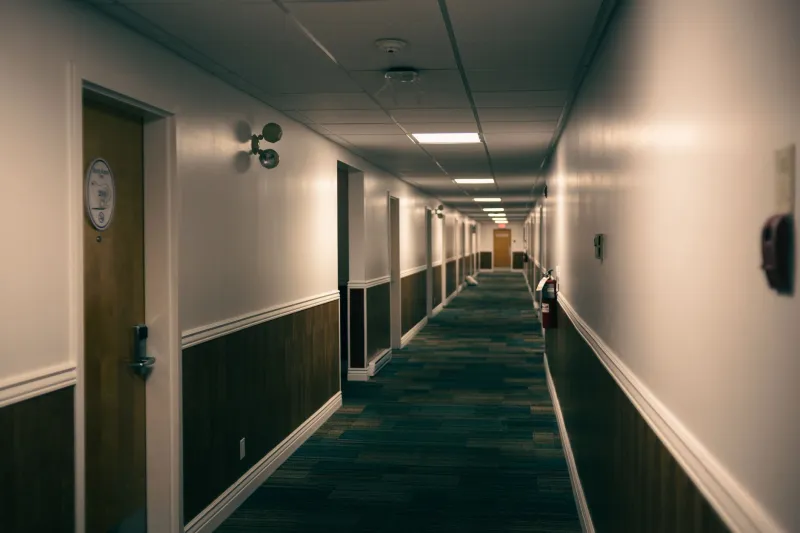
The room is not yours. That is, in the end, the entire point.
You did not choose its wallpaper. You will not replace its lightbulbs. No one who knows you has ever stood in it. When you leave, a stranger will strip the bed, reset the furniture, and erase every trace of your presence with industrial efficiency. The hotel room is, by design, a space that belongs to no one—and it is precisely this quality of radical impermanence that has made it, for more than a century of American travel, one of the most psychologically loaded environments a person can inhabit.
What happens in that room is the subject of this inquiry. Not the salacious version, though the historical record does not shy away from it. The more interesting question is structural: why has the temporary nature of the hotel stay so reliably licensed Americans to behave in ways they would not at home? And what does that pattern—consistent across decades, income levels, and geographies—reveal about the lives people carry into those rooms?
The Threshold Effect
Every culture that has produced written records has also produced evidence of what anthropologists now call threshold behavior—the documented tendency of individuals to act differently once they have crossed a boundary that marks them as temporarily displaced from their ordinary social context. Roman travelers at roadside inns, medieval pilgrims at monastery guesthouses, eighteenth-century merchants at colonial American taverns: the pattern repeats with striking consistency. The crossing of a threshold, particularly one that carries the explicit understanding of impermanence, appears to reduce the psychological cost of deviation from habitual behavior.
This is not a modern discovery. Tavern keepers in colonial New England understood it commercially. Their establishments were, by the standards of the time, remarkably permissive environments—spaces where men of different social stations drank together, where conversations occurred that would have been imprudent in a more permanent setting, where the ordinary hierarchies of community life were temporarily relaxed. The tavern was not lawless. It was, rather, operating under a different set of laws—ones that everyone present understood to be local and temporary.
The American hotel inherited this function and amplified it. By the mid-nineteenth century, the grand hotels of New York, Chicago, and San Francisco were functioning as something close to parallel cities—spaces in which the social codes of ordinary American life were enforced differently, if at all.
What the Staff Remembered
Oral histories collected from hotel employees across the twentieth century constitute one of the more candid archives of American private behavior. Longtime bellmen, housekeeping staff, and front desk clerks—interviewed by hospitality industry researchers and regional historians in the 1970s and 1980s—described with remarkable consistency the particular quality of vulnerability that guests displayed upon arrival.
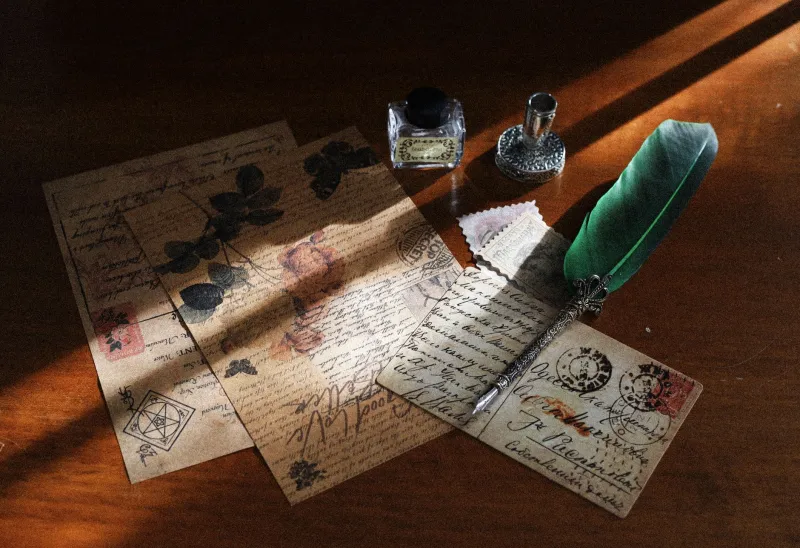
A retired housekeeper who spent thirty-one years at a mid-range hotel in Cincinnati recalled that guests would frequently leave notes—not instructions, but notes. To themselves, to no one in particular. Slips of paper with phrases that made no sense out of context. Lists that appeared to be reckoning with decisions rather than organizing tasks. She described finding, on multiple occasions, what appeared to be the beginnings of letters that were never finished and never sent. "People think," she said, "when they're in a room like that. They think differently than they do at home."
This observation aligns with what diary records from the same period confirm. Travelers who maintained journals—a practice far more common in the first half of the twentieth century than it is today—frequently noted that hotel rooms prompted a particular quality of reflection. The absence of domestic obligation, the unfamiliar ceiling, the sounds of strangers in adjacent rooms: these conditions appear to have functioned as a kind of enforced interiority. The room removed the usual excuses for not thinking.
The Mundane and the Profound
It would be a mistake to restrict this analysis to dramatic events. The psychological permission that hotel rooms extend operates across a wide spectrum of behavior, and the mundane examples are in some ways more instructive than the exceptional ones.
Hospitality industry records from the 1950s and 1960s document ordering patterns that differ markedly from what guests would have consumed at home. Room service logs from urban hotels show consistent patterns of guests ordering foods they described, in subsequent surveys, as indulgences—not because the food was unavailable at home, but because eating it at home would have required justification. In the hotel room, no justification was required. The temporary nature of the space extended to the temporary suspension of domestic accountability.
This is a small thing. It is also, in its smallness, deeply revealing. The person who orders the club sandwich at midnight in a hotel room is engaged in the same psychological operation as the person who uses the hotel stay to begin the conversation with themselves they have been avoiding for months. The permission structure is identical. Only the stakes differ.
Diary accounts from the postwar period are full of entries that begin with a version of the same sentence: I don't know why I'm writing this here, but. The hotel room created a condition in which the usual defenses were lowered—not because the traveler had decided to lower them, but because the room itself made the ordinary justifications for maintaining them unavailable.
The Architecture of Temporary Honesty
What the historical record ultimately demonstrates is that the hotel room functions as a space of temporary honesty—not necessarily moral honesty, but psychological honesty. The person in the room is briefly freed from the accumulated architecture of their ordinary life: the relationships, obligations, expectations, and self-presentations that structure daily existence. In that freedom, they frequently encounter themselves more directly than their home environment permits.
This is not unique to Americans. But the American relationship to hotel culture has a particular intensity rooted in the nation's foundational mythology of self-reinvention. A culture that has always believed, at some level, that identity is malleable—that a person can become someone different by moving to a new place—will find in the hotel room a miniaturized version of that promise. The room is America's oldest reinvention technology.
The confessions it has witnessed—the affairs begun and ended, the careers reconsidered, the marriages honestly evaluated for the first time in years, the letters written and not sent, the midnight room service orders that were really about something else entirely—are not aberrations. They are the room doing what it has always done: providing, for a fixed nightly rate, the one thing that home cannot easily supply. A temporary exemption from the person you have agreed to be.