The Sealed Souvenir: What We Preserve From Trips We Never Fully Took
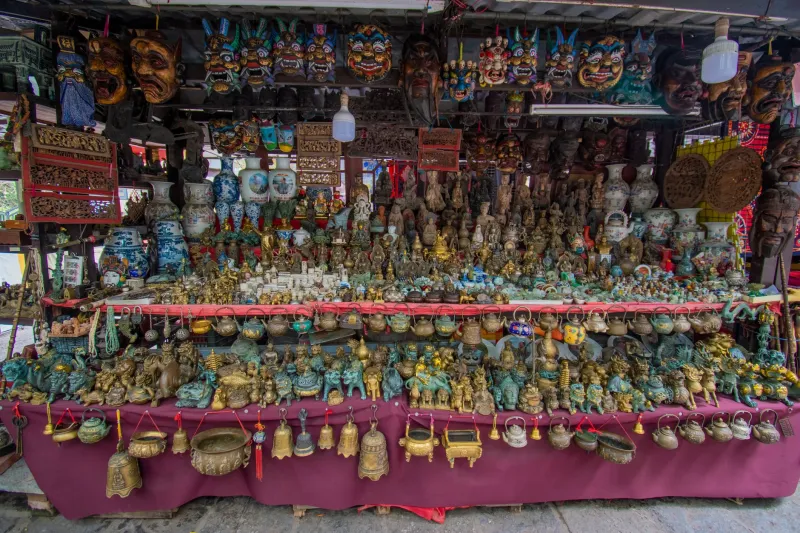
Every weekend, somewhere in America, the contents of a life are laid across folding tables in a driveway or a church parking lot. Among the coffee percolators and Reader's Digest condensed novels, there is almost always a box of travel artifacts: a snow globe from Niagara Falls with the water gone cloudy, a rolled map of Yellowstone still in its original rubber band, a linen tea towel from Williamsburg, Virginia, laundered perhaps once and then folded into permanent retirement. The price tags are modest. The histories are not.
These objects did not fail their owners through neglect. They were, in nearly every case, carefully transported home, deliberately stored, and consciously preserved. What they were not, in many instances, was actually used. The distinction matters more than it appears to.
The Victorian Precedent
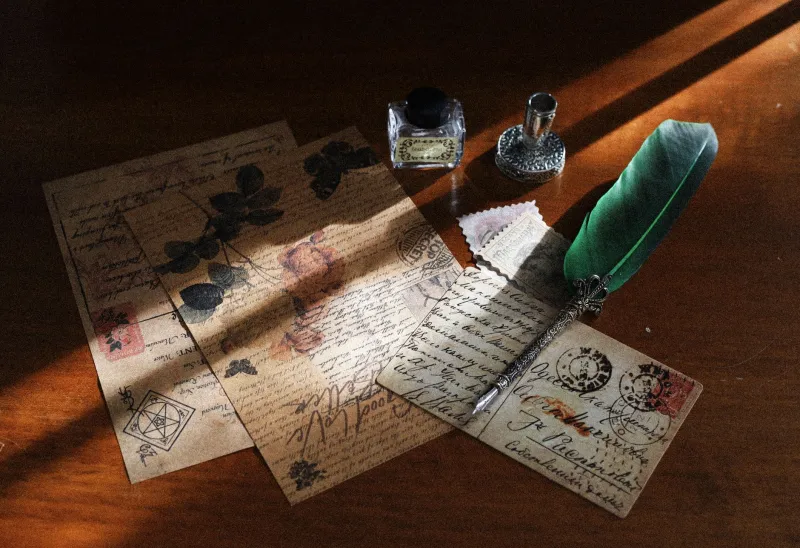
The habit of collecting travel objects for their symbolic rather than practical value is not a product of the modern gift shop. It predates the American tourist industry by centuries. Victorian travelers on the Grand Tour returned from the Continent with pressed botanical specimens, watercolor prints of Roman ruins, and fragments of mosaic tile purchased from street vendors near the Colosseum—objects that were catalogued, framed, and displayed in parlors as proof of cultural ambition rather than tools of ongoing engagement.
What the Victorians understood, and what their estate sale equivalents confirm, is that the souvenir serves a dual function. It is simultaneously a record of the journey taken and a placeholder for the journey imagined. The map of Yellowstone still in its rubber band was not forgotten. It was saved. The person who saved it likely intended, at some point, to unfold it, to trace the route with a finger, to remember. That the moment never arrived is not evidence of indifference. It is evidence of something more complicated.
Hospitality industry records from the late nineteenth and early twentieth centuries document a related pattern. Hotel gift shops in resort towns—Saratoga Springs, Bar Harbor, Asheville—tracked inventory carefully, and their purchasing ledgers survive in surprising numbers in regional archives. What those ledgers reveal is that the most popular items were rarely the most functional. Decorative ceramics outsold useful ones. Illustrated booklets describing local attractions sold briskly to guests who had already spent three days at those very attractions. The object was purchased not to extend the experience but to freeze it.
The Permission Structure of Acquisition
There is a psychological logic here that experimental research has only recently begun to articulate, though the historical record has been demonstrating it for millennia. When we acquire an object connected to a place or an experience, we are engaging in what might be called anticipatory memory—we are purchasing the feeling of having fully absorbed something we sense we have not fully absorbed. The sealed souvenir is, in this reading, a promissory note made to oneself.
Diary accounts from American travelers in the mid-twentieth century are particularly revealing on this point. A woman traveling alone through New Mexico in 1952 wrote in her journal that she had purchased a small Navajo-style weaving from a trading post outside Santa Fe. She described it as "something to sit with later, when I have time to understand what I saw." The weaving, she noted, was already wrapped in tissue. There is no subsequent entry indicating it was unwrapped.
This is not a story of failure. It is a story of honest self-knowledge, expressed indirectly. The traveler understood, at some level, that the trip had given her more than she had yet processed. The weaving was not a souvenir of New Mexico. It was a souvenir of her own incompleteness in the face of it.
What the Unopened Object Confesses
Estate sale professionals who specialize in clearing the homes of older Americans report a consistent observation: travel artifacts are among the objects most likely to be found in original packaging or in a preserved, unused state. This is distinct from, say, fine china kept for special occasions that never materialized. The china was waiting for a social event. The souvenir was waiting for a private reckoning.
The difference is significant. When we set aside the commemorative plate from Colonial Williamsburg or the unopened bottle of Vermont maple syrup purchased at a highway rest stop, we are not deferring a practical use. We are deferring a confrontation with what the trip was supposed to mean. The object holds the question open. As long as it remains sealed, the trip remains, in some sense, unfinished—and therefore still available to become what we needed it to be.
This behavior traces a direct line back to the Victorian collector, who displayed his Roman mosaic tile not because he had resolved his relationship to antiquity but because he had not. The display kept the question alive. The modern equivalent keeps it in a drawer.
The Trip We Needed to Take
What separates the souvenirs we engage with from the ones we preserve untouched is not the quality of the object or the distance of the journey. It is the degree to which the trip itself delivered what the traveler required. The bottle of hot sauce from a New Orleans market that gets used within a week of returning home represents a trip that landed. The hand-painted ceramic tile from Taos, still wrapped in the shop's tissue paper two decades later, represents a trip that pointed at something the traveler has not yet reached.
This is not a criticism. The historical record suggests that the gap between the trip taken and the trip needed is one of the most consistent features of human travel across cultures and centuries. Pilgrims returned from Jerusalem with vials of holy water they never opened. Medieval merchants carried home curiosities from distant markets that were displayed but never examined. The form changes. The underlying dynamic does not.
What the sealed souvenir ultimately reveals is that travel has never been primarily about the destination. It is about the traveler's unfinished conversation with themselves—a conversation that the journey interrupts, accelerates, and sometimes, if the trip is honest enough, begins. The object on the shelf, still in its wrapping, is evidence that the conversation is ongoing.
The next time you pass a driveway sale and spot the box of someone else's carefully preserved travel artifacts, consider what you are actually looking at. You are looking at a record of aspiration—not failed aspiration, but aspiration in the truest sense: desire that outlasted the journey and waited, patiently, for a moment that the calendar never quite provided. The past is full of such boxes. So, in all likelihood, is your own attic.