What the Luggage Already Knows: How the Objects We Pack Reveal the Trip We Believe We're Taking
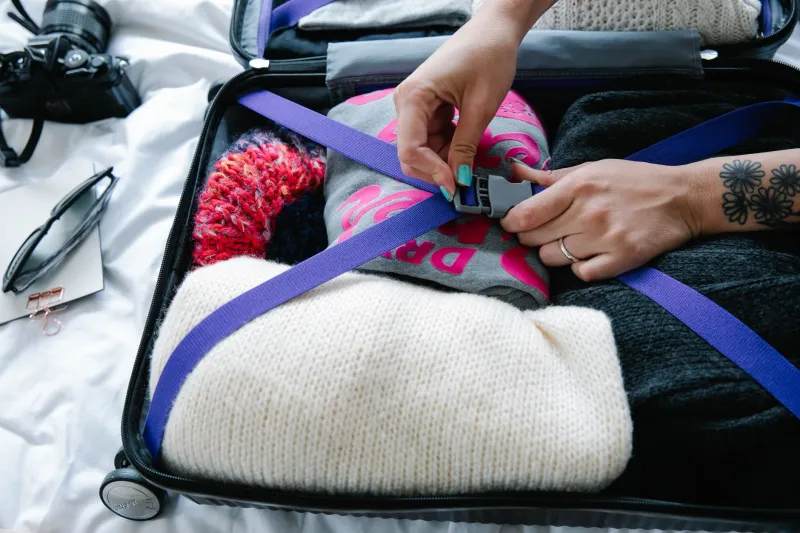
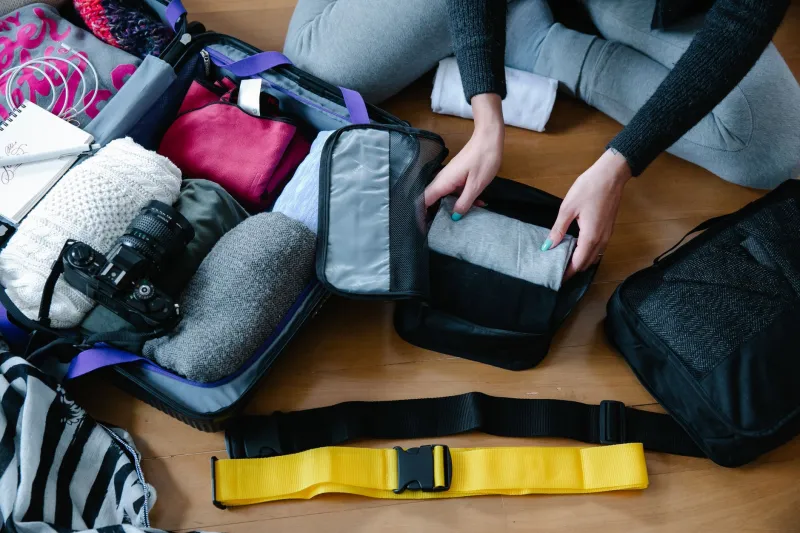
There is a peculiar honesty in an open suitcase. Before a single shirt is folded or a charger coiled into a corner, the traveler has already made a series of quiet decisions that reveal far more about psychology than logistics. The act of packing is, at its core, an act of prediction — and the most important variable in that prediction is not the destination. It is the return.
Pack for two weeks, and you bring what you need. Pack to leave permanently, and you bring what you are.
This distinction is not modern. It is ancient, structural, and deeply human. And understanding it requires looking not at airport terminals but at the long record of human migration, exile, and voluntary departure that preceded them by millennia.
The Temporary Container and the Permanent One
When the Roman legionary marched into Gaul, he carried roughly sixty pounds of equipment — tools, rations, weapons, and the minimum necessary to sustain a fighting man in the field. His kit was engineered for return. Every item served a function that would expire when the campaign ended. Nothing in that pack was irreplaceable. Nothing was carried because it had once belonged to his grandmother.
Contrast that with the cargo manifest of a single emigrant ship departing Hamburg for Baltimore in 1882. The trunks in the hold contained feather quilts, religious texts, hand-embroidered linens, and in more than a few documented cases, small vials of soil taken from the yard of a home the traveler would never see again. These were not practical objects. They were not selected to survive a journey. They were selected to survive a life.
The psychological mechanism at work is consistent across five thousand years of human travel: when we believe we are coming back, we pack for the trip. When we believe we are not, we pack for identity.
The Vacation Packer and the Emigrant Packer Are the Same Person
This dynamic does not require an ocean crossing to manifest. It operates at every scale of departure.
Consider the American traveler preparing for a two-week vacation to the Pacific Northwest versus the same person relocating to Portland for a new job. Behaviorally, these are the same individual. Psychologically, they are packing from entirely different premises. The vacationer brings what is needed and leaves behind what is loved. The relocator reverses that calculus almost completely.
Researchers studying decision-making under conditions of perceived permanence have consistently found that people attach greater significance to objects when they believe those objects will define them in a new context. The coffee mug that stays in the cabinet when you fly to Seattle for a week becomes a non-negotiable item when the move is indefinite. The framed photograph you would never check in a bag gets bubble-wrapped and shipped when the address changes.
What shifts is not the object. What shifts is the role the traveler expects it to play.
What Temporary Departure Permits
There is a particular freedom embedded in the temporary trip that historians of travel have noted repeatedly across cultures. The pilgrim on the road to Santiago de Compostela was instructed, by both spiritual tradition and practical necessity, to carry almost nothing. The lightness was not incidental — it was theological. The journey was understood as a temporary departure from ordinary life, and the pack reflected that understanding. You do not bring your whole self to a pilgrimage. You bring the self you are trying to examine.
American travel culture has inherited this tradition in diluted but recognizable form. The deliberate under-packing of the experienced traveler — the carry-on only, the capsule wardrobe, the single pair of shoes — is partly practical and partly philosophical. It is a statement about the nature of the trip: I am going out and coming back. I am not taking my life with me. I am leaving it here, intact, to return to.
This is why the over-packer is not merely inefficient. The over-packer is, on some level, uncertain about the return.
The Objects That Refuse to Stay Home
Every experienced traveler can identify at least one object they carry on every trip regardless of destination or duration — an item that has no practical justification for its presence. A particular book that has been read twice and will likely not be read again. A piece of jewelry worn nowhere but airports. A lucky item whose luck has never been tested and whose absence has never been risked.
These objects are not packing errors. They are anchors. They travel not because they are needed at the destination but because their absence would make the departure feel more permanent than the traveler intends.
The Roman soldier carried a wax tablet with the names of his family members. The eighteenth-century grand tourist tucked a portrait miniature into his trunk beside the dress coats. The American businessman flying to a three-day conference slips a photograph into the front pocket of his bag without quite knowing why. The form changes. The function does not.
The Return as Architecture
What the long record of human travel teaches us is that the return is not merely the end of a trip. It is the structural premise of one. Every decision made in the packing phase — what to bring, what to leave, what to carry on one's person versus check in the hold — is made in the shadow of an anticipated homecoming.
When that homecoming is certain, the suitcase is a tool. When it is uncertain, the suitcase becomes something closer to a confession.
The next time you stand before an open bag and reach for something you cannot entirely justify bringing, it is worth pausing to ask what you are actually packing for. The destination will tell you something about where you are going. The contents of the bag will tell you something about whether you believe you are coming back — and what version of yourself you are planning to retrieve when you do.
The luggage already knows. It has always known.