When America Forgot How to Walk: The Hidden Psychology of Automotive Travel
The Speed That Shaped Civilization
For the first 5,000 years of recorded human travel, everyone moved at roughly the same pace: three miles per hour, the natural speed of human walking. This wasn't a limitation—it was the foundation of how our species understood space, time, and each other. Medieval pilgrims, Roman legions, and frontier settlers all shared this common denominator of embodied movement, and it shaped everything from the distance between inns to the rhythm of courtship to the pace of religious conversion.
Then, in the span of a single generation, America abandoned this ancient rhythm entirely. The automobile didn't simply accelerate travel; it severed the psychological connection between movement and the body that had defined human experience since we first left the cave. What we gained in efficiency, we lost in something far more fundamental: the deep knowledge that comes only from moving through landscape at the speed of our own legs.
The Walking Mind vs. The Driving Mind
Consider what happens to consciousness at three miles per hour versus thirty. The walking traveler experiences landscape as a continuous narrative, each mile revealing itself in granular detail. Hills are felt in the legs before they're seen with the eyes. Weather isn't observed but inhabited. Distance isn't measured in time but in effort, creating an intimate relationship with geography that the automobile makes impossible.
This difference matters more than we realize. Anthropologists studying hunter-gatherer societies have found that the human brain evolved sophisticated spatial navigation systems designed specifically for pedestrian travel. We can still observe these systems at work in cultures that never fully motorized—the Aboriginal Australian concept of "songlines," the Inuit practice of landscape storytelling, the way Tibetan pilgrims read terrain as spiritual instruction.
 Photo: Aboriginal Australian songlines, via img.freepik.com
American travelers lost access to these ancient cognitive technologies the moment we started viewing landscape through windshields instead of walking through it. The road trip, for all its mythology of freedom, is actually a highly constrained experience—a predetermined path at a predetermined speed, with predetermined stops at predetermined intervals.
The Economics of Embodied Travel
Pre-automotive America understood something about travel that we've forgotten: the journey was supposed to be work. Not the modern concept of work as drudgery, but work as the physical and mental effort that creates meaning. The frontier settler who walked from Pennsylvania to Ohio arrived not just geographically but psychologically transformed by the effort itself.
This transformation was so reliable that entire industries depended on it. The 19th-century "walking cure" movement sent wealthy Americans on prescribed pedestrian journeys to treat everything from nervous exhaustion to moral weakness. These weren't quaint medical fads but sophisticated applications of what we now call embodied cognition—the understanding that thinking and moving are inseparable processes.
The automobile severed this connection between effort and transformation. Modern Americans spend thousands of dollars trying to recreate through spa retreats and wellness tourism what their great-grandparents accessed for free through the simple act of walking long distances. We've created an entire industry around selling back the psychological benefits of embodied travel.
The Mythology of Automotive Freedom
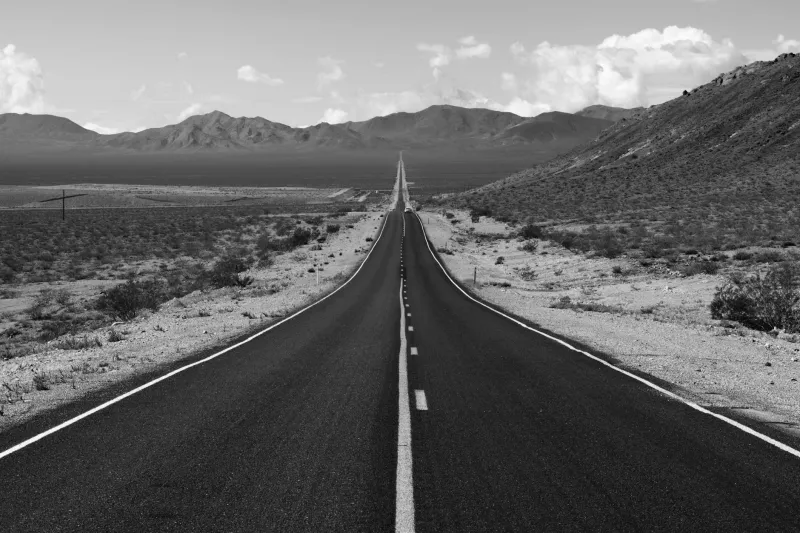
The American love affair with the open road isn't really about freedom—it's about nostalgia for a type of travel we can barely remember. The iconic image of the endless highway stretching toward the horizon is psychologically appealing precisely because it mimics the experience of walking toward a visible destination. But this is a false promise. The driver never actually reaches that horizon through their own effort; they're transported to it by a machine.
This explains why road trips so often disappoint despite their cultural promise. The automobile creates the illusion of journey without the substance. You can drive from New York to California and arrive essentially unchanged, having experienced the country as a series of framed images rather than as a physical reality your body had to negotiate.
The most honest automotive travelers unconsciously try to restore some element of embodied experience—stopping frequently, taking detours, choosing scenic routes that force slower speeds. These behaviors aren't really about seeing the sights; they're attempts to recover some fragment of the walking relationship with landscape.
What We Lost When We Stopped Walking
The shift from pedestrian to automotive travel didn't just change how Americans move; it fundamentally altered how we process experience itself. Walking creates what psychologists call "diffuse attention"—a relaxed, receptive state of consciousness that allows for unexpected connections and insights. This is why so many cultures associate walking with meditation, problem-solving, and creative breakthrough.
The automobile demands focused attention—eyes on the road, hands on the wheel, mind on the traffic. This state of hypervigilance is the opposite of the contemplative consciousness that pedestrian travel naturally produces. We've traded the psychology of pilgrimage for the psychology of commuting, even when we're supposed to be on vacation.
The Return of Embodied Travel
The recent explosion in walking-based tourism—the Camino de Santiago, the Appalachian Trail, urban walking tours—isn't a new trend but a return to an ancient understanding. These experiences are popular precisely because they restore the connection between movement and meaning that automotive travel severed.
 Photo: Appalachian Trail, via ashevilletrails.com
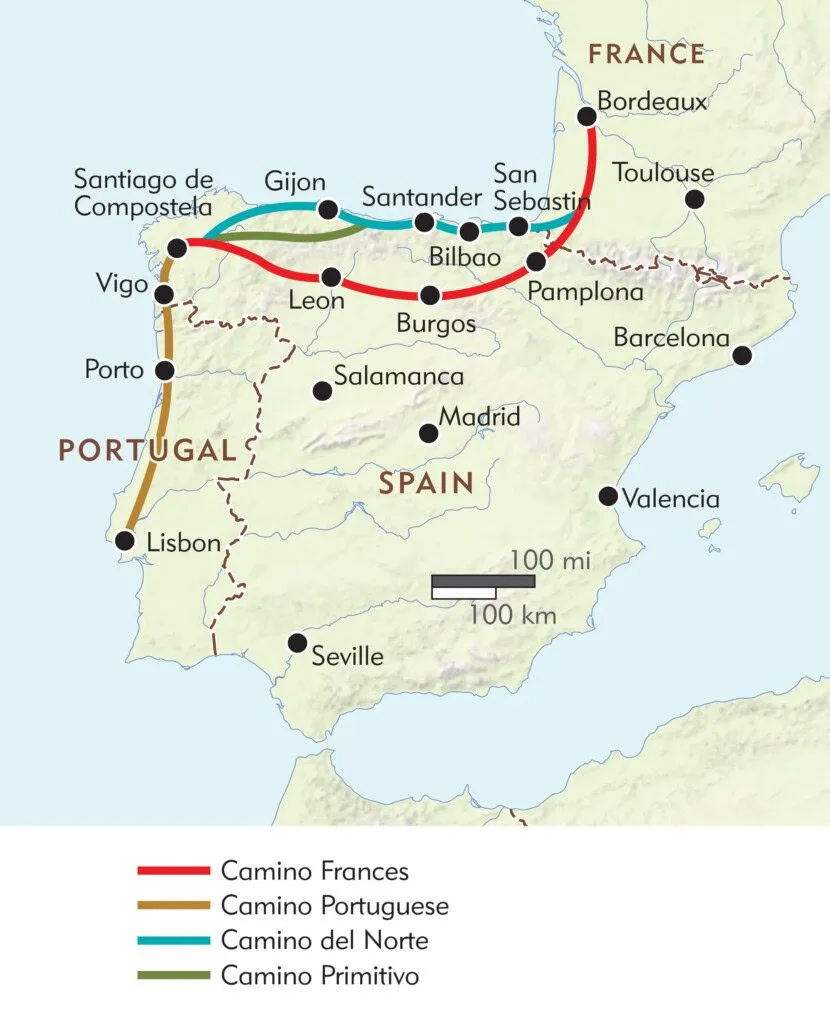 Photo: Camino de Santiago, via i.pinimg.com
The most psychologically satisfying travel experiences still involve some element of embodied movement: hiking to a remote vista, walking through a historic city center, exploring a neighborhood on foot. These activities work because they engage the same cognitive systems that shaped human consciousness for millennia.
For the modern American traveler, the question isn't whether to abandon the automobile entirely—that ship has sailed. The question is how to deliberately restore elements of embodied travel within our automotive culture. The answer lies in understanding that the journey itself, not just the destination, is supposed to change you. And that change only happens when your body, not just your vehicle, does the work of moving through the world.