The 2 A.M. Stranger: On Temporary Communities and the Truths We Reserve for People We Will Never See Again
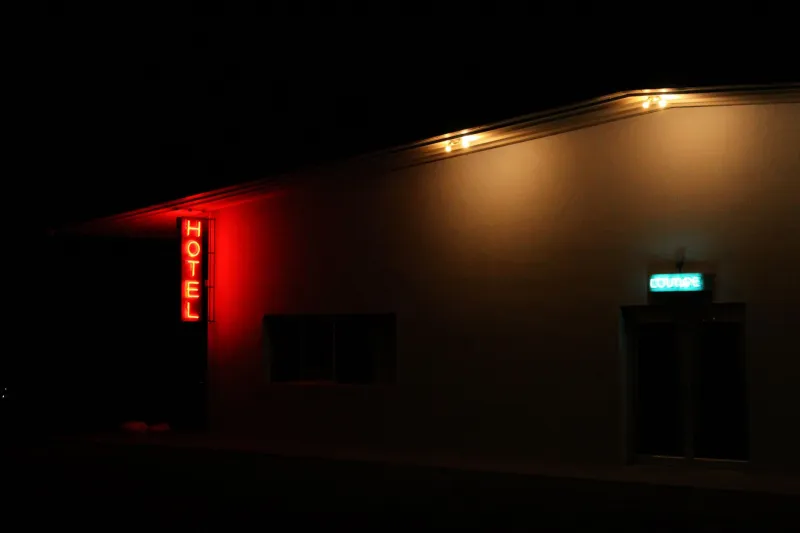
There is a particular kind of conversation that only happens in transit — in motel lobbies at midnight, in rest stop parking lots, in the common areas of rental houses where strangers have been deposited together by circumstance. These conversations have a quality unavailable in ordinary life, and the reason is very old: the knowledge that the listener will disappear makes honesty almost effortless.
If you have traveled with any frequency, you have almost certainly had one of these exchanges. You have told someone you would never see again something you would not tell your closest friend. You have, perhaps, been surprised by your own candor. The surprise is unnecessary. This is one of the most consistent behaviors in the entire recorded history of human movement.
The Inn as Institution
The roadside inn, in its earliest forms, was not merely a place to sleep. It was the primary information exchange of the ancient world. In Mesopotamia, in the Roman Empire, along the Silk Road trading routes — wherever people moved, they gathered in common spaces at the end of the day and exchanged what they knew. The news, the gossip, the warning, the confession.
The Roman taberna was simultaneously a tavern, an inn, a commercial exchange, and a social institution with no precise modern equivalent. Travelers from distant provinces arrived carrying information unavailable to locals — political developments, commodity prices, the condition of roads ahead. In exchange, they received shelter, food, and the accumulated intelligence of everyone who had passed through before them. The transaction was never purely commercial.
What the ancient sources record, with a consistency that survives across cultures and centuries, is that the conversation at the inn was different from the conversation at home. People said things in transit that they would not say in their own communities. Merchants disclosed the details of deals they would never acknowledge in their home markets. Soldiers described campaigns in terms unavailable in official accounts. Travelers confessed to failures, fears, and complications that their ordinary social roles required them to conceal.
The mechanism was simple and has not changed: these people would never see each other again. The normal social consequences of honesty — the damaged reputation, the altered relationship, the memory that persists in the community — were suspended. What was said at the inn stayed at the inn, not by rule but by geography.
Why the Threshold Matters
Anthropologists have a term for spaces that exist between defined social categories: liminal zones. The word derives from the Latin for threshold, and it refers to any environment that sits outside the ordinary structures of community, hierarchy, and role. Liminal spaces are, by definition, temporary. You pass through them. You do not live in them.
The motel room, the rest stop, the airport gate area, the Airbnb common room — these are all liminal in precisely this sense. They are not home. They are not the destination. They are the between-space, and the between-space has always operated by different rules.
In liminal space, the ordinary markers of identity become unreliable. The person in the motel lobby at midnight is not the version of themselves that their colleagues know, or that their family knows, or that their neighbors see arriving home on a Tuesday evening. They are temporarily unmoored from the social architecture that defines them in their ordinary life. This is disorienting, and it is also, for many people, a relief.
The stranger across the lobby is in the same condition. Neither of you has context for the other. You are, to each other, pure present tense — no history, no expectation, no social ledger of prior interactions. The conversation that emerges from this mutual anonymity has a freedom that most conversations between people with established relationships cannot access.
The Guest Book as Evidence
The Airbnb guest book is a contemporary artifact that deserves more serious attention than it typically receives. Left in rental properties for guests to write in voluntarily, these books accumulate, over months and years, a record of what travelers choose to say when they know the audience is anonymous and temporary.
The entries are rarely what you would expect from people writing for public consumption. They are frequently confessional in register — people describing what they were running from when they booked the rental, what they were trying to repair, what they were celebrating at the end of something difficult. They write about marriages in trouble, grief in progress, transitions they were not certain they would survive. They address the future strangers who will read their words with an intimacy they might not extend to people they actually know.
This is not a new phenomenon. Hotel registers from the nineteenth century — the actual handwritten ledgers, now archived in historical societies and university libraries across the country — contain similar evidence. Travelers who signed their names and hometowns frequently added notations that went well beyond the practical. Small observations, expressions of feeling, occasional confessions. The register was public, technically, but the audience was unknown and transient. The conditions for honesty were present.
The Motel Lobby at Midnight
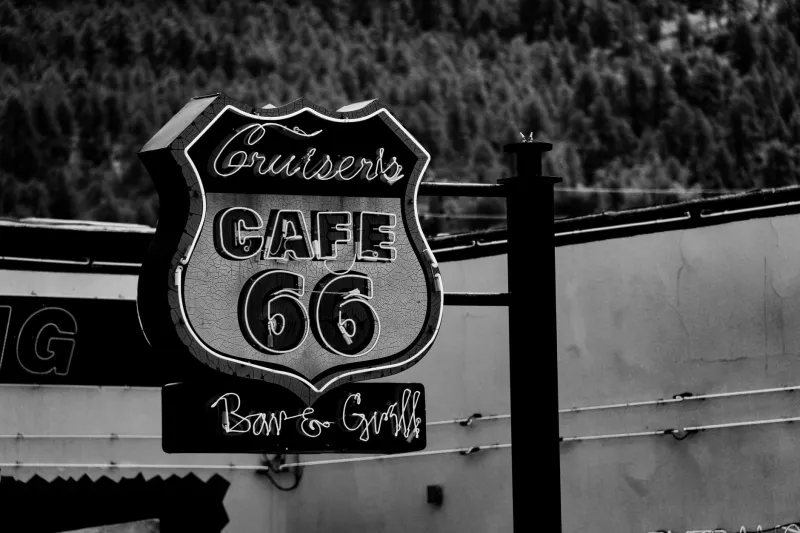
The American motel, specifically, created a social architecture that older inn traditions had not quite managed. The motor court and its descendants placed strangers in physical proximity — shared ice machines, shared vending alcoves, parking lots where people stood at midnight for no particular reason — while maintaining the formal separation of individual rooms. The motel lobby, where it existed, was a space without a clear social script. Nobody was required to speak. Nobody was required to be silent. The result was a particular kind of optional conversation, available to anyone who wanted it and carrying no obligation.
The conversations that happen in these spaces tend to follow a recognizable pattern, regardless of the decade or the specific location. Initial exchange is practical — directions, weather, the quality of the coffee. The transition to something more substantive happens quickly when it happens at all, because the window is understood to be short. You have until morning, or until one of you returns to your room. The constraint accelerates the intimacy rather than preventing it.
Travelers who have experienced this phenomenon frequently describe it as among the most honest exchanges of their lives. Not because the other person was especially wise or the setting especially conducive to reflection, but because the conditions removed the normal costs of candor. You could say the true thing because the person hearing it would be gone by morning.
The Strategic Dimension
For the traveler who wishes to understand this phenomenon rather than simply experience it, there is a practical dimension worth considering.
The temporary community of transit is not merely a space where you might inadvertently say more than you intended. It is also a space where others will tell you things they would not otherwise disclose. The fellow traveler in the airport lounge, the couple at the adjacent table in the motel breakfast room, the person at the rest stop who starts talking while you're both standing in the same patch of shade — these are people temporarily freed from their ordinary social constraints, and they will frequently tell you things about the place you're heading, the experience you're about to have, or the world you both inhabit that no guidebook and no algorithm will provide.
The long history of travel intelligence — the information networks that sustained ancient merchants, that guided medieval pilgrims, that allowed nineteenth-century American settlers to navigate an unmapped continent — ran almost entirely through these informal exchanges in shared temporary spaces. The stranger at the inn knew things you needed to know, and the conditions of the inn made them willing to share.
Those conditions have not changed. The motel lobby is still the inn. The rest stop is still the caravanserai. The person standing there at 2 a.m., for no apparent reason, is still the traveler who might tell you something true.
The only question is whether you sit down.