Sign Your Name: The Accidental Confessions Hidden in America's Hotel Registers

Somewhere in a county historical society in western Pennsylvania, there is a ledger from a tavern inn that operated along the National Road in the 1830s. The entries begin formally enough—names written in the careful copperplate of travelers who understood that penmanship was a form of self-presentation. But by the middle pages, something loosens. A traveler from Ohio has added, beneath his signature, a brief editorial opinion about the mattress. Another, from Virginia, has noted that the proprietor's wife makes a superior corn pudding, and that the proprietor himself is a man of reasonable honesty. A third has written something that the historical society's catalog describes, with admirable restraint, as "a ribald comment of uncertain attribution."
This ledger is not unusual. It is representative. Across the full span of American travel history, from the colonial ordinary to the interstate motel, the guest register served as an accidental confessional—a space where travelers wrote things they would not have said aloud, to an audience they could not quite see, about experiences they were still processing.
What those registers reveal, read carefully and across time, is a remarkably stable set of human behaviors dressed in the changing costumes of each era. The traveler of 1835 and the traveler of 1975 were operating on the same psychological equipment. Only the medium varied.
The Register as Social Contract
The requirement to sign into a guest register was not, originally, a hospitality courtesy. It was a legal and commercial instrument. English common law traditions that crossed the Atlantic with the first settlers established that innkeepers bore responsibility for the safety of their guests and their property—a responsibility that required knowing, at minimum, who was present on the premises. The register was the innkeeper's evidence of compliance.
But legal instruments have a way of accumulating social meaning beyond their original function, and the register acquired additional dimensions almost immediately. To sign your name in a public ledger was to assert your existence as a legitimate traveler—a person with a name, a place of origin, and a destination. In an era when identity documents were sparse and personal reputation was the primary currency of social trust, the act of signing was a form of declaration. I am a real person from a real place, and I am here on legitimate business.
The column for "place of origin" is particularly revealing in early registers. Travelers from distant cities recorded their hometowns with what reads, across the distance of nearly two centuries, as quiet pride. To have come from Philadelphia or Boston or New York was to carry, in the register, a small credential. To have come from a town too small to be recognized was sometimes addressed by the traveler themselves, who would add a brief clarifying note about the county or the nearest larger settlement—an early instance of the anxious self-annotation that would eventually become the social media bio.
What the Anonymous Room Unlocked
Human psychology has not changed in five thousand years, and one of its most consistent features is the behavioral shift that occurs when a person believes they are unobserved. The guest register was not, technically, anonymous—it required a name. But it was functionally semi-anonymous in a way that mattered: the writer was unlikely to encounter the reader. The innkeeper in rural Ohio and the traveler from Connecticut operated in separate social worlds, and the probability that any comment written in the register would follow the writer home was effectively zero.
This perceived anonymity produced a distinctive register voice that appears across surviving ledgers from the eighteenth century through the mid-twentieth: more candid than a letter, less guarded than a conversation with a stranger, and occasionally startling in its directness. Travelers complained about bed bugs with a specificity that suggests genuine outrage. They praised food with an enthusiasm that reads as genuine surprise. They commented on the behavior of other guests, the cleanliness of the facilities, and the character of the proprietor with the confidence of people who expected their words to remain local and temporary.
The psychological mechanism at work here is well-documented in contemporary research: people behave differently when they believe they are not being watched, and they speak more honestly when they believe their words will not be attributed. The guest register, for most of its history, functioned as a low-stakes confessional. The traveler could say what they actually thought, because the person they actually thought it at was unlikely to ever read it.
The Motel Era and the Loosening of Form
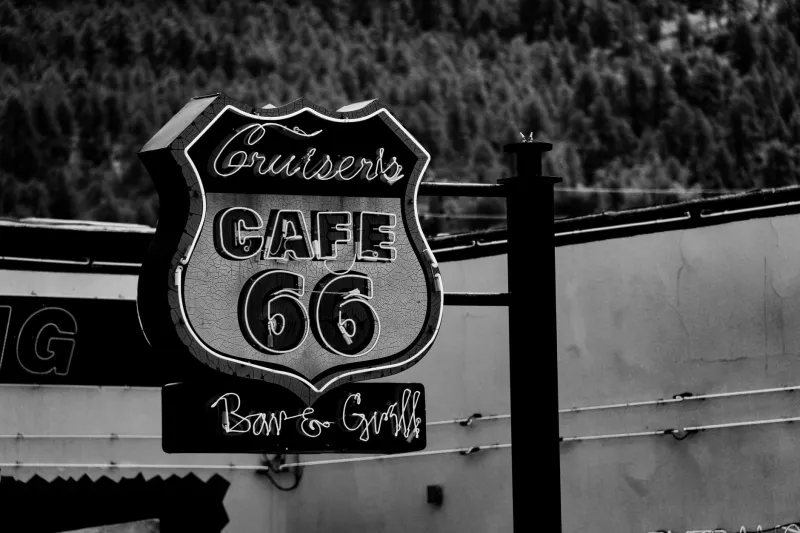
The mid-twentieth century motel register represents a distinct chapter in this history, and it is worth examining separately. The motel—a genuinely American invention, designed for automobile travelers stopping for a single night on routes that would have no fixed social community—stripped the guest register of most of its remaining social formality.
At a nineteenth-century hotel, the register was kept by a desk clerk who observed the signing and who represented, in some sense, the social standards of the establishment. The motel often reduced this interaction to a minimum. The traveler arrived, signed, received a key, and was largely left alone. The register entry became correspondingly abbreviated—a name, sometimes false; a license plate number; a home address, sometimes invented. The formality of copperplate gave way to the pragmatic scrawl of someone who had been driving since morning and wanted to reach the room.
But something interesting happened in the comment sections that some motels appended to their registers, and in the comment cards that began to supplement them in the postwar decades. Freed from even the minimal social observation of the desk clerk, travelers wrote with a candor that occasionally approached the clinical. Complaints about noise, about plumbing, about the behavior of neighboring guests, about the precise temperature at which the air conditioning unit vibrated—these were recorded with a specificity that suggests the writers understood, on some level, that they were documenting something for posterity, even if posterity was only next week's manager.
The comment card was the first systematic attempt to harvest the traveler's candid opinion as a business intelligence tool. It was also, from a historical perspective, the first indication that the industry understood what travelers had always known: that the anonymous written opinion had value precisely because it was unguarded.
The Review That Ate the Register
The online review platform is the guest register's direct descendant, and the continuity is more than metaphorical. The psychological transaction is identical: a traveler, at some remove from the experience, records their assessment of an accommodation for the benefit of strangers they will never meet. The register entry of 1850 and the TripAdvisor review of 2010 are the same document in different handwriting.
What changed is the direction of the anxiety. In the era of the physical register, the writer believed they were essentially unaccountable—their words might be read by the next guest, but they would not follow the writer into their ordinary life. The online review inverts this entirely. The writer's name is attached. The review is permanent. The audience is potentially unlimited. And the subject of the review—the hotel, the motel, the bed-and-breakfast—can respond publicly.
The result is a curious regression toward formality. Online reviews, studied in aggregate, are notably more performative and less candid than the physical register entries that preceded them. The writer is constructing a public identity as a reviewer, not simply recording a private reaction. The loosening that the physical register permitted—the ribald comment, the specific complaint, the unguarded praise—has been recaptured by the awareness of audience.
What the Ledger Knew
For the traveler interested in understanding a place rather than simply visiting it, surviving guest registers are among the most valuable primary sources available. They are held in county historical societies, state archives, university special collections, and the attics of families who ran inns for generations. They are rarely digitized. They require physical presence to consult—which is, in its own way, appropriate.
To read an old register is to encounter the traveler's voice in its least mediated form: written quickly, in a temporary space, for an uncertain audience, with the reasonable expectation that no one of consequence would ever read it carefully. That expectation was wrong, as it turns out. Someone is always reading carefully. The long memory of a place is assembled from exactly these unguarded moments—the name signed in haste, the complaint recorded in frustration, the small praise offered to a stranger who made one night on a long road slightly more bearable than it might have been.
The register knew things about its guests that the guests did not know it knew. It still does.