The Deliberate Invisible: Why Some American Towns Chose Obscurity Over Opportunity
The history of American tourism is largely written from the perspective of places that welcomed the arriving economy — the resort towns, the scenic corridors, the Main Streets that learned to perform themselves for outside audiences. Far less examined are the communities that saw the same wave approaching and, with clear eyes and deliberate intention, stepped aside. Their reasoning was not simple hostility. It was, in many cases, a more sophisticated analysis of long-term civic survival than their celebrated neighbors ever managed.
Understanding why certain places refused discovery — and what became of them afterward — is one of the more useful exercises available to the serious traveler. It requires reading the landscape not for what it offers the visitor but for what it has chosen to withhold, and why.
The Railroad Calculation
In the decades following the Civil War, the extension of rail lines through Appalachian communities presented local leaders with a choice that looked, on its surface, like no choice at all. The railroad meant access to markets, an end to geographic isolation, the arrival of cash wages and manufactured goods. To refuse it seemed irrational.
And yet some communities refused it, or declined to advocate for routes that would have brought lines through their valleys. The reasons varied but tended to converge on a shared concern: the railroad did not merely bring goods in. It brought strangers in, and it took young people out. Several mountain communities in western North Carolina and southwestern Virginia recognized, from observation of neighboring areas, that the arrival of outside economic infrastructure tended to reorganize local society in ways that benefited the infrastructure's owners more than the inhabitants.
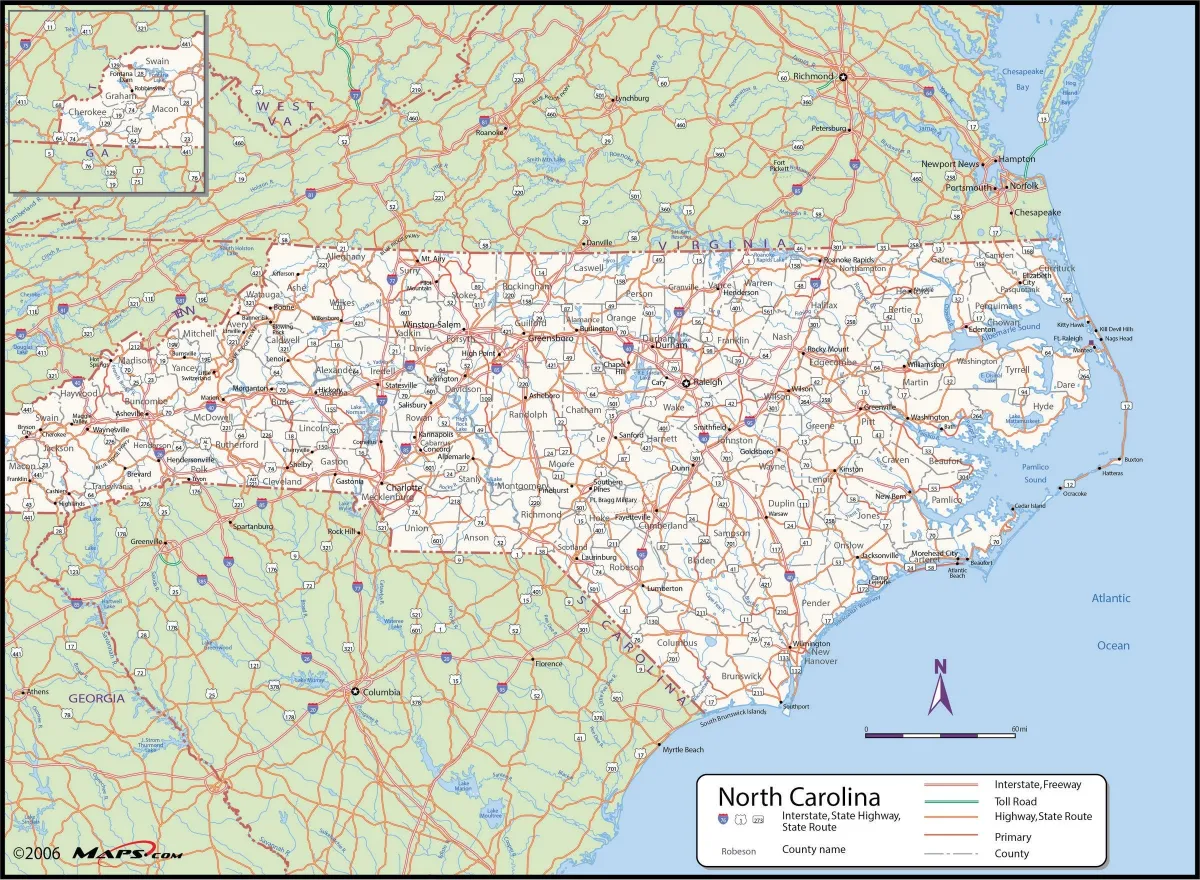 Photo: North Carolina, via cdn.shopify.com
This was not Luddism. It was a land-tenure argument dressed in cultural language. Communities whose economies rested on small-scale subsistence farming and local barter networks had developed, over generations, a form of economic resilience that was largely invisible to outside observers precisely because it generated no surplus for extraction. Inviting the railroad meant inviting the conditions under which that resilience would be dismantled and replaced with wage dependency — a trade that looked like progress from the outside and felt, to those who understood the local arithmetic, like a net loss.
Some of those communities still exist, in recognizable form, today. Their neighbors who welcomed the railroad and the tourism economy it eventually carried are, in many cases, gone — absorbed into resort districts or simply emptied by the same mobility that the railroad enabled.
The Boutique Hotel Problem
The contemporary version of this calculation is playing out in small cities across the American interior, and it is worth examining with the same clarity the Appalachian communities applied to the railroad.
The arrival of boutique hotel development in a previously overlooked small city follows a pattern that is by now well-established and fairly predictable. A handful of national publications identify the place as "undiscovered." Real estate prices in the historic district begin to move. A developer proposes a boutique property in a former industrial building. The city council convenes to consider incentive packages.
At this point, the communities that have studied the cycle — or that have simply watched what happened to their neighbors — face the same structural question their Appalachian predecessors faced. The arriving economy promises tax revenue, jobs, and visibility. What it does not promise, and what the historical record suggests it rarely delivers in full, is the preservation of the conditions that made the place worth visiting in the first place.
Several mid-sized American cities have, in the past two decades, quietly declined to pursue the boutique destination model. They have turned down developer overtures, declined to submit applications for heritage tourism grants, and in some cases actively suppressed the kind of media coverage that initiates the discovery cycle. Their reasoning, when articulated at all, tends to be framed in terms of infrastructure capacity or community character. The underlying logic is more fundamental: they have read the curve and decided they prefer to stay on its left side.
What the Cycle Actually Costs
The destruction cycle of tourist discovery is not a secret. It has been documented thoroughly enough that any city planner with a library card can reconstruct it from case studies. A place is identified as authentic. Visitors arrive to experience that authenticity. The infrastructure required to serve the visitors gradually displaces the conditions that produced the authenticity. The place becomes a version of itself, optimized for outside consumption, and the original inhabitants — the ones whose presence constituted the authenticity — are priced or crowded out.
This cycle operates on a timeline of roughly fifteen to thirty years, depending on the pace of initial discovery and the local capacity for development. It is fast enough that a community leader who was present at the beginning can, if they live long enough, watch the entire arc complete itself.
What the communities that opted out understood, either through analysis or through the visceral observation of neighboring cases, is that the cycle is easier to prevent than to arrest. Once the discovery economy achieves critical mass in a place, the political and economic forces it generates tend to overwhelm local resistance. The time to make the decision is before the magazine piece runs, not after.
The Invisibility Strategy
Deliberate obscurity is not the same as stagnation. The communities that have most successfully maintained their character against the pressures of the tourism economy have generally done so not by closing themselves off but by cultivating a specific kind of selective visibility — present enough to sustain local commerce, absent enough from the national conversation to avoid triggering the discovery mechanism.
This requires active maintenance. It means not submitting to certain travel publications. It means local business owners declining invitations to appear in destination marketing campaigns. It means city councils resisting the temptation to brand the community as anything at all. In an era when visibility is reflexively treated as an unqualified good, the decision to remain unbranded is genuinely countercultural — and genuinely difficult to sustain against the enthusiasm of any individual resident who believes their town deserves wider recognition.
The traveler who finds one of these places — and they can be found, though not through the usual channels — encounters something increasingly rare in American civic life: a community whose character has not been edited for outside consumption. The food is local because the town feeds itself, not because it is performing localism. The buildings are old because no one has found it profitable to replace them. The people are present because they have not been displaced.
Reading the Landscape
For the traveler who has developed an eye for this pattern, the signs of deliberate invisibility are legible in the landscape itself. The absence of a visitor's center is meaningful. The lack of wayfinding signage for attractions that clearly exist is meaningful. A downtown with working businesses oriented toward local customers rather than browsing tourists is, in the current environment, a significant data point.
None of this means such places are unwelcoming to the individual traveler who arrives with genuine curiosity and appropriate modesty. What it means is that they have made a collective decision about the terms on which outside engagement occurs — and that decision deserves to be respected rather than overridden by the traveler's desire to feel they have discovered something.
The long memory of American civic life contains many more examples of communities that chose this path than the travel press has any incentive to acknowledge. They are not failures of development. In many cases, they are its most successful refusals — and the proof of their wisdom is precisely that you have not yet read about them anywhere.