The Landmark They Chose to Lose: What a Town's Demolitions Reveal About Its True Ambitions
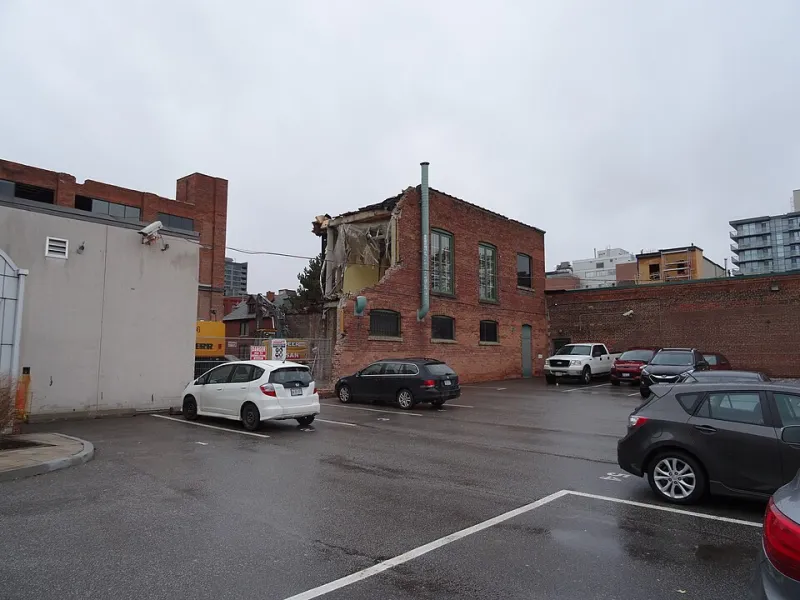
Photo: OldYorkGuy, CC BY-SA 3.0, via Wikimedia Commons
The Landmark They Chose to Lose: What a Town's Demolitions Reveal About Its True Ambitions
The Temple of Artemis at Ephesus was destroyed seven times. Six of those destructions were imposed from outside — by flood, by arson, by conquest. The seventh was committed by the city itself, which quarried the ruins for building material once the temple ceased to serve a living purpose. That final demolition is the instructive one. The external catastrophes tell us about the fragility of monuments. The self-directed quarrying tells us about the community's actual relationship to its own history — and its calculation, made with clear eyes, that the stone was worth more as a foundation for something new than as a ruin worth preserving.
 Photo: Temple of Artemis at Ephesus, via explorekusadasi.com
Ephesus is not an anomaly. It is a template. From the wholesale clearance of historic Route 66 motor courts to the deliberate burning of Coney Island's aging pavilions, from the demolition of Penn Station to the quiet erasure of entire Main Street districts across the rural Midwest, communities have repeatedly eliminated the features that drew outsiders to them. The mechanism changes across centuries. The psychology does not.
 Photo: Coney Island, via bonjournewyork.fr
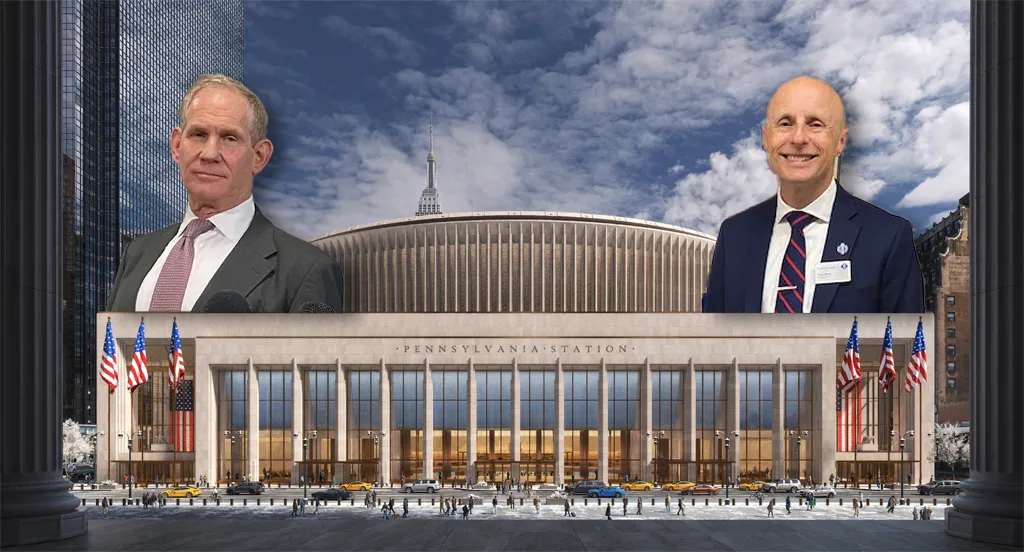 Photo: Penn Station, via nyc.streetsblog.org
For the serious traveler, this pattern is not merely melancholy. It is actionable. A community's demolition record is one of the most reliable predictors of its future trajectory available — if you know how to read it.
The Three Modes of Civic Self-Erasure
Historical analysis of landmark destruction reveals three distinct patterns, each with different implications for what comes next.
The first is neglect that becomes policy. A landmark falls into disrepair not because anyone decides to destroy it, but because no one decides to save it — and eventually the cost of saving it becomes the justification for the demolition that was, in retrospect, always the preferred outcome. This was the fate of thousands of historic train depots across the American interior between 1950 and 1980. The railroad companies stopped maintaining them. The cities stopped requiring maintenance. The structures deteriorated to the point where demolition was presented as a safety necessity rather than a choice. The choice had been made years earlier, in the form of sustained inattention.
The second pattern is deliberate erasure for modernization. Here the community makes an explicit decision that the landmark represents a past it is finished with — that the old building, the old district, the old attraction is incompatible with the image the town is trying to project toward a different future. Penn Station's 1963 demolition is the American case study. The structure was not dangerous. It was not unsalvageable. It was, in the estimation of the people who controlled its fate, simply the wrong kind of impressive for a city that wanted to be modern rather than grand. The architectural critic Ada Louise Huxtable wrote at the time that its destruction marked the moment Americans learned to mourn what they had not yet lost. The lesson did not prevent further losses.
The third pattern is the most psychologically complex: destruction of the landmark by the community that originally built it, once the landmark's function has shifted from local pride to external curiosity. This is the pattern that most directly concerns the traveler, because it represents the moment when a destination's relationship to its own identity fractures along the line between residents and visitors.
When Tourists Become the Threat
Coney Island's long decline illustrates this fracture with particular clarity. The great amusement parks — Steeplechase, Luna Park, Dreamland — were not originally built for outsiders. They were built for New Yorkers, by New Yorkers, as a democratic escape valve for a city under enormous population pressure. The attractions were locally embedded, locally patronized, and locally meaningful.
As the twentieth century progressed and Coney Island's identity became increasingly defined by its tourist function rather than its neighborhood function, the relationship between the place and its residents grew adversarial. The landmark that outsiders came to see was not the landmark that residents experienced. The fires that consumed the old pavilions — some accidental, some not — were not mourned uniformly. For many longtime residents, the burning structures represented an identity that had been imposed on them by external perception rather than one they had chosen for themselves.
This dynamic — the landmark as contested property between the community that lives with it and the community that visits it — recurs throughout American tourism history. The Route 66 motor courts that were demolished in the 1970s and 1980s were not torn down by people indifferent to history. They were torn down by people who had spent decades living adjacent to a mythology that did not include them, in structures that tourists found charming and owners found expensive to maintain. The romance of Route 66 was a product of distance. Up close, it was a leaking roof and a dated electrical system.
Reading the Demolition as Diagnostic
For the traveler attempting to assess a destination's future, the demolition record provides information that promotional materials are structurally unable to supply. A chamber of commerce brochure will tell you what a community values. The demolition record will tell you what it values more.
A town that has consistently demolished its oldest commercial district in favor of highway-adjacent retail has made a legible statement about its relationship to pedestrian culture, local identity, and the kind of visitor it hopes to attract — or more precisely, the kind of visitor it has stopped hoping to attract. That statement is more reliable than any revitalization plan, because it reflects revealed preference rather than stated aspiration.
Conversely, a community that has preserved its landmark infrastructure through periods of economic pressure — that has chosen the expensive option of maintenance over the cheaper option of demolition — has demonstrated something about its values that is equally legible and considerably more encouraging. Preservation under pressure is not sentiment. It is a policy choice, and policy choices reflect the actual priorities of the people making them.
The Traveler's Forensic Toolkit
The practical application of this framework is straightforward, if occasionally uncomfortable. Before committing significant time or money to a destination, examine what it has chosen to lose.
What was here twenty years ago that is no longer here? What was demolished, and by whom, and over whose objection? What does the current built environment reveal about which constituencies had the power to shape it? These questions are answerable through local newspaper archives, historic preservation society records, and the institutional memory of anyone who has lived in a place long enough to remember what it looked like before.
The answers will not always be discouraging. Some communities have destroyed landmarks that deserved to be destroyed — structures that represented exclusion, or exploitation, or a version of the past that the community rightly decided it was finished performing. Demolition is not inherently self-defeating. It is always, however, revealing.
The town that burned its own landmark — whether by flame, neglect, or zoning variance — has told you something true about itself. The traveler who listens to that confession before booking, rather than after arriving, has used history the way it was always meant to be used: as the most reliable intelligence available about what comes next.