Twelve Words and a Smile: What Five Thousand Years of Travel Proves About Speaking the Local Language

Mark Twain was, by his own cheerful admission, a catastrophic French speaker. In The Innocents Abroad, his account of an 1867 journey through Europe and the Middle East, he documented his linguistic failures with the same comic relish he brought to everything else — the baffled hotel clerks, the patient waiters, the Parisian cab drivers whose expressions cycled through confusion, pity, and something approaching affection. What Twain noticed, and recorded with more acuity than he perhaps intended, was that his terrible French consistently produced better outcomes than his fluent English. People helped him. They lingered. They occasionally sat down and turned the exchange into a conversation.
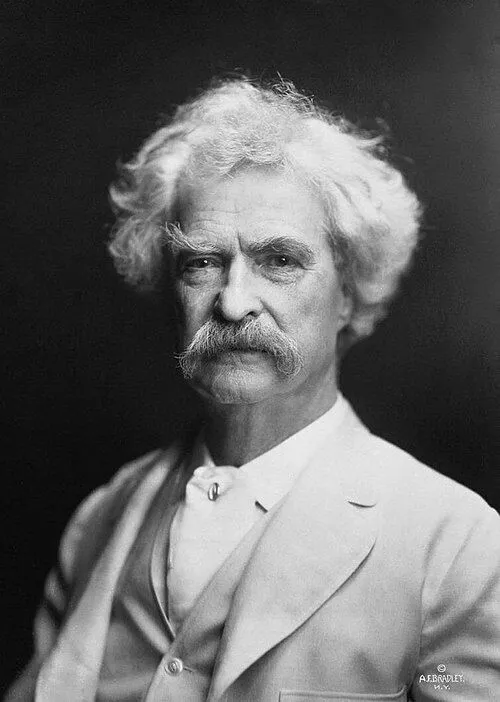 Photo: Mark Twain, via bloximages.chicago2.vip.townnews.com
This is not a charming anomaly from the nineteenth century. It is a data point in a pattern that runs across five thousand years of recorded travel, through cultures as different from one another as ancient Egypt and contemporary Japan, and it points toward a consistent truth about human social psychology that the modern American traveler — historically among the least linguistically adventurous in the world — has been slow to fully absorb.
What Herodotus Understood About Fumbling
Herodotus, writing in the fifth century BCE, was a Greek traveling extensively through a world that did not speak Greek as its primary language. His accounts of Egypt, Persia, and the Scythian territories of the Black Sea coast reveal a traveler who made consistent, deliberate efforts to engage with local languages and interpreters — not merely as a practical matter of navigation, but as a signal of respect whose social returns he clearly recognized.
 Photo: Herodotus, via c8.alamy.com
Egyptian priests, he noted, were notably more forthcoming with a foreigner who arrived having learned something of the local tongue than with one who came armed only with a translator and the implicit assumption that his own language should suffice. The information Herodotus collected — the detailed accounts of Egyptian religious practice, agricultural cycles, and historical memory that fill the second book of his Histories — was, by his own account, available to him in part because he was perceived as someone who had made an effort. The effort was its own credential.
This dynamic was not unique to Egypt or to the ancient Mediterranean. Silk Road merchants of the medieval period who survived long enough to become prosperous almost universally possessed functional vocabulary in multiple languages along their routes. The ones who did not were not merely inconvenienced; they were vulnerable. A trader who could not read the social register of a caravanserai — who could not distinguish a welcome from a warning, or a fair price from an extortionate one — was operating at a structural disadvantage that money alone could not compensate.
The Signal That Money Cannot Send
The social psychology underlying this pattern is not complicated, but it is worth stating precisely. When a traveler attempts a local language — even badly, even with an accent that makes native speakers wince — they are transmitting a specific signal: I considered you worth the effort. This signal is received, and processed, in ways that are largely consistent across cultures, because the underlying social logic is consistent.
Human beings have always needed to assess strangers rapidly: are they here to take, or here to exchange? Are they indifferent to us, or curious about us? The stranger who arrives speaking only their own language, however fluently, sends a particular message about the asymmetry they expect from the interaction. The stranger who arrives with imperfect but earnest attempts at the local tongue sends a different one. Neither message is necessarily conscious. Both are received.
American travelers have historically had particular difficulty with this calculus, for reasons that are themselves historically explicable. For most of the twentieth century, American economic and military dominance meant that the dollar and the English language arrived ahead of the traveler, pre-negotiating a set of expectations that made linguistic effort seem optional. If the hotel clerk speaks English, why learn Italian? If the menu has English translations, why memorize any French?
The answer is not that learning a language is morally superior to expecting translation services. The answer is purely practical: what you receive when you make the effort is qualitatively different from what you receive when you do not, and the difference is not random.
What the Colonial Traveler Got Wrong
The history of British and American travel writing from roughly 1850 to 1950 contains a remarkably consistent complaint: that foreign populations were cold, unhelpful, or inexplicably hostile to perfectly reasonable requests. Reading these accounts today, the actual explanation is usually visible in the text itself, a few lines above the complaint. The traveler spoke loudly and slowly in English. The traveler expressed surprise that the local population did not understand them. The traveler tipped in a currency and manner that signaled unfamiliarity with local custom. And then the traveler was baffled by the reception they received.
This is not ancient history. Travel forums and review sites today contain structurally identical complaints from American visitors to France, Japan, and Mexico, written with the same genuine puzzlement that animated the Victorian travel memoir. The psychology has not changed. Only the platform has.
The Practical Arithmetic of a Few Phrases
What the historical record consistently demonstrates is that the threshold for linguistic effort that produces meaningful social returns is remarkably low. You do not need fluency. You do not need accuracy. You need, in most cases, a small vocabulary deployed with evident sincerity: a greeting in the local language, a please and a thank you, an attempt at ordering food or asking directions that signals you have thought about where you are going before you arrived.
Japanese hosts, who have one of the most thoroughly documented traditions of hospitality assessment in the world, consistently report that foreign visitors who attempt even elementary Japanese phrases are categorized differently — and treated more generously — than those who do not, regardless of the quality of the attempt. French hosts, whose reputation for linguistic severity is itself a kind of historical myth built on a genuine cultural pride in their language, show the same pattern. The effort is the message. The quality of the effort is secondary.
For the American traveler preparing for an international journey, this translates into a specific and achievable preparation: ten to fifteen phrases, learned well enough to deploy naturally, covering greeting, gratitude, apology, and a few basic transactional requests. Not a language course. Not an app subscription. A modest investment of attention, made before departure, that signals to every person you encounter that you understood, before you arrived, that you were the visitor and they were the host.
Five thousand years of travelers made this investment and recorded the returns. The ones who skipped it also left records. The difference between those two bodies of testimony is not subtle.