The Moment a Town Stops Living and Starts Exhibiting: How American Communities Embalm Themselves for Visitors
Photo: Mack Sennett Comedies / Associated First National, Public domain, via Wikimedia Commons
Marfa, Texas did not always have a Judd Foundation. For most of its existence, it was a cattle-shipping depot and county seat of modest ambition, the kind of West Texas town that appeared on maps primarily because someone had to be there to manage the surrounding emptiness. Then Donald Judd arrived in 1971 with a vision and a substantial amount of Dia Art Foundation money, and the town's relationship with its own identity began its slow, irreversible transformation. By the time Marfa became a pilgrimage destination for the design-conscious and the culturally curious, the community had already begun the familiar work of deciding which version of itself to preserve in amber.
 Photo: Marfa, Texas, via static1.thetravelimages.com
The Marfa pattern is not unique. It is, in fact, one of the most consistent behavioral sequences in American civic life — a pattern that repeats across geography, across era, and across the full spectrum of what makes a town worth visiting in the first place. Understanding its mechanics is not merely an exercise in local history. It is one of the most reliable predictive tools available to a traveler who wants to know where a place is headed before the travel magazines announce it.
The Triggering Event: When the Outsider Arrives
The formation of a local historical society is almost never the spontaneous expression of community pride it presents itself as. It is, in the overwhelming majority of cases, a defensive response. The trigger is the arrival of people who do not share the community's inherited understanding of what the place means — people who see potential where locals see memory, who see real estate where locals see neighborhood, who see atmosphere where locals see ordinary Tuesday mornings.
This pattern was visible in Gold Rush California within a decade of the initial strikes. As San Francisco transformed from a mudflat encampment into a commercial metropolis, the old-timers — many of whom had arrived only five years earlier — began constructing a mythology of the authentic California that the newcomers were destroying. The California Historical Society was founded in 1871, precisely as the state's character was shifting from extractive frontier to agricultural and industrial economy. The founding members were not primarily academics. They were people who had been there first and wanted that fact acknowledged before it became irrelevant.
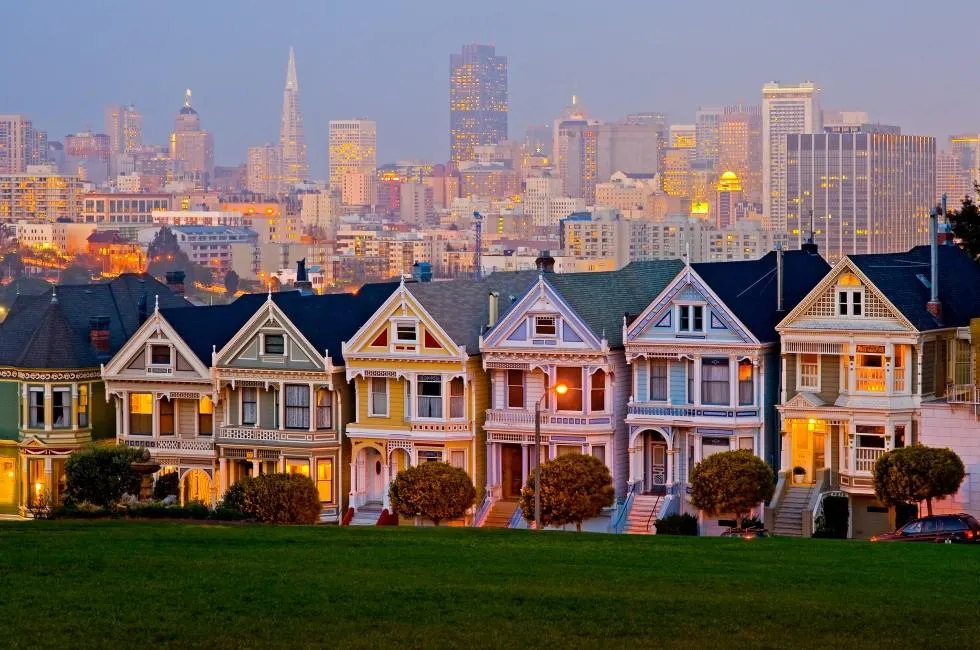 Photo: San Francisco, via www.fodors.com
The same sequence unfolded in Brooklyn between approximately 2005 and 2015, compressed into a single decade by the accelerating pace of contemporary urban change. As neighborhoods that had been economically marginal for a generation became desirable, the historical society memberships grew, the landmark applications multiplied, and the local archives suddenly attracted volunteers who had shown no previous interest in municipal history. The content of what was being preserved was secondary to the act of preservation itself — which was, at its core, a territorial claim made in the language of culture.
The Museum as Argument
When a town opens a museum about itself, it is not merely celebrating its past. It is making an argument about what the past means and, by extension, what the present is obligated to respect. The argument is almost always directed at the same audience: the people who arrived recently enough to be considered outsiders but have sufficient economic power to reshape the place.
This is why the interpretive framing of local museums so often emphasizes hardship, authenticity, and the specific texture of life before whatever transformation the community is currently experiencing. The Leadville, Colorado mining museum does not foreground the environmental devastation of silver extraction. The Deadwood, South Dakota historical sites do not dwell on the dispossession of Lakota people that preceded the gold rush. What they foreground is the particular human experience of the people who built the town — the difficulty of the work, the community formed under pressure, the identity earned through specific local struggle.
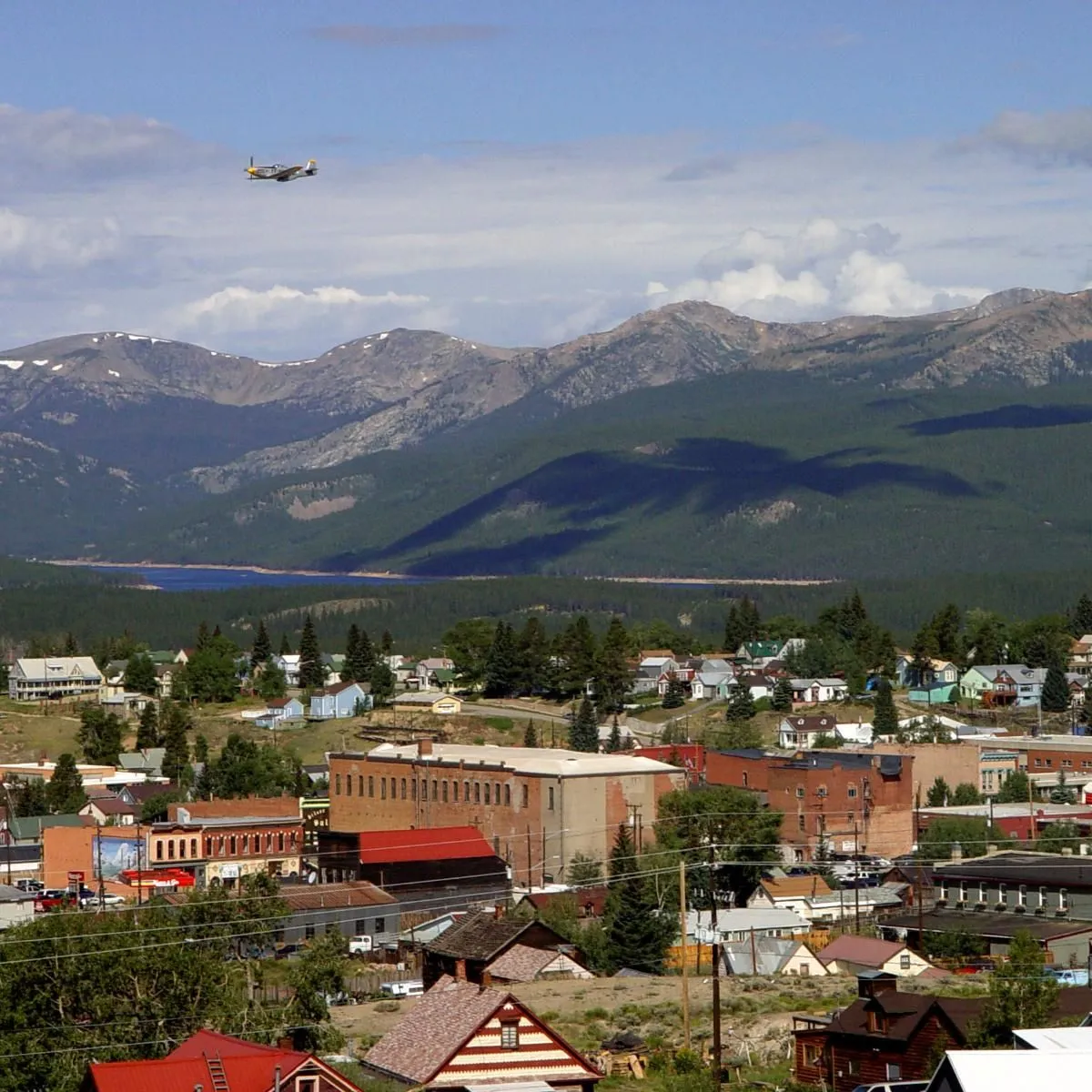 Photo: Leadville, Colorado, via i.pinimg.com
This is not dishonesty. It is the natural operation of collective memory under threat. Human beings have always selectively preserved the past that serves the present, and the present need of a changing town is almost always the same: to establish that this place has a character that preceded the current wave of arrivals and will, ideally, survive it.
Reading the Cycle: What the Plaques Tell You About the Price of Coffee
For the attentive traveler, the density and recency of historical markers in an American town is one of the more reliable indicators of where that town sits in its development cycle. A community that has been stable for generations tends to have old plaques, weathered and somewhat ignored, placed by organizations that have since dissolved or merged. A community in the early stages of discovery tends to have new plaques — freshly cast, grammatically ambitious, placed by a historical society that has recently experienced a surge in both membership and municipal funding.
The new plaque is not evidence that the town has suddenly become historically significant. It is evidence that the town has recently become aware that its historical significance is an asset that requires active management. This awareness typically arrives within eighteen to thirty-six months of the first feature in a national publication, the opening of a third coffee shop with exposed brick and a pour-over program, or the announcement of a significant real estate development.
Marfa's Chinati Foundation now anchors an entire economy of cultural tourism. The historical markers went up. The museum expanded. The old feed store became a design hotel. Each of these developments is individually reasonable and often genuinely valuable. Together, they constitute the town's transition from a place that is lived in to a place that is performed — a transition that is, at this point in American civic history, essentially irreversible once it begins.
What This Means for the Traveler
None of this renders the museum dishonest or the plaques worthless. The history they record is real. The community feeling that produced them is genuine. What the traveler gains from understanding the cycle is not cynicism but precision — the ability to read what a town is telling you about its own anxieties, and to calibrate your experience accordingly.
A town in the early stages of self-curation is still largely itself. The historical society is new and slightly disorganized. The museum is in a building that was recently something else. The locals who staff it are people who actually remember the era being documented. This is the moment of maximum interest for the historically minded traveler — the point at which the living memory and the institutional memory still overlap.
A town in the late stages of the cycle has completed the transition. The museum is professionally managed, the narrative is polished, and the relationship between the community and its own past has been fully mediated by the apparatus of cultural tourism. The place is still worth visiting. But you are no longer visiting the town. You are visiting the town's argument about itself.
Knowing the difference is what separates the traveler from the tourist — and it has been separating them, in every culture that ever built a monument to its own recent past, for as long as human communities have been worth visiting at all.