When the Gift Shop Became the Destination: America's Century-Long Confusion About Why We Travel
The Moment Memory Became Merchandise
In 1876, a Philadelphia hotel manager named William Penn made a discovery that would reshape American tourism forever: guests spent more money in his lobby gift shop than they did on their rooms. Penn's Hotel Bellevue had accidentally stumbled onto a fundamental truth about human psychology—travelers don't remember experiences, they remember the objects that represent those experiences. Within a decade, resort towns across America were redesigning themselves around this insight, transforming from places you visited into places you shopped.
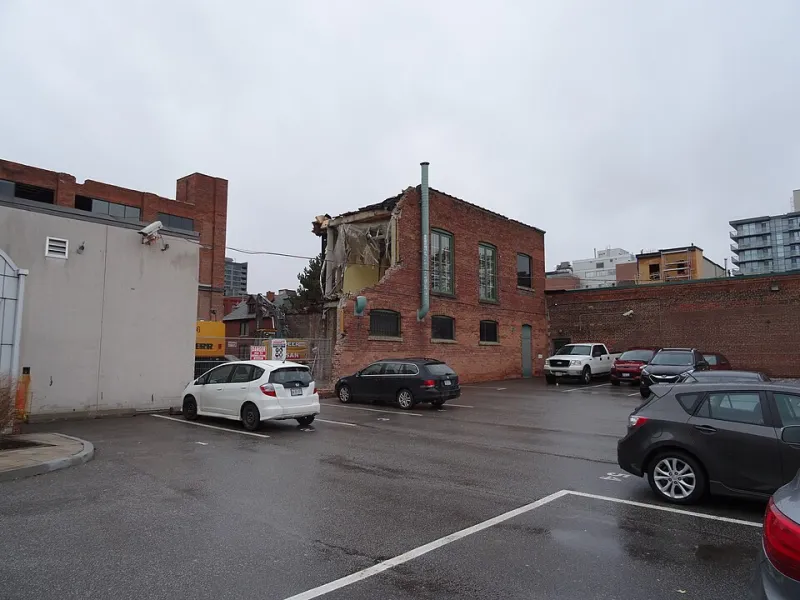
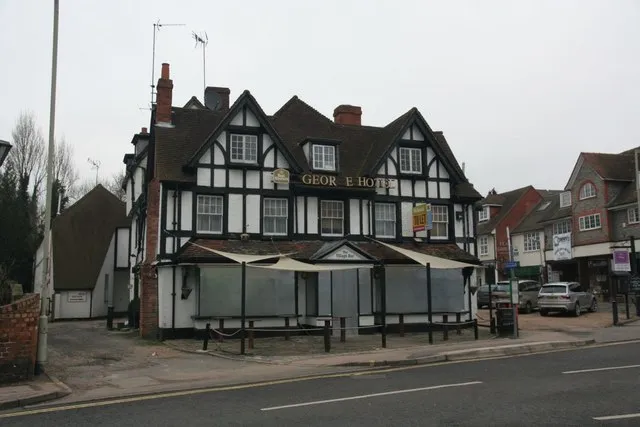 Photo: Hotel Bellevue, via www.closedpubs.co.uk
The shift wasn't subtle. Victorian-era resorts that had once organized their layouts around natural attractions—scenic overlooks, mineral springs, mountain vistas—began reorganizing around retail spaces. The gift shop moved from basement to lobby, from afterthought to centerpiece. Resort architects started designing buildings where visitors encountered the souvenir counter before they saw the attraction it supposedly commemorated. America had invented the world's first destination shopping experience, and we've been perfecting the formula ever since.
The Commercial Archaeology of Niagara Falls
Nowhere is this transformation more visible than at Niagara Falls, where the evolution from natural wonder to retail destination can be traced through 150 years of commercial archaeology. The earliest Niagara souvenirs were simple proof-of-presence items: pressed flowers from the gorge, pieces of shale from the riverbank, water from the falls themselves sealed in small bottles. These objects served as evidence—you had to physically visit Niagara to obtain them.
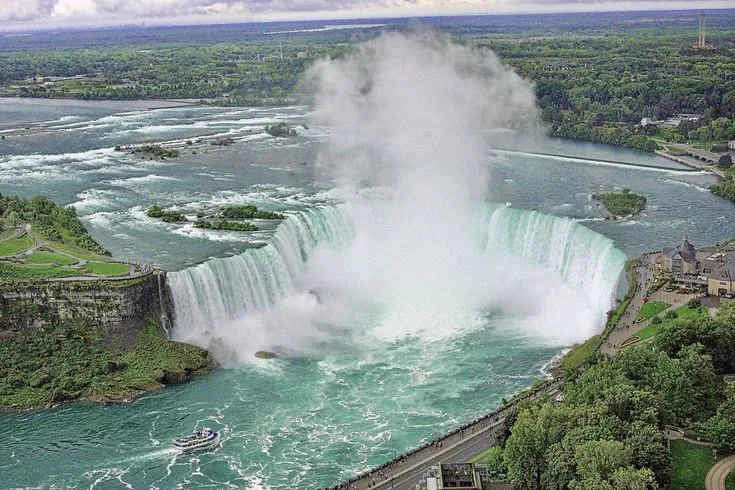 Photo: Niagara Falls, via i.pinimg.com
By the 1920s, Niagara's souvenir ecosystem had evolved into something more sophisticated and more problematic. The pressed flowers were replaced by mass-produced postcards featuring idealized images of the falls. The river shale gave way to factory-made "authentic Niagara stone" paperweights. The bottled water became "Niagara mist" sold in decorative containers manufactured in Ohio. The souvenirs no longer required your physical presence at the falls—they only required your presence at the gift shop.
Today's Niagara retail complex represents the logical endpoint of this evolution. Visitors can purchase Niagara-themed snow globes made in China, Niagara t-shirts printed in Mexico, and Niagara fudge manufactured in Pennsylvania. The gift shops stay open longer than the viewing platforms, employ more people than the boat tours, and generate more revenue than all other Niagara attractions combined. The falls themselves have become the free entertainment that draws customers to the real business: selling the idea of having been to Niagara Falls.
The Psychology of Purchased Memory
The reason this commercial strategy works lies in how human memory actually functions. Psychologists have known since the 1970s that episodic memory—our recollection of specific experiences—degrades rapidly over time. Within six months of returning from a trip, most travelers have forgotten the majority of what they actually did, saw, and felt. What they remember instead are the objects they brought home and the stories those objects help them reconstruct.
This isn't a failure of memory; it's how memory is designed to work. The human brain prioritizes information that serves future survival needs over information that serves nostalgic entertainment. Your subconscious doesn't care whether you remember the exact shade of blue in the Caribbean water—but it does care whether you remember which destinations made you feel happy, successful, or culturally sophisticated. Souvenirs serve as external memory storage devices, helping you reconstruct not what happened during your trip, but how you want to remember what happened during your trip.
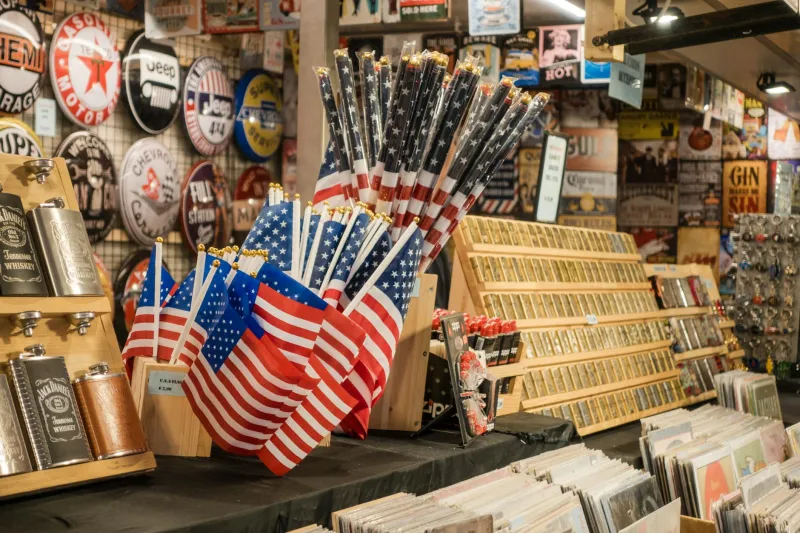
American retailers figured this out long before psychologists did. By the early 1900s, resort gift shops were selling not just objects but carefully curated memory packages. The Yellowstone coffee mug, the Grand Canyon snow globe, the Statue of Liberty keychain—each item was designed to trigger a specific emotional reconstruction of the travel experience. The object itself became more important than the experience it supposedly represented.
Airport Retail and the Industrialization of Departure
The modern airport terminal represents the full industrialization of souvenir psychology. Airport retailers have perfected the art of selling travel experiences to people who are already traveling, creating a closed loop where the journey itself becomes the destination shopping experience. Hudson News, the company that dominates American airport retail, generates more revenue per square foot than most luxury department stores by selling travelers the idea of where they've been and where they're going.
Airport gift shops reveal the sophisticated psychology behind modern souvenir marketing. The "I Love NY" t-shirt sold at LaGuardia isn't targeting tourists who have spent a week exploring Manhattan—it's targeting business travelers who had a layover at JFK and want to purchase the experience of having been to New York. The California wine sold at LAX isn't marketed to visitors who toured Napa Valley—it's marketed to conference attendees who want to bring home proof that their business trip was also a cultural experience.
This represents a fundamental shift in how Americans think about travel authenticity. Previous generations bought souvenirs to commemorate experiences they had actually had. Current generations buy souvenirs to represent experiences they wish they had had, or experiences they might have had if they weren't rushing between conference rooms and airport gates.
The Instagram Economy of Proof
Social media has accelerated the souvenir-first mentality by creating new forms of travel documentation that prioritize visual proof over experiential depth. The Instagram post featuring a strategically placed souvenir serves the same psychological function as the Victorian pressed flower—it provides evidence that you were somewhere worth being. But the Instagram economy has shortened the feedback loop between experience and documentation, creating pressure to purchase proof before you've actually had the experience you're trying to prove.
This dynamic explains the rise of "destination boxes"—curated packages of local products that can be shipped to your home, allowing you to purchase the souvenir experience without the travel experience. Companies like Try the World and Bokksu have built successful businesses selling the material culture of places their customers have never visited and may never visit. The souvenir has achieved complete independence from the destination.
Reading the Retail Tea Leaves
Understanding America's souvenir psychology provides a predictive framework for identifying which travel experiences are being hollowed out by commercial substitution. Any destination where the gift shop generates more revenue than the attraction itself is a destination where the souvenir has begun to replace the experience. Any travel activity that can be adequately represented by a purchasable object is a travel activity at risk of commercial displacement.
The warning signs are everywhere: national parks where visitors spend more time in the visitor center gift shop than on hiking trails; historic sites where the museum store is larger than the museum; cities where the airport souvenir selection is more comprehensive than what's available downtown. These aren't just commercial conveniences—they're symptoms of a tourism industry that has learned to profit from the gap between experience and memory.
The Experiences That Resist Commercialization
Not all travel experiences can be reduced to purchasable objects, which is why some forms of tourism remain relatively immune to souvenir displacement. Adventure travel, cultural immersion experiences, and physically challenging activities resist commercialization because they create memories that can't be adequately represented by material objects. You can't buy a souvenir that captures the experience of reaching a mountain summit or having a meaningful conversation with a local stranger.
The most authentic travel experiences are often the ones that produce the worst souvenirs. The t-shirt from the remote hiking trail you discovered by accident will always be less commercially sophisticated than the t-shirt from the famous landmark you visited because everyone else did. The authenticity lies not in the object but in the impossibility of reducing the experience to an object.
This suggests a simple diagnostic test for travel authenticity: if the experience can be adequately captured by something you can buy, it's probably not an experience worth having. The best travels resist commercialization not because they reject commerce, but because they create memories too complex and personal to be packaged and sold. Those are the trips you'll remember without needing to buy anything to help you do it.