Named Before It Was Built: The Calculated Optimism Behind America's Most Ambitious Town Names
Named Before It Was Built: The Calculated Optimism Behind America's Most Ambitious Town Names
Before you arrive in a place, it has already told you something about itself. The road sign, the exit marker, the entry in the atlas — these are not neutral identifiers. They are the first sentence of a story the town's founders composed, often under considerable duress, at the precise moment when everything about the community's future was uncertain. In that moment of uncertainty, they chose a word. That word is a document.
America is littered with towns named Eden, Paradise, Prosperity, Opportunity, Utopia, and Harmony. There are at least a dozen communities named Hope scattered across the country, and the United States Census Bureau has, at various points, recorded settlements named Ideal, Advance, and New Era. None of these names were accidents. All of them were arguments.
The Map as Marketing Copy
The practice of naming a settlement as an act of commercial persuasion predates America by several millennia. When Alexander the Great founded cities bearing his name across the territories he conquered — from Alexandria in Egypt to the more distant Alexandrias of Persia and Central Asia — he was not simply satisfying a considerable ego. He was performing an act of psychological colonization. The name announced a set of associations: order, Hellenic civilization, the infrastructure of commerce, the protection of a known power. Merchants calculating their routes needed to know not just where a city was but what kind of city it aspired to be. The name carried that information.
Roman colonial settlements operated on a similar logic. Names like Forum Julii (modern Fréjus, in France) or Caesarea in Judea were not descriptions of existing conditions. They were declarations of intended conditions — signals to potential settlers, traders, and administrators that this location had been claimed by a recognizable order and was open for business under its terms.
Medieval pilgrimage routes across Europe were dotted with settlements whose names functioned as roadside promises. Bon Repos (Good Rest), Bon Accueil (Good Welcome), Sainte-Foy (Holy Faith) — these were not merely picturesque. They were competitive positioning, distinguishing one inn-town from another in the minds of travelers who had heard the names before they had traveled the roads.
The American frontier settlers who named their communities after aspirational ideals were working in exactly this tradition. They understood, with the clarity that comes from having almost nothing, that a name on a map was a form of capital.
The Anxiety Behind the Aspiration
Here is what makes these names genuinely interesting to the historically minded traveler: they are most reliably optimistic when the underlying circumstances are most precarious. The town named Prosperity was generally not prosperous at the time of naming. The town named Eden was frequently a muddy clearing. The name was not a description. It was a bet.
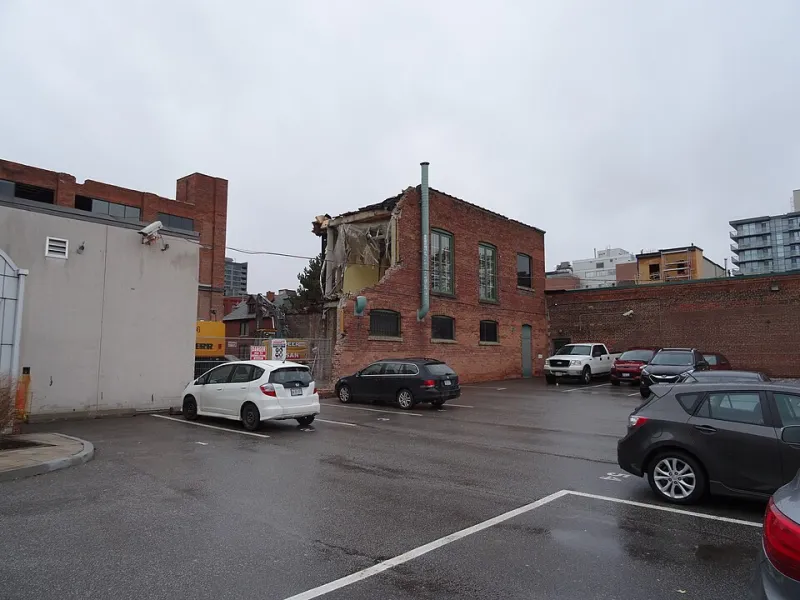
Prosperity, West Virginia, incorporated in 1902, was a coal camp. The men who named it were not surrounded by abundance. They were surrounded by a mine, a company store, and a set of conditions that offered workers very little control over their circumstances. The name was, depending on how generously one reads it, either an expression of genuine hope or a piece of marketing aimed at attracting labor to a community that needed to compete with other coal camps for the same pool of migrants.
 Photo: Prosperity, West Virginia, via thumbs.dreamstime.com
Both readings are probably correct. This is the dual nature of aspirational naming: it is simultaneously sincere and promotional, and the gap between those two things is often the most historically revealing feature of a community's founding.
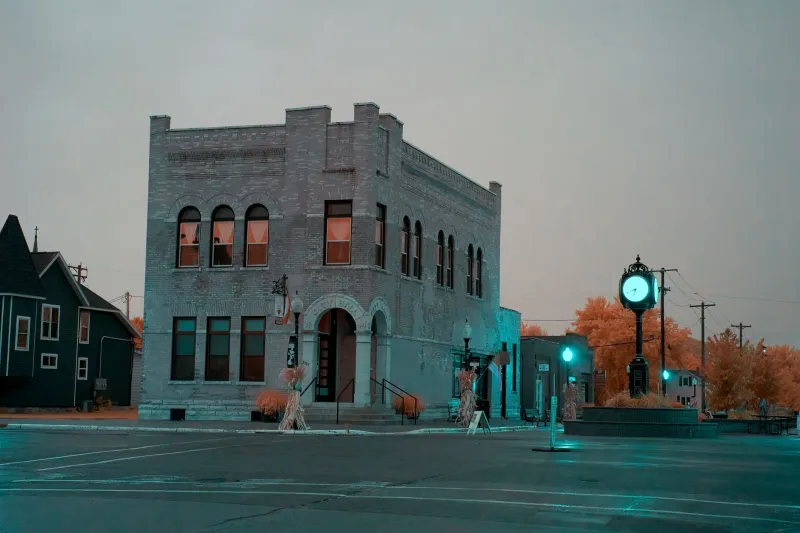
The same pattern holds at the other end of the social scale. The resort communities of the nineteenth-century Northeast — Bar Harbor, Newport, Saratoga Springs — chose names that evoked natural elegance and aristocratic leisure at precisely the moment when their founders were attempting to attract a class of wealthy vacationers who had not yet decided to go there. The name was part of the infrastructure being built to receive them.
 Photo: Bar Harbor, via i.pinimg.com
What the Railroad Surveyors Read
The most consequential audience for a frontier town's chosen name was not the migrant family loading a wagon in Ohio. It was the railroad surveyor standing in a field in Kansas, deciding which of three possible routes would carry the line west.
Railroad companies in the second half of the nineteenth century received enormous land grants from the federal government — grants that gave them extraordinary incentive to route their lines through territory they could then develop and sell. The towns along a proposed route were, from the railroad's perspective, potential revenue sources. A town with an optimistic name, a plausible agricultural future, and a committee of local boosters willing to offer land grants and station-site concessions was a more attractive stop than a town with a merely descriptive name and no apparent ambition.
This created a feedback loop in which the act of naming became part of the competition for infrastructure investment. Towns named Opportunity and Advance were making an argument to surveyors, investors, and federal officials that they understood the terms of the commercial transaction being negotiated. The name was a signal of sophistication as much as aspiration.
Towns that failed to secure the railroad generally declined, and many of their aspirational names now mark communities so small they barely register in the census. These are among the most historically interesting destinations in America — places where the gap between the name and the outcome is visible in the landscape itself.
Reading the Name Before You Arrive
For the modern traveler, a community's chosen name is one of the most reliable pieces of advance intelligence available. It tells you what the founders wanted, which tells you something about what they feared, which tells you something about the economic and social conditions in which the town was born.
A town named after a religious virtue — Faith, Providence, Salem — was likely founded by a community whose identity was organized around a specific denominational culture. That culture may or may not persist, but its residue is usually visible in the architecture, the community calendar, and the social geography of the place.
A town named after a geographic feature that no longer exists — Elmwood, Lakeside, Riverside — has a story about environmental change written into its street signs. The elms died. The lake drained. The river moved. The name is a fossil record of a landscape the current residents may never have seen.
A town named after an abstract ideal — Liberty, Justice, Union — was almost certainly named during or immediately after a period of political conflict. These names cluster along the timelines of the Revolutionary War, the Civil War, and the waves of European immigration that brought communities anxious to declare their American credentials before anyone could question them.
The Name as Time Capsule
The most useful frame for thinking about aspirational place names is the time capsule. The founders sealed something inside the name at the moment of greatest uncertainty — their hopes, their fears, their understanding of what the market required — and the name has been broadcasting that signal ever since, largely unheard.
When you drive through a town called Paradise and find a modest agricultural community that has seen better decades, you are not looking at irony. You are looking at sincerity under pressure. Someone, at some specific moment in the past, believed that this patch of ground could be made into something extraordinary, and they said so in the only public language available to them.
The gap between the name and the current reality is not a failure of imagination. It is a record of what was attempted. For the traveler who knows how to read it, that record is more interesting than any official historical marker — and considerably more honest.