The Price of the Outsider: How Civilization Learned to Monetize the Stranger's Arrival
What the Entrance Fee Actually Says
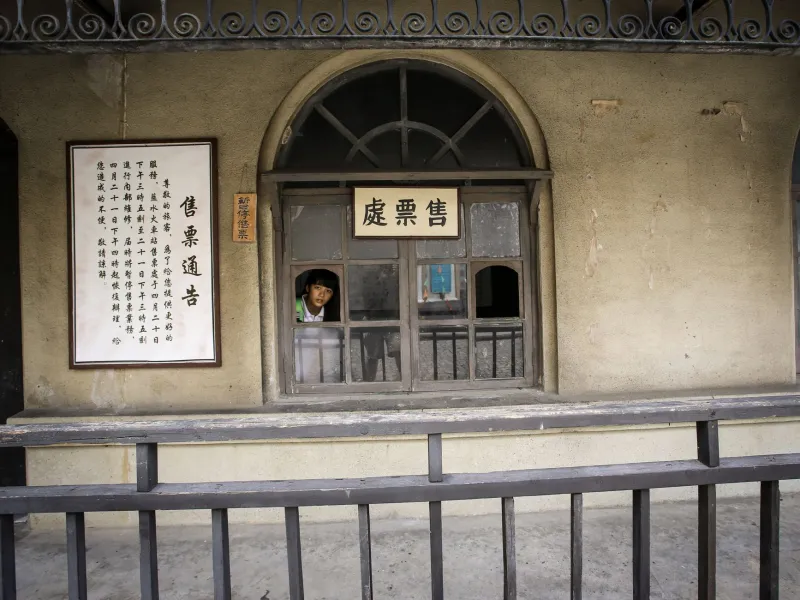
The ticket booth at the entrance to a national park performs two functions simultaneously. The first is fiscal: it collects revenue. The second is sociological: it marks a boundary. The person passing through the booth is formally identified as someone who does not live here, does not belong here in the permanent sense, and whose access to this place is conditional and temporary. The fee is the price of admission. It is also the price of being an outsider.
This dual function is not a modern invention. It is among the oldest economic arrangements in the human record, and understanding its history tells us considerably more about the psychology of tourism—and of the communities that receive tourists—than any contemporary policy debate manages to illuminate.
Temple Economies and the Sacred Markup
The oldest documented entrance systems were religious. Temples across the ancient world—in Egypt, Mesopotamia, Greece, and Rome—maintained tiered access structures in which proximity to the sacred was calibrated to payment. The outer courts were open. The inner sanctuaries required offerings, ritual fees, or priestly mediation that cost money. The pilgrim from a distant city paid more, in cumulative terms, than the local worshipper, because the pilgrim also required lodging, food, guide services, and the purchase of appropriate sacrificial animals from vendors who operated under temple patronage.
This was not exploitation in any simple sense. The temple economy provided genuine services: the maintenance of the sacred site, the employment of priests who could perform the correct rituals, the preservation of the cult that had drawn the pilgrim in the first place. But the pricing structure was not neutral. It extracted a premium from distance. The further you had traveled to reach this place, the more you would spend once you arrived—and the less leverage you had to resist the pricing, because you had already invested so much to get there.
Every modern tourist destination operates on this same logic, whether or not anyone involved has thought about it in these terms.
Venice and the Science of Visitor Extraction
By the high medieval period, certain cities had developed what can only be described as a systematic science of visitor monetization. Venice is the clearest example, and the most instructive one for American travelers, because Venice's situation—a physically constrained destination of extraordinary desirability—prefigures the situation of every American city that has discovered, sometimes with alarm, that it has become a tourist product.
Venetian authorities in the thirteenth and fourteenth centuries understood that their city attracted merchants, pilgrims bound for the Holy Land, and wealthy travelers from across Europe, all of whom needed to pass through a single point of entry and all of whom were, by definition, temporary. The republic's response was comprehensive: port fees, currency exchange margins, mandatory use of licensed gondoliers, regulated hostelry, and a system of guided access to certain churches and relics that ensured money changed hands at every threshold.
What made the Venetian system sophisticated was not its greed but its self-awareness. Venetian authorities debated, in writing, the tension between extracting maximum value from visitors and preserving the conditions that made visitors want to come. They understood that a city which treated outsiders purely as revenue sources would eventually exhaust its own appeal. The fee had to be calibrated. The welcome had to be genuine enough to survive the commerce.
This is a tension that cities from Savannah to Sedona are working out in real time, with considerably less institutional memory to draw upon.
The American Invention of the Democratic Fee
The United States introduced something genuinely novel into the history of stranger taxation when it began charging entrance fees to the national parks in the late nineteenth century. The novelty was not the fee itself—that was ancient—but the ideological framing around it. The national parks were explicitly public land, held in trust for all citizens. The entrance fee was therefore not a tax on outsiders but a charge levied equally on all Americans regardless of origin.
In practice, this democratic framing obscured a more familiar dynamic. Visitors to Yellowstone in 1916 were overwhelmingly wealthy, because the infrastructure required to reach the parks—railroads, automobiles, time off from wage labor—was not equally distributed. The fee was nominally universal. The visitor pool was not. The parks were democratic in principle and selective in practice, which is a description that applies to a great many American institutions of that era.
The America the Beautiful pass, which provides annual access to federal lands for a flat fee, is a contemporary attempt to resolve this tension. It is also, structurally, the same solution that Venetian authorities arrived at six centuries earlier: offer the frequent visitor a bulk discount that converts them from an outsider into something closer to a stakeholder.
The Resentment Beneath the Welcome
Every culture that has studied the economics of tourism has eventually confronted the same uncomfortable finding: communities simultaneously want visitors and resent them, and the fee structure is one of the primary mechanisms through which that resentment is managed and expressed.
The psychological literature on this is consistent. Residents of high-tourism destinations report a phenomenon researchers call the demonstration effect—the experience of watching outsiders consume, at leisure, a place that residents must navigate as the backdrop of ordinary life. The tourist's relationship to a place is fundamentally aesthetic. The resident's is functional. These two relationships are not compatible, and the entrance fee—the tax on the outsider's aesthetic consumption—is one of the ways the community asserts that the resident's functional claim takes precedence.
This is why the debate over tourist taxes in American cities like New Orleans, New York, and Hawaii is never purely fiscal. It is always also a debate about belonging, about who the city is for, and about whether the revenue generated by visitors can compensate for what their presence costs the people who actually live there.
What the Fee Has Always Communicated
Strip away the fiscal apparatus and the entrance fee communicates something simple: you are welcome here, conditionally, temporarily, and at a price we have set. This is not hostility. It is, in fact, a remarkably honest social contract—more honest, in some respects, than the free entry that implies no obligation and extracts its costs through other means.
The pilgrim paying at the temple gate, the merchant paying Venetian port fees, and the family paying at the national park entrance booth are all receiving the same message. You may enter. You do not belong. The distinction between those two facts is the oldest economic principle in the history of human movement, and no booking platform or policy reform has yet found a way to dissolve it.