Traveling by Yesterday: The Long American Habit of Navigating by Maps That Were Already Wrong
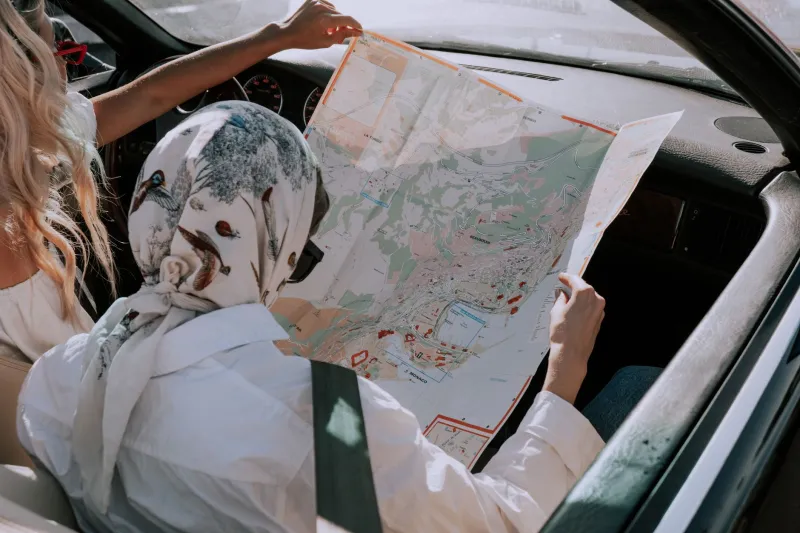
Somewhere in America right now, a traveler is pulling off a highway exit to find a diner that closed during the previous administration. They have a guidebook, or a family story, or a note in someone's handwriting that says the pie is worth the detour. The building may still be there. The pie is not.
This is not a failure of research. It is, in fact, one of the oldest and most consistent behaviors in the entire history of human travel.
The Delay Has Always Existed
The problem of navigating by outdated information is not a product of the digital age, nor of any particular American carelessness. It is structural. It is built into the nature of recorded knowledge itself.
The Roman Itinerarium Antoninum, compiled sometime in the third century CE, was a road directory covering the empire's major routes, distances, and stopping points. It was consulted by travelers for generations after many of the establishments it listed had changed ownership, changed character, or ceased to exist entirely. Scholars have noted that certain towns appear in the Itinerarium with a confidence that archaeological evidence does not support—the towns had shrunk, or shifted, or been absorbed into something else by the time most travelers were consulting the text.
The travelers consulted it anyway. Because a map that is mostly right is infinitely preferable to no map at all, and because there is a particular human comfort in having an authority to follow, even when the authority is decades behind the road.
American travelers inherited this habit fully formed.
The Guidebook Lag
The golden age of American travel guidebooks—roughly 1880 through 1960—produced some of the most confidently incorrect literature in publishing history. The WPA Guides, assembled by the Federal Writers' Project during the 1930s, are magnificent documents of a country that was already changing faster than any editorial calendar could track. Hotels recommended in the 1939 edition of the Louisiana guide were, by the time many readers arrived with the book in hand, operating under different names, different management, or different racial admission policies that the original text had either omitted or euphemized beyond recognition.
Baedeker's American editions, revered by European visitors as authoritative, were typically three to five years behind actual conditions by the time they reached print. Travelers arriving with the 1906 edition in 1911 were navigating a country that had absorbed a catastrophic earthquake, a financial panic, and the automobile—none of which the book had anticipated.
And yet the books were consulted. Were trusted. Were argued over at roadsides.
What the Family Route Actually Is
The most durable form of outdated travel information in American culture is not the printed guidebook. It is the family route.
Every American family of sufficient age has one: a sequence of roads, exits, stopping points, and restaurants that was established by one generation and transmitted to the next with the authority of scripture. The specific diner where you always stop for breakfast. The particular stretch of two-lane highway you take instead of the interstate because someone, decades ago, decided the scenery was worth the extra forty minutes. The motel chain that was once reliable and may or may not still be.
These routes are not evaluated. They are inherited. And they persist long after the conditions that created them have dissolved.
This is not irrational behavior. The family route encodes real information—information about what the originating generation valued, about what the road once offered, about a version of the country that existed and was experienced and was worth preserving in some form. The fact that the information is no longer operationally accurate does not make it worthless. It makes it archaeological.
Phantom Towns and Ghost Restaurants
The most dramatic consequence of navigating by outdated information is the discovery of what might be called the phantom destination: a place that exists fully in the traveler's expectation and only partially—or not at all—in current reality.
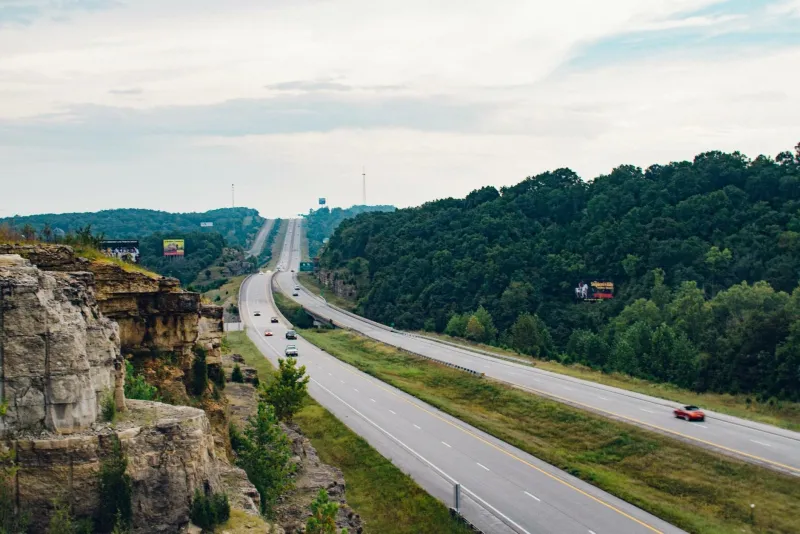
American Route 66 is the most documented example of this phenomenon, but it is far from the only one. The Lincoln Highway, the National Road, the old Dixie Highway—each of these corridors generated a culture of specific stopping points that became embedded in travelers' mental maps long after the physical establishments had changed beyond recognition or vanished entirely. Travelers who followed these routes in the 1970s and 1980s based on their parents' accounts from the 1950s were, in effect, conducting archaeological expeditions disguised as vacations.
The ghost restaurant is a related species. Every American city of any age has them: establishments so thoroughly embedded in local and tourist mythology that visitors arrive expecting to find them years, sometimes decades, after their closure. The restaurant's reputation has achieved a kind of immortality that its physical existence could not sustain. People navigate to the address. They stand on the sidewalk. They take photographs of whatever replaced it.
This is not confusion. It is pilgrimage.
Why We Navigate by Yesterday
The persistence of outdated travel information is not simply a failure of updating. It reflects something more fundamental about how humans relate to inherited knowledge.
A recommendation from a trusted source—a parent, a beloved guidebook, a community of fellow travelers—carries an authority that current information from an unknown algorithm cannot easily displace. The Yelp review from a stranger last Tuesday and the memory of your grandmother's certainty about a particular place are not equivalent data points, regardless of which one is more temporally accurate. One carries history. The other carries a timestamp.
Five thousand years of travel record suggests that humans have always weighted inherited knowledge heavily, even when they had access to more current sources. Merchants in the medieval Islamic world consulted Ibn Battuta's fourteenth-century accounts of distant cities generations after political upheaval had rendered specific details obsolete. American pioneers followed journals from expeditions that had traversed the same terrain under radically different seasonal and political conditions.
They were not being careless. They were being human.
The Map and the Territory
The philosopher Alfred Korzybski's most famous observation—that the map is not the territory—was intended as a warning about the dangers of confusing representation with reality. Applied to travel, it yields a more complicated lesson.
The outdated map does not simply misrepresent the territory. It preserves a version of the territory that no longer exists and that cannot be recovered except through exactly this kind of imperfect, time-lagged documentation. The wrong guidebook is also an archive. The phantom destination is also a record.
American travelers who navigate by yesterday are not simply making errors. They are, without quite knowing it, maintaining a continuous relationship with the country as it has been—a country that is always in the process of becoming something the current maps have not yet caught up to, and the old maps remember imperfectly but remember nonetheless.