The Welcome Desk at Civilization's Edge: Why Every Culture Built the Same Booth for Lost Strangers
The Pharaoh's Reception Committee
When archaeologists excavated the customs house at Elephantine Island in southern Egypt, they found something that would be instantly recognizable to anyone who has ever pulled into a highway rest stop: a desk, a chair, and papyrus records of the same questions asked over and over. "Where are you from? What is your business here? How long do you plan to stay?" The scribe stationed at this Nile checkpoint in 2000 BCE was performing the world's first recorded tourist information service, and his job description hasn't changed in four millennia.
Every civilization that has ever received strangers has independently arrived at the same institutional solution: a designated person, in a designated place, whose job is to transform geographic confusion into cultural orientation. The modern visitor center, with its wall-mounted maps and rack of brochures, represents not American innovation but human inevitability. We build welcome desks because the alternative—letting strangers figure things out for themselves—threatens something deeper than tourism revenue.
The Medieval Merchants' Manual
By the 13th century, European trading cities had perfected the art of stranger management through guild halls that functioned as combination embassy, hotel concierge, and cultural translation service. Venice's Fondaco dei Tedeschi didn't just house German merchants; it provided them with a handbook explaining local customs, price expectations, and the unwritten rules of Venetian commerce. The building's architecture told the story: public reception areas designed for maximum transparency, private quarters for cultural decompression, and a central courtyard where foreign confusion could be converted into local confidence.
 Photo: Fondaco dei Tedeschi, via i.pinimg.com
These medieval information centers reveal the essential psychology behind all welcome infrastructure: they exist not primarily to help visitors, but to manage the anxiety that visitors create in residents. The guild hall served as a cultural airlock, ensuring that foreign merchants understood the local rules before they could accidentally violate them. The Venetian authorities weren't being hospitable—they were being strategic.
America's Democratic Experiment in Orientation
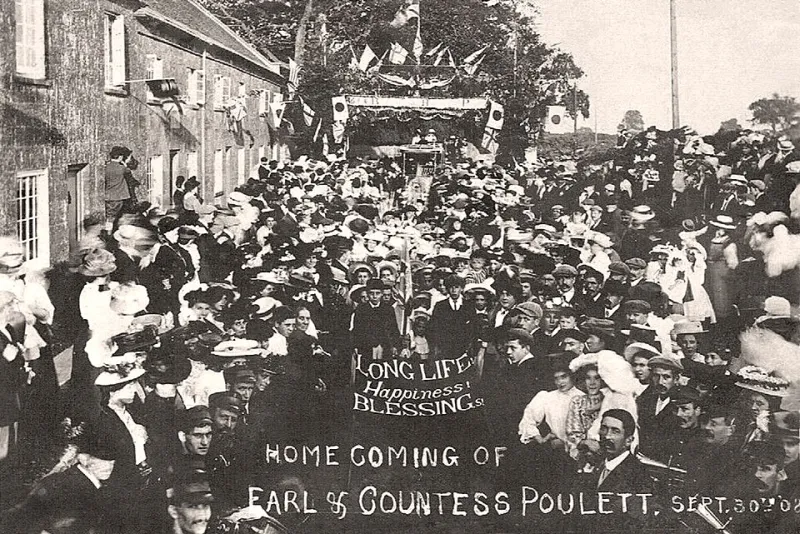
When American cities began building dedicated visitor centers in the 1960s, they inherited this ancient template but added a distinctly democratic twist: the information would be free, comprehensive, and available to anyone who walked through the door. This represented a radical departure from the medieval model, where orientation services were reserved for merchants wealthy enough to afford guild membership. America's visitor centers promised to democratize the stranger experience, offering the same quality of welcome to backpackers and business travelers alike.
The psychological appeal was irresistible. In a country built by people who had all been strangers somewhere, the visitor center became a civic symbol of the welcome that every American ancestor had once needed. The volunteer staffing model that emerged—retired residents eager to share local knowledge—turned stranger orientation into a form of community service, transforming potential cultural anxiety into civic pride.
The Architecture of Anxiety Management
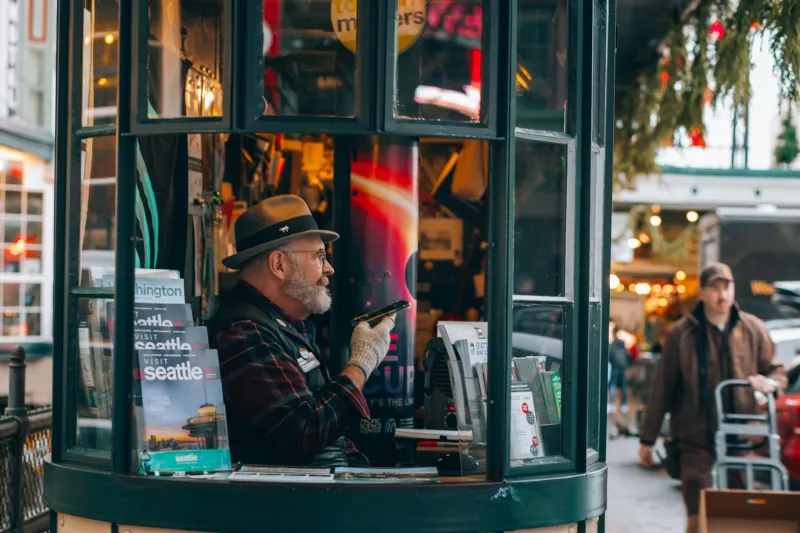
Modern visitor centers follow architectural patterns that would be familiar to ancient Egyptian border guards. The reception desk faces the entrance, creating immediate eye contact between staff and visitors. Maps dominate the wall space, providing visual reassurance that this place can be understood and navigated. Brochure racks offer pre-packaged answers to predictable questions, reducing the cognitive load on both visitors and staff.
But the most revealing design element is often what's hidden: the back office where staff retreat between visitor interactions, the storage areas where seasonal promotional materials wait their turn, and the bulletin boards covered with internal memos about which local businesses are paying for preferred placement in the brochure rack. These spaces reveal the commercial machinery that drives modern welcome infrastructure, showing how the ancient function of stranger orientation has been monetized without losing its fundamental psychological appeal.
Reading the Welcome Signs
The quality and design of a place's visitor center functions as a precise diagnostic tool for understanding local economic health and civic confidence. Cities with elaborate, well-staffed welcome centers are typically places that have learned to profit from stranger anxiety—they've figured out how to convert geographic confusion into economic opportunity. The presence of multiple language options, digital displays, and extended operating hours signals a community that has invested seriously in the business of being discovered.
Conversely, the absence of formal welcome infrastructure often indicates a place that either doesn't need visitors or doesn't want them. Rural communities that have never built visitor centers aren't necessarily unwelcoming; they may simply operate on social networks where strangers are rare enough to be handled through informal channels. The gas station attendant who gives directions, the diner waitress who recommends local attractions—these represent older forms of stranger orientation that predate institutional welcome infrastructure.
The Digital Displacement
Smartphone navigation has begun to hollow out the traditional visitor center in the same way that GPS emptied highway rest stops of their wayfinding function. Why ask a human for directions when your device can provide turn-by-turn guidance? Why collect paper brochures when every local business has a website? The question facing modern visitor centers is whether they can evolve beyond their original function of geographic orientation to provide something that algorithms cannot: cultural translation.
The most successful contemporary visitor centers have reinvented themselves as curated experience brokers rather than information dispensaries. Instead of simply providing maps and brochures, they offer insider knowledge about seasonal timing, crowd avoidance strategies, and local customs that no app can deliver. They've learned to compete with digital convenience by emphasizing human insight—the same value proposition that made guild halls indispensable to medieval merchants.
The Eternal Return to the Welcome Desk
Five thousand years of visitor centers teach us that human beings will always need institutional help making sense of unfamiliar places, regardless of technological advancement. The ancient Egyptian scribe, the medieval guild master, and the modern visitor center volunteer are all performing the same essential function: converting the chaos of arrival into the confidence of orientation. They exist because being a stranger is fundamentally disorienting, and every culture that wants to profit from strangers must first help them stop feeling lost.
The next time you pull into a highway visitor center, you're participating in one of humanity's oldest institutional traditions. The questions you ask—Where should I eat? What's worth seeing? How long should I stay?—are the same ones that have echoed across welcome desks for millennia. The only thing that changes is the technology used to provide the answers. The need for those answers remains as constant as human curiosity itself.